Most event organisers think about marketing as something that happens before the event. Run some ads, post some flyers, sell tickets. Job done.
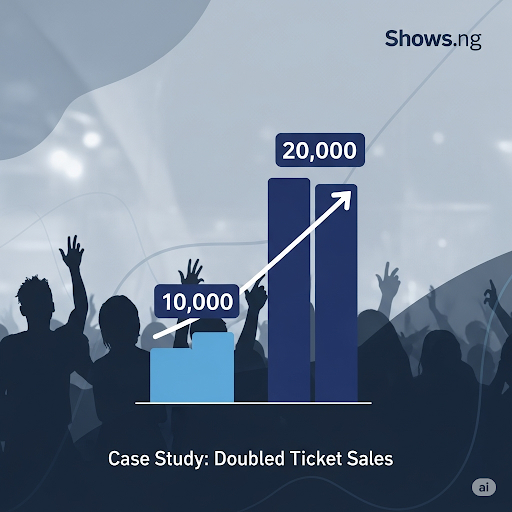
The best organisers think differently. They treat every event as a node in a continuous growth loop — each show feeds the next, audiences compound, and the cost of selling out drops with every edition. That is not luck. It is the result of deliberate, repeatable workflows.
This post breaks down exactly how to build those workflows — from your first promotional post to the data you collect months after the event ends.
"An event that sells out is nice. An event organiser who consistently sells out has a system."
Phase 1: The Foundation — Know Your Audience Before You Post
Before any flyer gets designed or any ad budget is spent, the single most valuable thing you can do is define your audience segment clearly. Not "young people in Lagos." Something specific: working professionals aged 25–35 who attend music events on weekends and spend ₦5,000–₦20,000 on tickets.
Why does this matter so much? Because every marketing decision downstream — the platforms you use, the tone of your copy, the ticket price tiers you create, the influencers you approach — flows from this definition.
Audience Research Checklist
- Look at who attended (or engaged with) your last 2–3 events
- Check which social posts drove the most ticket clicks
- Survey previous attendees — even 20 responses tells you a lot
- Study the audience of comparable events in your city
- Build one clear "attendee persona" document and refer to it constantly
Shows.NG Feature
Attendee Data — Right in Your Dashboard
Every event you run on Shows gives you access to the full attendee list — names, contact details, and ticket types purchased. This is your most direct research source. Use it to understand who is actually showing up, not just who you think is. Log into your organiser dashboard →
Phase 2: Pre-Event Marketing — Build Momentum, Not Just Awareness
The biggest mistake in event promotion is treating the pre-event window as a single announcement rather than a multi-stage momentum build. People rarely buy the first time they see something. They buy after repeated, credible exposure.
Structure your pre-event campaign in three stages:
The Tease (4–6 weeks out)
Create intrigue before you reveal everything. Countdown posts, partial reveals, "something is coming" content. This primes your audience before the full announcement drops.
The Launch (3–4 weeks out)
Full announcement with event details, early-bird ticket link, and a clear reason to act now. Run your highest-value content here: official trailer, headliner reveal, venue walkthrough. This is your biggest push window.
The Close (1–2 weeks out)
Urgency and social proof. Highlight how many tickets remain, share attendee hype, leverage last-minute FOMO. Close with a "final call" post 24–48 hours before the event.
Channels That Actually Convert
Not all channels perform equally. For African entertainment events, these consistently deliver the strongest ticket-to-cost ratio:
| Channel | Best For | Pro Tip |
|---|---|---|
| Warm audiences, last-mile conversion | Broadcast lists convert 3–5× better than cold DMs | |
| Instagram Reels | Discovery and reach | Behind-the-scenes clips outperform polished graphics |
| X (Twitter) | Trend-driven hype, community | Tag relevant accounts; threads outperform single posts |
| Email / SMS | Previous attendee retention | Personalised subject lines improve open rates by 26%+ |
| Micro-influencers | Niche community trust | 10k–100k accounts often outperform celebrity tags |
Shows.NG Feature
DP Generator — Turn Every Attendee into a Walking Billboard
The Shows DP Generator lets you create branded profile picture frames for your event in seconds. Share it with your community and watch your audience do the promoting for you — every changed profile picture is free reach to hundreds of people who have never heard of your event.
Shows.NG Feature
Advertise — Reach Buyers Already on the Platform
Shows has a built-in advertising feature that puts your event in front of people already actively browsing for things to attend. It is one of the most targeted placements you can get, because you are reaching an audience with active buying intent — not just casual scrollers. Explore advertising options →
Phase 3: Ticket Sales Workflow — Remove Every Barrier
A potential buyer is only motivated for a short window after seeing your content. The longer the journey from interest to payment, the more people you lose. Your job is to collapse that journey to as few steps as possible.
Here is what a frictionless ticket sales workflow looks like:
One link. One destination.
Every piece of marketing — story, tweet, flyer — should point to the same ticket link. Fragmented links create confusion and kill conversions.
Offer tiered pricing
Early bird, regular, and VIP tiers serve three purposes: rewarding early buyers, creating urgency as cheaper tiers run out, and anchoring price perception so your standard tier feels reasonable.
Shows.NG Feature
Built-In Ticket Tiers — Early Bird, Regular, VIP & Tables
When creating your event on Shows, you can set up multiple ticket categories — Early Bird, Regular, VIP, Tables, or any custom tier you need. Each tier has its own price, quantity cap, and availability window. The platform automatically marks a tier as "sold out" when it hits capacity, which creates real, visible urgency rather than manufactured pressure. Set up your tiers →
Shows.NG Feature
Referral Program — Let Your Audience Sell For You
Shows has a built-in referral programme where your attendees and community can earn commission for every ticket they help sell. This turns your most excited fans into a sales team at no upfront cost to you. For organisers, it is one of the most efficient word-of-mouth amplifiers available on the platform.
Shows.NG Feature
ShowsMeet — Sell Tickets to Online Events Too
Not every event needs a physical venue. With ShowsMeet, you can host ticketed online events and live streams — workshops, conferences, comedy sets, panel discussions — and reach an audience beyond your city. It's the same ticketing and checkout flow, just with a virtual door.
Make the page work for you
Your event listing is a sales page. A strong cover image, clear lineup or agenda, and a specific start time all reduce hesitation. Vague event pages kill ticket sales — even for great events.
Enable mobile checkout
Over 80% of ticket purchases on the continent happen on mobile. If any part of your checkout is slow or clunky on a phone, you are losing money.
📊 Organiser Insight
Events that list clearly defined ticket tiers sell an average of 40% more tickets than single-price events — even when the total revenue per ticket is similar. The psychology of choice and urgency is a real driver of action.
Phase 4: Event-Day Operations — The Experience IS the Marketing
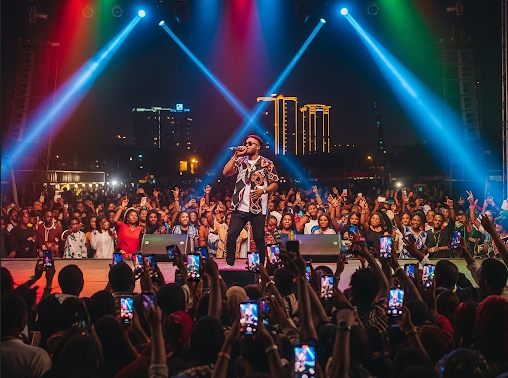
This is the phase most organisers overlook in their growth strategy. But everything that happens on event day feeds directly into your next promotional cycle.
Word-of-mouth is still the most powerful marketing channel in our market. And it is entirely generated on the day. Here is how to engineer it:
- Design at least one photographable moment — a branded backdrop, a unique setup, an unexpected visual — that people will naturally want to share
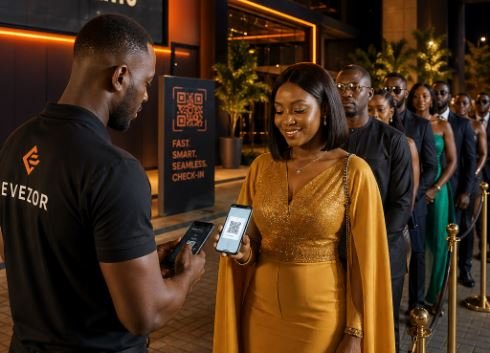
- Ensure entry is seamless. Long queues are the number one source of negative reviews and bad social sentiment
- Have staff greet attendees and actively create a warm atmosphere in the first 20 minutes
- Prompt attendees to share content at peak energy moments (headliner entry, key performances, etc.)
- Capture your own professional content — photos and short video — for post-event repurposing
Shows.NG Feature
Free Ticket Scanner App — Zero Queue, Zero Drama
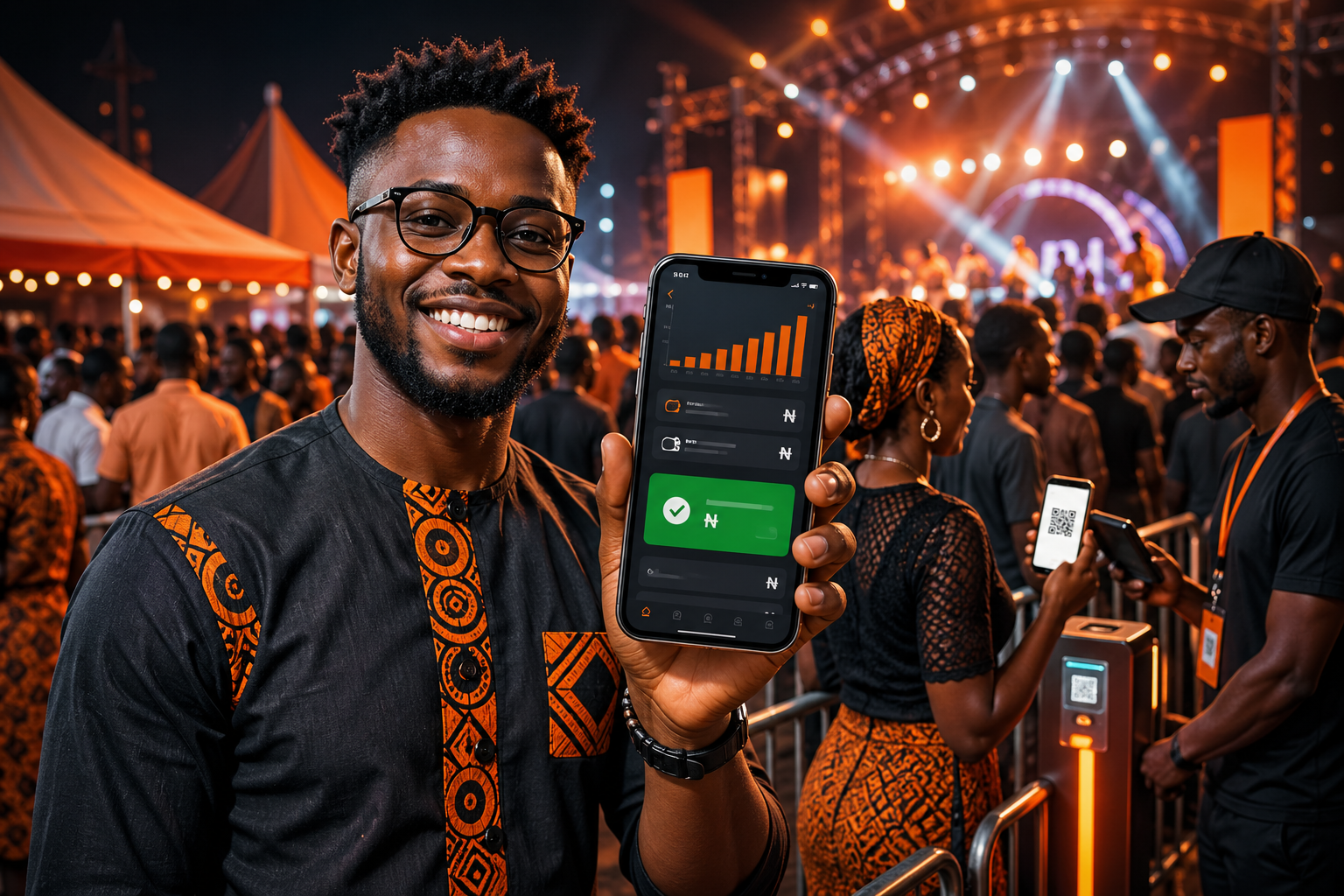
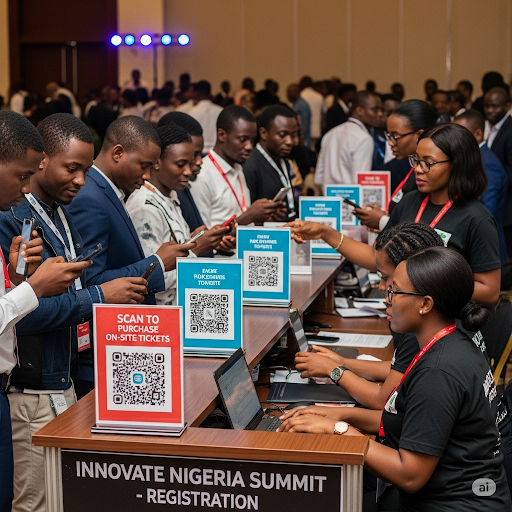
Shows provides a free ticket scanner app your team can use on any smartphone to validate tickets at the gate instantly. No dedicated hardware, no third-party equipment rental. Fast, reliable QR scanning means your entry line moves quickly — which is one of the most direct ways to protect your event reputation. Download the Scanner App →
Phase 5: Post-Event — This Is Where Growth Is Actually Built
The 48 hours after your event are the most underutilised period in most organisers' calendars. Yet this window is when your audience is at its highest emotional engagement with your brand. Here is exactly how to use it:
Send a thank-you message (within 24 hours)
A personalised thank-you via email or SMS is not just courtesy — it is a retention mechanism. Include a highlight, a teaser of the next event, and an early-access link for loyal attendees.
Shows.NG Feature
Your Attendee List is Already Waiting for You
You do not need to chase people down for contact details after the event. Your Shows dashboard already has the full attendee list — names, email addresses, phone numbers, and which ticket tier each person bought. Export it and use it to send that thank-you message, the survey, or the early-bird announcement for your next edition. This data is yours, always. Access your dashboard →
Post your best content immediately
Release your professional photos and highlight video within 48 hours while audience excitement is still high. This content will drive organic shares and serve as your most credible marketing asset for the next edition.
Collect feedback
A simple 3-question survey sent within 72 hours of the event gets response rates of 30–50% from engaged attendees. Ask what they loved, what could improve, and whether they would attend the next edition. This data is gold.
Announce the next event
The single best time to sell tickets to your next event is immediately after a great one. "Edition 4 just got announced — early bird is live" converts remarkably well when sent to people who just had a great experience.
Phase 6: Analytics — The Engine That Compounds Growth
None of the above compounds over time without measurement. Organisers who grow consistently are not necessarily more creative or better connected — they are more data-literate. They know exactly which posts drove ticket clicks, which tier sold out first, and which hour of day saw the most purchases.
Metrics Every Organiser Should Track
- Ticket velocity — how fast tickets sell per day from announcement to event date
- Traffic source — which platform or channel is driving the most ticket page visits
- Conversion rate — what percentage of people who visit your ticket page actually buy
- Repeat attendee rate — how many buyers have been to a previous edition
- Revenue per tier — which price point is your actual growth engine
Shows.NG Feature
Real-Time Analytics — Free for Every Organiser
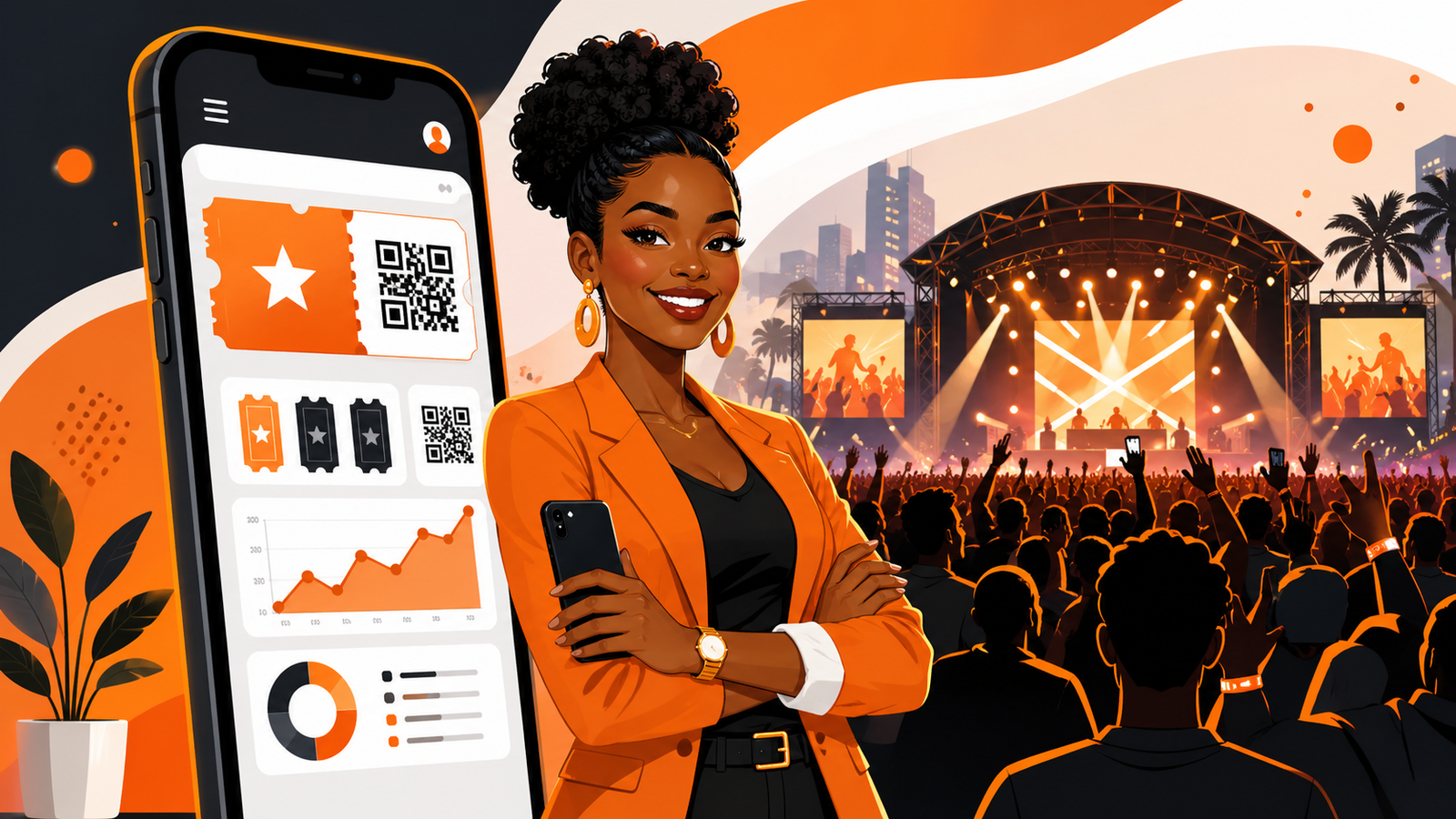
Every event on Shows comes with a built-in analytics dashboard at no extra cost. You get live ticket sales counts, revenue breakdown by ticket tier, a sales timeline showing exactly when purchases spiked, and a full post-event report that stays on your account permanently. No waiting for end-of-day emails. No paying for a premium plan to see your own data. See how the analytics dashboard works →
Your ticketing platform should surface most of this for you. If you are spending money on ads without knowing your conversion rate, you are flying blind. Set a weekly 30-minute review of your event analytics as a non-negotiable habit.
"Data does not kill creativity in event management — it focuses it. When you know what actually moves tickets, you stop wasting effort on what doesn't."
Putting It All Together: The Organiser Growth Loop
When these phases are connected intentionally, they stop being separate tasks and become a self-reinforcing system. Here is how it flows:
Know your audience → target the right channels
Audience clarity feeds precise, efficient marketing spend.
Momentum-based promotion → faster ticket sell-through
Staged campaigns create urgency that drives early and consistent sales.
Frictionless checkout → higher conversion rate
Every removed barrier means more of your marketing budget actually turns into revenue.
Great event experience → organic word-of-mouth
The experience your attendees have is your cheapest and most credible marketing.
Smart post-event follow-up → retained and expanded audience
Every event grows your base for the next one. Nothing is wasted.
Analytics review → sharper decisions for the next edition
You get progressively better at running events because you are measuring what matters.
Conclusion
Building a growth machine as an event organiser does not require a big team or a big budget. It requires intentionality and consistency. Most organisers treat each event as a standalone project; the ones who build audiences treat each event as a chapter in a longer story.
Start with one phase. Get good at the post-event follow-up. Build your audience list. Obsess over your conversion rate. Over time, the compounding effect is genuinely powerful — and it is the difference between an organiser who hustles for every ticket sale and one who has a machine that does a lot of the work automatically.
You already have the platform. Now build the workflow around it.