In this article
- Start With Why the Pop-Up Needs to Exist
- A Pop-Up Does Not Have to Be a Surprise
- The Best Pop-Up Concept Is Easy to Explain
- Choose the Venue for What Needs to Happen There
- Do Not Pay for More Space Than the Idea Needs
- Decide Whether the Pop-Up Should Be Public or Controlled
- Capacity Should Be Decided Before Promotion Becomes Successful
- Free Does Not Mean You Should Ignore Registration
- If You Charge, Make the Ticket Explain What People Are Buying
- Use Limited Offers Carefully
- Promote the Temporary Nature Without Making the Message Empty
- Do Not Wait Until the Night Before to Start Promoting
- Use Paid Advertising When Organic Reach Is Not Enough
- Turn Participants Into Part of the Promotion
- Your Flyer Should Explain the Pop-Up Faster Than Your Caption Does
- Plan the Entrance Even When the Event Is Small
- Temporary Venues Need More Operational Checking Than Familiar Ones
- Get Permission Before Building an Event Around Someone Else's Space
- Power Should Match the Experience You Designed
- Think About Payments Before Customers Arrive
- Design for Movement, Not Only Photographs
- Give People Something Worth Sharing Without Building a Photo Studio Everywhere
- Do Not Create FOMO by Making the Experience Miserable
- Have a Plan for People Who Discover the Event Too Late
- Use the Pop-Up to Learn Something
- Follow Up Before the Temporary Experience Becomes a Distant Memory
- The Best Pop-Up Leaves a Clear Impression, Not Just a Temporary Address
A clothing brand takes over a small studio for one weekend. A chef serves a special menu from a temporary location for one evening. An artist turns an empty space into a short exhibition. A beauty brand creates a two-day experience where customers can test products, meet creators and shop.
None of these concepts needs a permanent venue.
That is part of what makes a pop-up event interesting.
A pop-up is a temporary experience created for a limited period. It might last a few hours, one day, a weekend or several days, but it is designed around the fact that it will not remain in that location indefinitely.
Pop-ups can work for fashion, food, art, music, retail, product launches, community gatherings, brand activations and experimental event concepts. They can be public or invitation-only, free or ticketed, heavily promoted or deliberately intimate.
The temporary nature creates possibilities, but it also creates pressure.
You have less time to learn the venue. Less time to fix a bad layout. Less time for word of mouth to rescue weak promotion. If the experience runs for only one day, you cannot simply promise to improve operations next week.
A successful pop-up therefore needs more than an unusual location and attractive photographs. The concept, venue, audience, promotion and operations all need to make sense together.
Start With Why the Pop-Up Needs to Exist
Do not begin by searching for an empty shop or rooftop.
Begin with the reason for creating the event.
A fashion brand may want customers to see and try a new collection physically. A food business might want to test demand for a new concept before committing to a permanent location. An artist could use a temporary exhibition to introduce new work. A company may want to bring a product directly to consumers through an experiential launch.
The objective changes how the event should work.
If the goal is product sales, the space needs to support browsing, payment and stock management. If the goal is awareness, the experience and content people take away may matter more than immediate transactions. If you are testing a business idea, collecting useful customer reactions may be more important than creating the largest crowd possible.
“We want to do a pop-up because pop-ups look cool” is not yet a strategy.
Know what should be different after the event happens.
A Pop-Up Does Not Have to Be a Surprise
The word pop-up sometimes creates the impression that nobody should know where the event is happening until the last minute.
That is only one possible approach.
Many successful pop-ups are announced well in advance because the organisers need people to plan, register or buy tickets. A fashion showroom running for two days may spend weeks promoting its dates. A chef hosting a limited dinner may require reservations before the venue opens.
The temporary nature already creates scarcity.
You do not need to create unnecessary secrecy unless secrecy itself improves the concept.
If hiding the venue until shortly before the event would create confusion, make transport harder or reduce attendance, there is little value in doing it simply because the word pop-up sounds spontaneous.
Choose the communication style that serves the experience.
The Best Pop-Up Concept Is Easy to Explain
Someone should be able to understand why they should attend without listening to a long explanation.
“A two-day showroom featuring emerging Abuja fashion labels” is clear.
“A Sunday tasting where five chefs reinterpret Nigerian street food” gives people something specific to imagine.
“An intimate acoustic evening for 80 guests inside an art studio” communicates a different kind of experience.
The clearer the concept, the easier almost every other decision becomes.
You can identify the audience more accurately. The venue becomes easier to judge. Influencers and partners can explain the event properly. Your graphics become more focused because you are not trying to represent ten unrelated ideas inside one flyer.
If the concept itself is vague, promotion usually becomes vague too.
Choose the Venue for What Needs to Happen There
An unusual venue can make a pop-up memorable, but unusual should not mean impractical.
Think about what attendees will physically do.
If people are shopping, is there enough room to browse without constantly colliding? If food is being prepared, can the setup safely support the operation? If it is a performance, can attendees see and hear properly? If the concept depends heavily on photography, what will the space look like once people, equipment and furniture are inside it?
Also think about access.
A beautiful location can become frustrating if nobody can find it, parking is impossible or ride-hailing drivers repeatedly drop guests at the wrong entrance.
Before committing, spend time inside the venue rather than judging it only through photographs.
Walk from the entrance to the main experience. Imagine the space at full capacity. Decide where people will queue, where staff will work and what happens when somebody wants to leave while another group is arriving.
Do Not Pay for More Space Than the Idea Needs
One advantage of a pop-up is that you may not need the scale or long-term commitment of a traditional venue.
Use that advantage intelligently.
A small room filled with the right audience can create stronger energy than an enormous venue with large empty sections.
This is especially useful when testing a concept.
If you do not yet know whether 500 people genuinely want the experience, designing the first edition around 100 or 150 people may give you much better information without exposing the organiser to unnecessary venue costs.
Small capacity can also become part of the appeal when it is genuine.
If only 80 people can comfortably fit, communicate the capacity appropriately and allow the event to feel intentionally intimate rather than apologising because it is not larger.
Decide Whether the Pop-Up Should Be Public or Controlled
Not every pop-up benefits from maximum discovery.
A retail pop-up trying to attract new customers may want as much relevant public visibility as possible. An industry preview, private tasting, press event or early product experience might work better with controlled access.
Shows.ng currently supports both public events and private events that can be hidden from public searches and accessed through their event link.
That gives an organiser some flexibility.
You can create a public event when discovery matters, or keep access more controlled when the concept is intentionally invitation-led.
The decision should come from the experience rather than from the idea that exclusivity automatically makes an event desirable.
A private event nobody particularly wants to attend is still just a private event.
Capacity Should Be Decided Before Promotion Becomes Successful
Pop-ups can run into trouble when marketing succeeds faster than operations.
A small café is promoted aggressively and suddenly hundreds of people arrive within the same hour. A temporary showroom has enough products but nowhere for customers to move. An exhibition designed for fifty people becomes uncomfortable when three times that number appear together.
Know what the venue can reasonably handle before creating demand.
This is not only about the total number of people who attend during the day.
Think about how many can be inside comfortably at the same time.
A pop-up running for six hours might accommodate hundreds of visitors across the day even though only a fraction should be inside simultaneously.
If timing matters, consider whether registration periods, sessions or controlled ticket quantities would help distribute attendance rather than allowing everybody to arrive at once.
Free Does Not Mean You Should Ignore Registration
Some pop-ups do not need paid tickets.
A brand launch, product trial, community activation or retail experience may deliberately be free because the main business objective is something other than admission revenue.
Registration can still be useful.
It gives the organiser a clearer idea of expected attendance and gives interested guests one official place to find the event information.
Shows.ng supports both free and paid events, so a pop-up does not need to charge admission simply because it uses an event platform.
The important question is whether registration solves a real problem.
If the pop-up is completely open, designed for passing foot traffic and has no meaningful capacity concern, registration may add unnecessary friction. If capacity is limited or the organiser needs to communicate important information before arrival, it can become much more useful.
If You Charge, Make the Ticket Explain What People Are Buying
A paid pop-up needs a stronger value proposition than “come and see what we are doing.”
Tell people what the ticket gives them.
Does it include a tasting? A workshop? A product? Access to a performance? A reserved session? A credit that can be used towards a purchase?
If several ticket categories exist, make the differences meaningful.
A small temporary event rarely needs five confusing tiers. One standard ticket and perhaps one clearly differentiated premium experience may be more effective than creating Gold, Platinum, Diamond and VIP categories nobody can explain.
The temporary format should feel simple to enter, not administratively complicated.
Use Limited Offers Carefully
Pop-ups naturally create urgency because the experience has an end date.
You can support that with an early offer or partnership promotion when it makes sense, but avoid turning the campaign into constant discounting.
Shows.ng allows organisers to create ticket coupons, including general codes and unique codes with quantity and validity controls.
That could be useful if a partner has a limited allocation, if early supporters receive a specific offer or if a returning customer group has been promised a benefit.
The strongest scarcity is still real scarcity.
If the event ends on Sunday, it genuinely ends on Sunday. If a session only has twenty spaces, there really are twenty spaces.
You do not need to manufacture false countdowns around a format that already has a natural deadline.
Promote the Temporary Nature Without Making the Message Empty
“For one weekend only” can attract attention.
But people still need to understand why that weekend deserves their time.
Lead with the actual experience.
The short duration then becomes a reason to act rather than the entire reason to care.
A food pop-up could show the menu development and introduce the people behind it. A fashion pop-up can reveal parts of the collection and the designers participating. An art event might show the transformation of the temporary space.
Behind-the-scenes content works particularly well for pop-ups because transformation is part of the story.
People can see an ordinary space slowly becoming something that will exist for only a short period.
Do Not Wait Until the Night Before to Start Promoting
Spontaneity for the attendee does not require spontaneity from the organiser.
If the event needs ticket sales, registrations, partners or planned attendance, give the audience enough time to act.
How much time depends on the concept.
A low-cost local activation may work with a shorter campaign than a premium tasting where people need to coordinate schedules and spend considerably more money.
Build anticipation gradually.
Introduce the idea. Reveal useful details. Show the venue or contributors where appropriate. Answer practical questions before people need to ask them repeatedly.
The promotional campaign should become clearer as the date gets closer, not simply louder.
Use Paid Advertising When Organic Reach Is Not Enough
A clever concept does not guarantee that the right people will discover it.
If the pop-up has a clear commercial objective and organic promotion is not reaching enough relevant people, paid advertising can extend the campaign.
Shows.ng allows organisers to advertise published events through available advertising packages, with promotion options that can include platforms such as Facebook, Instagram and Google.
You can review the process through the Shows.ng event advertising guide.
For a physical pop-up, location matters particularly strongly.
An impressive number of views from people hundreds of kilometres away may do little for a one-day experience in Lekki, Maitama or Port Harcourt.
Judge promotion by whether it is reaching people who can realistically attend, not simply by how large the reach number looks.
Turn Participants Into Part of the Promotion
If designers, chefs, artists, speakers, vendors or other collaborators are part of the pop-up, make it easy for them to share their involvement.
Give them correct graphics, the event link and the information their audiences actually need.
Shows.ng also has a DP Generator for creating branded event display pictures, which can be useful for concepts where collaborators or confirmed supporters want to put themselves visually inside the campaign.
A fashion collective might use DPs for participating designers. A community pop-up could allow members to show that they are attending. A creative market might involve vendors in the visual campaign.
Do not force everybody to post identical material.
Give collaborators enough assets to communicate consistently while still allowing them to speak in a way that feels natural to their own audience.
Your Flyer Should Explain the Pop-Up Faster Than Your Caption Does
Temporary events often depend heavily on social sharing, particularly through WhatsApp and Instagram.
That means the main graphic has to survive outside the organiser's original post.
Someone may receive the image without the caption you carefully wrote underneath it.
Make sure the essential information travels with the graphic.
The event name, date, relevant time information, location or location instructions and clear route to registration should not be buried inside tiny text.
If the exact address is being withheld intentionally, make the process for receiving it clear.
Do not rely on mystery so heavily that interested people cannot work out how to attend.
Plan the Entrance Even When the Event Is Small
A pop-up does not need a stadium-sized gate operation, but somebody still needs to manage arrivals.
If tickets or registrations are being checked, decide where that happens without blocking the main experience.
If products are displayed immediately inside the entrance, make sure arriving guests do not create a bottleneck around people who are trying to browse.
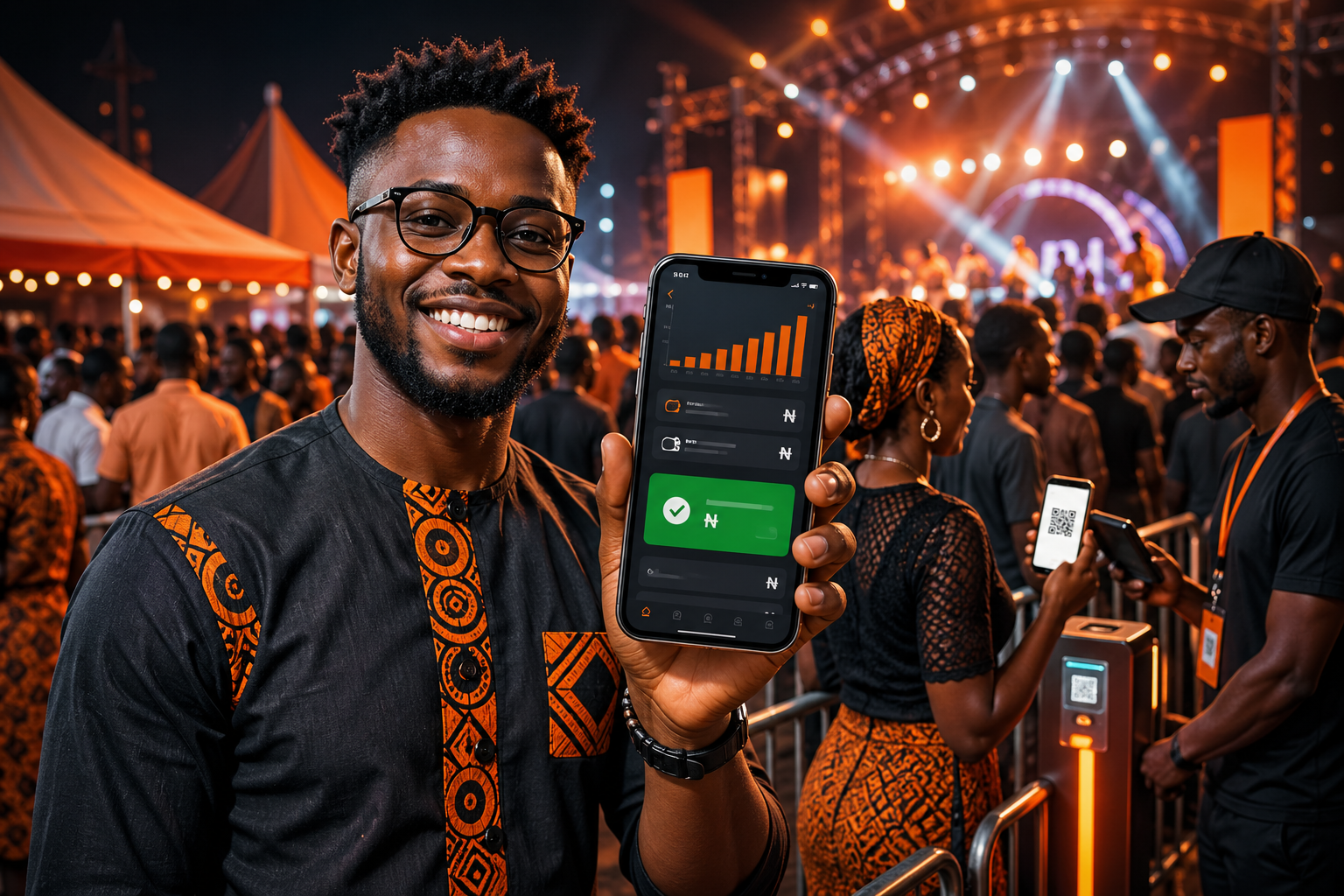
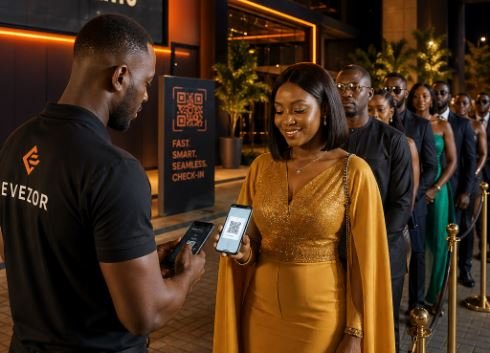
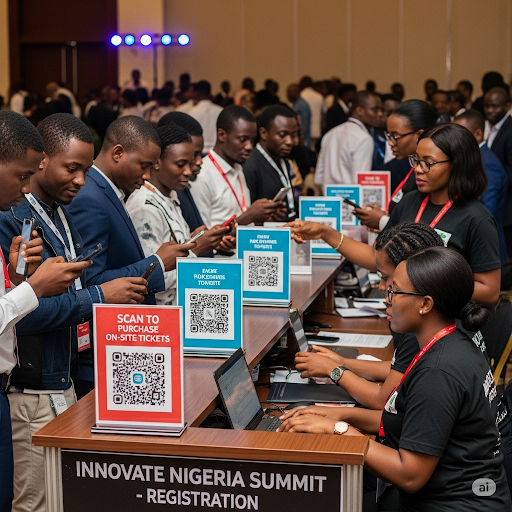
For ticketed pop-ups on Shows.ng, organisers can use the Shows Ticket Scanner to scan attendee QR codes or barcodes and verify tickets at entry.
The ticket scanner guide explains the basic process.
This can be particularly useful when capacity is genuinely limited and the organiser needs to know that the person entering has the correct ticket.
Technology still needs a sensible physical layout around it. A scanner does not help much if the person operating it is standing inside a narrow doorway while everybody else tries to squeeze past.
Temporary Venues Need More Operational Checking Than Familiar Ones
A major difference between a pop-up and a recurring event in the same venue is familiarity.
You may have never run anything in this space before, and you may never use it again.
Check the basics carefully.
Understand the available power, toilets, water, lighting, access routes, waste arrangements and what equipment the venue actually provides.
If your concept depends on internet connectivity, test it rather than assuming the signal will be good because the venue is in a busy part of town.
Think about setup and breakdown too.
When can vendors enter? How long do you have after closing before everything must leave? Is there somewhere to store packaging, stock or equipment during the event?
A temporary venue may look inexpensive until you discover how many things you need to bring yourself.
Get Permission Before Building an Event Around Someone Else's Space
The temporary nature of a pop-up does not remove normal responsibilities around using a venue or public space.
If you do not own the property, get clear permission from whoever controls it.
Understand what activities the venue allows, how many people it can accommodate and whether there are restrictions around sound, food preparation, alcohol, structures, signage or operating hours.
Where approvals from property managers or relevant authorities are required for the particular location or activity, deal with them early enough that the event is not depending on assumptions.
An unexpected shutdown is not the kind of surprise a pop-up needs.
Power Should Match the Experience You Designed
A clothing showroom using natural daylight and a few payment devices has different power requirements from a pop-up concert with sound, lighting and production equipment.
List what actually requires electricity.
Then understand how the venue supplies it and what happens if that supply fails.
Do not simply assume every Nigerian event needs the same generator recommendation. The correct backup depends on the equipment, venue and operational requirements.
If losing power would stop the core experience, backup planning deserves much more attention.
If the event can continue safely with minimal interruption, your plan may be simpler.
Think About Payments Before Customers Arrive
Retail and food pop-ups often involve more transactions than the event ticket itself.
Guests may buy clothing, art, food, merchandise or other products once inside.
Decide how those payments will be managed.
The system needs to be practical for the business and clear for the customer. Also think about queues. One slow payment point can create congestion even when every other part of the event works properly.
For products, stock control matters too.
Know what was brought into the pop-up, what has sold and what remains. Limited-edition language loses credibility quickly when the team itself does not know whether a product is still available.
Design for Movement, Not Only Photographs
Small spaces become uncomfortable quickly when layout is based entirely on how the room will photograph before guests arrive.
Imagine people moving through it.
Where will they stop? Where will conversations happen? Will somebody looking at a product block the route to another part of the room? If food is being served, where does the queue go?
Allow enough room around the activities that naturally slow people down.
A beautiful central installation may be worth reconsidering if it leaves only a narrow path for everybody else.
Pop-ups often succeed because they feel intimate.
Intimate should not mean trapped.
Give People Something Worth Sharing Without Building a Photo Studio Everywhere
Pop-ups are naturally good content environments because they transform a temporary space.
Use that visual opportunity.
Your product displays, lighting, signage, packaging, artwork or stage may already create strong photographs if they are designed well.
A dedicated photo area can make sense, but it does not need to become the entire creative strategy.
Attendees are more likely to share an interesting experience than a generic neon sign they have already seen at ten other events.
Think about what is visually specific to this pop-up.
That specificity is what makes somebody scrolling online ask where the photograph was taken.
Do Not Create FOMO by Making the Experience Miserable
Scarcity can be valuable.
Overcrowding is not scarcity.
A two-hour queue outside a tiny pop-up may create social media photographs suggesting enormous demand, but the people standing in that queue may have a very different opinion of the event.
Do not oversell the capacity simply because having a crowd outside looks exciting.
If demand becomes much larger than expected, manage it.
You might control entry, communicate waiting expectations or decide that the concept deserves another edition rather than forcing everyone into a space that cannot handle them safely or comfortably.
The goal is to leave people wishing the event lasted longer, not wishing they had stayed home.
Have a Plan for People Who Discover the Event Too Late
The temporary nature of a pop-up means some people will hear about it after it has already started or even after it has ended.
That attention still has value.
If the event is running for several days, make the remaining dates and availability easy to find.
If it has ended, decide where interested people should go next.
Perhaps they can join the brand's mailing list, follow the organiser or hear about the next activation when it is confirmed.
Do not immediately promise another pop-up if you have not decided whether one will happen.
Use the interest as information.
People asking for another edition can help show demand, but the next event should still make operational and financial sense.
Use the Pop-Up to Learn Something
A temporary event can be an excellent test.
A restaurant concept can discover which dishes people respond to. A fashion label can see what customers try on and actually buy. A creative brand can learn which parts of an experience attract attention and where people spend time.
Plan how you will capture those lessons.
Do not rely entirely on memory after everybody is exhausted.
Look at registrations or ticket sales where relevant. Compare expected attendance with actual turnout. Review when demand increased and whether particular ticket types performed differently.
Then combine those numbers with what the team observed physically.
What kept running out? What questions did customers repeatedly ask? Where did people spend the most time? Which part of the layout caused problems?
A pop-up that teaches you something useful can have value even if it never becomes a permanent concept.
Follow Up Before the Temporary Experience Becomes a Distant Memory
Once the doors close and the temporary space disappears, the relationship with attendees does not have to disappear with it.
Share photographs and useful highlights while the event is still fresh.
If people registered through Shows.ng and you have something relevant to communicate, the platform's attendee communication tools can also help organisers contact people connected to the event.
That could be a genuine thank-you, information attendees asked for, a feedback request or another relevant update.
Do not use a successful pop-up as permission to send constant promotions afterwards.
Temporary experiences often feel special precisely because they do not overstay their welcome. Your follow-up should respect that too.
The Best Pop-Up Leaves a Clear Impression, Not Just a Temporary Address
A pop-up works because something interesting appears for a limited period and gives people a reason to pay attention now rather than someday.
But temporary does not mean careless.
Start with a concept people can understand. Choose a space that supports what will actually happen. Set capacity according to the venue rather than your ego. Decide whether the event should be public, private, free or paid based on its real objective.
Then promote it to the people most likely to care.
Shows.ng can support several parts of that process depending on the type of pop-up you are running. Current Shows features include free and paid event support, private events, coupons and ticket scanning, while organisers who need additional reach can also explore event advertising.
If your pop-up is ready to become a real event rather than another idea sitting in your notes, you can create your event on Shows.ng, set the capacity and ticket structure, and give people one clear destination for the information they need.
A good pop-up feels temporary because the experience has a deliberate ending, not because the planning was rushed.