In this article
- The First Change Is Recognising Where Discovery Now Happens
- A Free Programme Can Still Benefit From Tickets
- The Registration Link Can Travel Further Than a Paper Ticket
- The Event Page Should Answer the Questions a First-Time Guest Will Have
- Younger Attendees Still Need a Reason to Care
- Let the Media Team Tell a Story Instead of Reposting One Flyer
- Do Not Make People Register and Then Forget About Them
- The Gate Should Match the Simplicity of Registration
- Registration Data Can Help the Church Plan Better
- Follow-Up Should Feel Like Ministry, Not Lead Generation
- Digital Does Not Mean You Stop Welcoming People Personally
- Do Not Use Technology Simply Because Young People Use Phones
- The Real Goal Is Making the Door Easier to Approach
A young person sees a church programme on Instagram and decides they might attend.
The flyer looks interesting. A speaker they recognise is coming, the theme feels relevant and a few friends have already shared it. Then they try to work out how to register.
They are told to collect a paper ticket after service on Sunday.
For somebody who already attends that church every week, that may not be a problem. For the person who discovered the programme online, lives in another part of town or has never entered the church before, it creates another barrier between interest and attendance.
This is where digital ticketing and online registration can become useful for church programmes, particularly those trying to reach younger people beyond their existing congregation.
The technology itself is not what attracts a new generation. A QR code will not make an irrelevant programme suddenly interesting. But when the event already has something meaningful to offer, making registration fit naturally into the way people discover and share events can make it easier for that interest to become attendance.
The First Change Is Recognising Where Discovery Now Happens
Many church programmes are still promoted successfully through Sunday announcements, posters, fellowship meetings and word of mouth. Those channels remain useful because they reach people who are already connected to the church.
Younger audiences, however, may first hear about the same programme somewhere completely different.
A member posts the flyer on WhatsApp. Someone sends a TikTok clip from last year's event. A speaker shares the announcement on Instagram. A friend forwards the programme into a university group chat.
At that moment, the church is no longer communicating only with people who understand its internal processes.
Someone outside the congregation may not know who to call for a ticket. They may not know where the church office is or which member is distributing invitation cards. They simply know that the programme looks interesting and they want to understand how to attend.
The registration process should meet that interest where it happens.
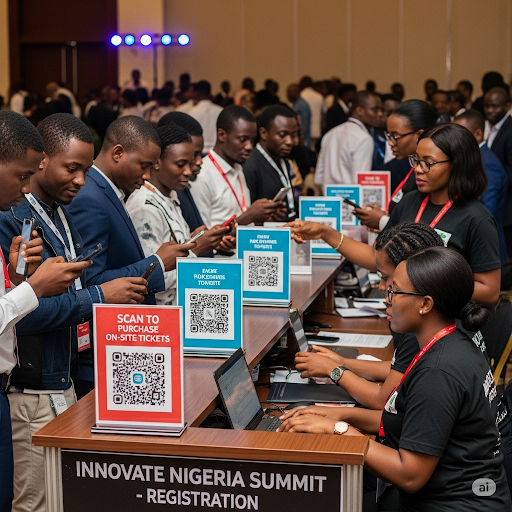
If the event is being discovered online, giving people a clear online registration or ticket link means they can move from seeing the programme to securing a place without first finding somebody inside the church.
A Free Programme Can Still Benefit From Tickets
Church organisers sometimes hear the word ticketing and immediately think about charging people for admission.
That does not have to be the case.
A free ticket or registration can simply act as a reservation.
Imagine a youth conference with a hall that comfortably accommodates 800 people. Entry may be completely free, but the organising team still needs to think about chairs, volunteers, refreshments, parking, security and how many people are likely to arrive.
Without registration, the team may be planning almost entirely from guesswork.
An online registration process can give interested attendees a way to indicate that they plan to come while giving the church a clearer picture of demand before the programme begins.
It does not eliminate no-shows, particularly for free events. Someone who registered without paying can still change their mind. But having an indication of interest is usually more useful than knowing nothing until people begin walking through the gate.
The Registration Link Can Travel Further Than a Paper Ticket
Paper invitations depend heavily on physical distribution.
Someone prints them, takes them to church, shares them after service, gives a bundle to another fellowship and hopes those tickets eventually reach interested people.
A link behaves differently.
One member can share it with a university fellowship. Another can send it to colleagues. A guest speaker can include it when promoting the programme to their own audience. Someone who lives outside the immediate neighbourhood can register without travelling to the church beforehand.
This can be particularly useful when a church wants a youth programme to reach people beyond its regular Sunday attendance.
The event may still be deeply connected to the church, but registration no longer depends on already knowing somebody inside it.
That small change can make an event feel more open to someone attending for the first time.
The Event Page Should Answer the Questions a First-Time Guest Will Have
Existing church members already know things that outsiders do not.
They know where the auditorium is. They understand how people normally dress. They know whether parking is easy, which entrance is commonly used and whether a programme advertised for 4pm usually means doors open at 4pm or the first session begins then.
A first-time attendee has none of that context.
This is why the page connected to the registration link should do more than display the event title.
Give people the correct venue information, date and timing. Explain what the programme is about and who it is intended for. If there are important attendance requirements, communicate them before people arrive.
If the programme includes music, conversations, workshops, worship, performances or particular speakers, describe enough of the experience for somebody unfamiliar with the church to understand why they might want to come.
The goal is not to turn a church programme into an entertainment product. It is simply to communicate clearly with people who cannot fill in the missing details themselves.
Younger Attendees Still Need a Reason to Care
Moving registration online should not be confused with youth engagement itself.
If the only change is replacing a paper ticket with a digital one while everything else remains disconnected from the audience, the result may not change very much.
The programme still needs relevance.
Think about why the event exists and what someone in the intended age group should gain from being there. That might be spiritual growth, honest conversations about work and relationships, worship, creative expression, mentorship, community or simply meeting other young people navigating similar stages of life.
Then communicate those reasons in a language that feels natural.
You do not need to force slang into every caption to prove that a church understands young people. Young audiences can usually tell when language is being performed at them.
Clear communication about a genuinely useful programme will often travel further than trying too hard to sound trendy.
Let the Media Team Tell a Story Instead of Reposting One Flyer
Once the registration link is available, promotion becomes more useful because every piece of content can lead somewhere.
But that does not mean posting the same flyer every morning with a different countdown number.
Introduce the people involved. Let a speaker explain briefly what they want attendees to take away from their session. Show preparation for a performance or rehearsal. Revisit a strong moment from a previous edition if one exists. Answer questions people are already asking about the programme.
As the event approaches, the audience should understand more about it than they did on announcement day.
This is especially useful for someone who did not grow up in the church or does not attend regularly. The content helps them understand the atmosphere before they decide whether the programme feels like a space they can enter comfortably.
If your team wants to show more of the preparation itself, our guide on using behind-the-scenes event content to build trust explains how to do that without turning every problem into social media content.
Do Not Make People Register and Then Forget About Them
Registration creates an opportunity for better communication before the event.
Someone may register three weeks in advance and genuinely intend to attend, then simply forget about the programme as the date gets closer.
A useful reminder can help.
That communication does not need to become daily messaging. Give attendees the important information at sensible moments. Remind them of the date. Confirm the venue. Tell them when doors open. If something significant changes, make sure registered attendees hear about it rather than hoping everyone sees another social media post.
This becomes even more important when people are travelling from outside the immediate area.
Clear communication tells attendees that the team is organised and helps reduce avoidable questions on event day.
The Gate Should Match the Simplicity of Registration
It would be strange to make registration easy online and then create unnecessary confusion when everyone arrives.
If attendees receive digital tickets or registration confirmations, brief the ushers and gate team on how they will be checked.
Someone should know what happens when a guest cannot immediately find their ticket. The team should understand where first-time attendees go after entry and whether different registration categories exist.
The entrance should feel welcoming without becoming uncontrolled.
For a church programme, this balance matters. Nobody wants guests to feel interrogated before worship has even started, but organisers still need to understand who is entering the venue and manage attendance responsibly.
Your separate guide on using online ticketing to improve entry at church concerts and worship events looks more closely at the gate side of the process.
Registration Data Can Help the Church Plan Better
One of the less visible benefits of moving registration online is that the organising team begins to have something more concrete to plan around.
Instead of somebody saying, "Plenty people are interested," the team can look at registrations and see how interest is developing.
If demand is much stronger than expected, staffing, seating and entry plans may need attention. If registrations remain low, the media team still has time to examine whether the programme has been communicated clearly enough.
Afterwards, the church can compare registrations with actual attendance and learn something about the behaviour of its audience.
For recurring youth events, that information becomes more useful over time. The organisers may discover when people tend to register, which types of programmes attract stronger interest and how far in advance promotion needs to begin.
The point is not to reduce ministry to a dashboard.
It is simply better to make practical event decisions with some information than to make every decision from assumption.
Follow-Up Should Feel Like Ministry, Not Lead Generation
This is especially important for church events.
Someone providing their information to register for a youth conference has not automatically asked to receive unrelated messages indefinitely.
If the church plans to communicate after the event, that communication should make sense in the context of the relationship.
You might share an event follow-up, useful resources from the programme or information about another relevant gathering. If someone has expressed interest in getting more involved with the church, there may be a natural next step.
But avoid treating every registration as permission to add someone permanently to every available broadcast list.
Young people are familiar with what it feels like to give a phone number once and suddenly begin receiving endless promotional messages. Respecting communication preferences is another way of showing that the church takes people seriously.
Digital Does Not Mean You Stop Welcoming People Personally
One risk of introducing more technology is assuming the technology can replace hospitality.
It cannot.
A registration system can tell you someone intends to attend. It cannot make them feel comfortable when they arrive alone.
A QR ticket can verify entry. It cannot introduce a first-time guest to someone their age or help them understand what happens next.
Church events still need people.
Ushers, youth leaders, volunteers and programme coordinators shape whether a new attendee feels like an outsider who successfully scanned a ticket or somebody who was genuinely welcomed into the gathering.
The digital process should remove unnecessary friction so the human side has more room to work.
Do Not Use Technology Simply Because Young People Use Phones
There is also a danger in treating technology itself as a youth strategy.
Young people use smartphones, but that does not mean every piece of technology automatically makes an event relevant to them.
The reason online registration works is practical. It reduces the distance between discovering the event and deciding to attend. It makes information easier to share and gives organisers a clearer understanding of registrations.
Use technology where it makes participation easier.
Do not add complicated apps, unnecessary login steps or digital gimmicks simply to make the programme appear modern.
The strongest technology often becomes almost invisible because it allows people to do what they already wanted to do with less effort.
The Real Goal Is Making the Door Easier to Approach
For churches trying to connect with younger audiences, online ticketing should not be presented as the miracle that suddenly fills a youth programme.
The programme still needs a reason to exist. The church still needs to communicate well. Members still need to invite people. The experience still needs to feel welcoming when attendees arrive.
What digital registration can do is remove some of the practical friction around taking the first step.
A person can discover the event on their phone, understand what it is about, register from the same device and receive the information they need without already belonging to the church.
That matters when your goal is to reach beyond the people who would have attended anyway.
If you are preparing a youth conference, worship gathering, concert or another church programme, you can create your event on Shows.ng and give people a clear online route from discovering the programme to registering for it.
Reaching a new generation is not about replacing everything the church used to do with technology. It is about removing unnecessary barriers between someone becoming interested and actually walking through the door.