In this article
- The Problem Started Before Anyone Reached the Gate
- Moving the Booking Process Online Changed the Preparation
- Different Ticket Types Became Easier to Manage
- The Real Difference Was at the Entrance
- It Also Changed the Work Given to Volunteers
- Church Events Still Need Hospitality, Not Just Efficiency
- What Other Churches Can Learn From the Experience
- A Better Entry Experience Starts Before Event Day
A church concert is supposed to begin with anticipation. People arrive ready to worship, sing, reconnect with friends and settle into the experience. The last thing anyone wants is for that first impression to be a long argument at the entrance about missing names, unclear ticket categories or whether somebody actually paid.
That was the kind of problem one Nigerian church was trying to avoid when it moved its concert ticketing online. Like many growing faith-based events, the gathering had reached a point where informal methods were becoming harder to manage. What may have worked when attendance was smaller no longer made sense when more people were expected and the organisers needed a clearer way to know who had booked, what type of access they had and whether the venue was approaching capacity.
The change was not really about making the church concert feel more commercial. It was about making the arrival experience more organised.
The Problem Started Before Anyone Reached the Gate
Manual ticketing creates problems long before event day. Someone pays by transfer and sends a screenshot to one volunteer. Another person confirms payment through WhatsApp. A guest is added to a spreadsheet, but their name is misspelled. Someone buys VIP access but appears on the wrong list. Another attendee assumes that because they know a member of the organising team, they can sort everything out when they arrive.
Individually, none of these situations seems serious. Put several hundred people together at one entrance and they begin to slow everything down.
For a church concert, that delay has an extra effect because the gate is part of the atmosphere of the programme. Guests who spend twenty minutes arguing about whether their name is on a list do not suddenly forget the frustration when they enter the auditorium. Ushers become stressed, security personnel are pulled into ticket disputes and organisers who should be concentrating on the programme end up responding to calls from the entrance.
The church needed a process that separated payment confirmation from event-day entry. If someone had booked successfully, there should already be a clear record before they arrived.
Moving the Booking Process Online Changed the Preparation
Using online ticketing meant attendees could secure their place before the concert rather than relying on manual confirmation between themselves and the organising team.
The church used Shows.ng to manage the ticketing process, which allowed the organisers to create ticket categories, receive bookings online and issue digital tickets that could later be verified at the venue. Shows.ng currently supports ticket creation, attendee management and QR or barcode verification through its ticket scanner tools.
That shift also gave the organisers a clearer picture of attendance while they were still preparing the event. Instead of trying to estimate turnout from WhatsApp messages or verbal promises, actual bookings provided something more useful for planning.
This matters for church events because attendance affects much more than chairs. It influences security, ushering, parking, refreshments, programme materials and how many people the venue can comfortably accommodate. A worship night that is expected to attract 300 people is planned differently from one already showing demand for more than 1,000.
Online booking does not remove the need for good planning, but it gives the planning team better information to work with.
Different Ticket Types Became Easier to Manage
Church concerts and gospel events are not always completely free or completely paid. Some have general admission and premium seating. Others use tickets primarily to control capacity while offering different access levels to sponsors, invited guests or special categories.
That becomes awkward when the distinction exists only on a printed list.
If Regular and VIP guests are standing in the same queue while volunteers search through names, the ticket category stops helping the flow of the event. The information exists, but nobody can use it quickly.
With digital tickets, the access type can be connected to the individual booking. At check-in, the gate team can verify the ticket and direct the attendee appropriately rather than trying to remember what somebody purchased two weeks earlier.
This is particularly useful when a church event has reserved seating, premium sections, invited ministers, sponsors or different entry points. The ticket does not have to carry the whole event operation, but it can provide a clear starting point for deciding where each guest should go.
The Real Difference Was at the Entrance
The biggest benefit became visible on event day.
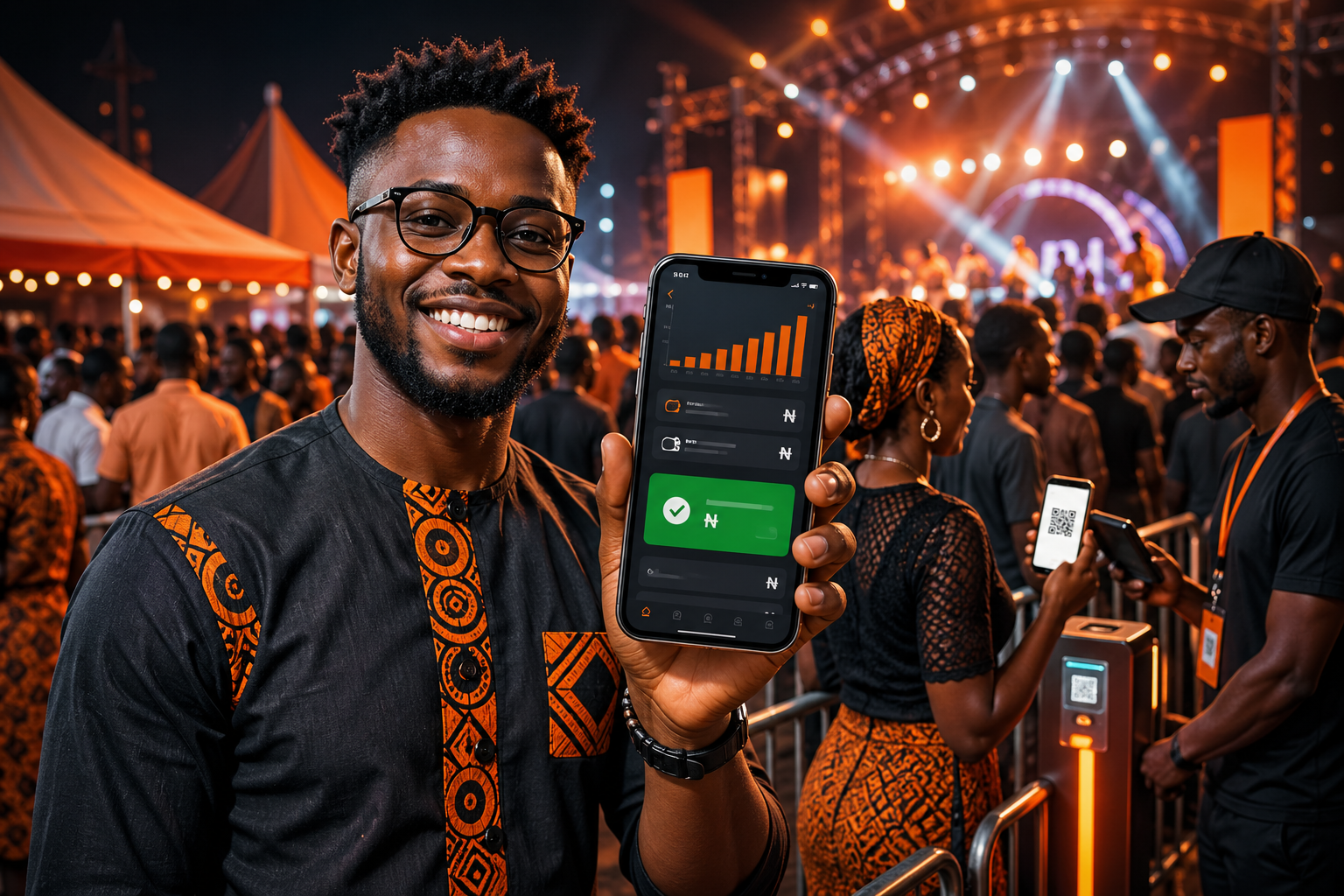
Instead of the gate team relying entirely on paper tickets, handwritten lists or screenshots of payment confirmations, guests could present their digital tickets for verification.
Shows.ng's current scanner system allows event teams to scan QR codes or barcodes and verify attendee details at the entrance. It can also identify tickets that have already been scanned, which helps reduce confusion around duplicate use.
That does not mean every queue disappears simply because tickets are digital. Entry still needs to be organised. Enough people need to be scanning. Security screening should not block ticket verification. VIP guests may need a separate lane. Volunteers must know what to do if a ticket does not validate.
What digital ticketing changes is the kind of problem the team is solving.
Instead of asking, "Did this person really pay?", the team can focus on checking the ticket and moving the person through the entrance. Instead of searching several WhatsApp conversations for evidence of payment, there is a defined booking record.
For churches that have previously dealt with difficult entrances, that can remove a large amount of unnecessary discussion from the gate.
We have a more detailed guide on how to avoid messy event entry if you want to plan the scanning, staffing and queue side of the process properly.
It Also Changed the Work Given to Volunteers
Church events often depend heavily on volunteers. Ushers, youth workers, protocol teams and other members may be giving their time rather than working as professional event staff.
That makes a simple process even more important.
A volunteer should not need to understand the full financial history of every ticket buyer. They should not be asked to decide whether a screenshot looks legitimate or whether someone claiming to know a pastor should be allowed through without confirmation.
The clearer the system, the easier it is to train people for one specific responsibility.
One person scans. Another manages the queue. Security handles screening. A designated supervisor deals with exceptional cases. If somebody genuinely has a booking problem, the issue can be moved away from the main entry line instead of stopping everyone behind them.
That kind of separation can make a major difference when hundreds of guests arrive within the same thirty-minute period.
Church Events Still Need Hospitality, Not Just Efficiency
There is a risk in talking about ticketing and access control as though a church concert should feel like a stadium checkpoint.
That is not the goal.
The technology should make hospitality easier, not replace it.
Guests should still be welcomed. Ushers should still be able to answer questions. Older attendees or people who are less comfortable with digital tickets may need extra help. Somebody whose phone has gone off should not automatically be treated as though they are trying to enter dishonestly.
A good system gives staff enough order to handle those situations calmly.
If most guests can be verified quickly, the team has more time to help the few people who genuinely need assistance. The event feels more organised without becoming unfriendly.
This balance is especially important for faith-based gatherings, where the way people are received can shape how welcome they feel before the programme has even started.
What Other Churches Can Learn From the Experience
The most useful lesson from this church concert is not that every church event suddenly needs to charge for tickets.
Many church programmes will always remain free.
The lesson is that registration and access control become more important as attendance grows.
A free worship night can still use registrations to understand expected turnout. A large Christmas concert may need different seating categories. A youth convention may want a reliable record of attendees. A gospel concert selling tickets may need to separate payment, booking and check-in instead of asking volunteers to manage all three manually.
Churches can use the same kind of planning for Easter productions, conferences, conventions, choir concerts, youth programmes, relationship seminars and other gatherings where capacity and entry need to be controlled.
Shows.ng supports churches alongside other event organisers, with public event pages, ticketing and access-control tools designed to help organisers manage attendance and entry.
If your church is preparing a larger programme, you can set up ticketing or registrations on Shows.ng and give attendees one clear event page rather than managing bookings across several chats and spreadsheets.
A Better Entry Experience Starts Before Event Day
When people talk about a successful church concert, they usually remember the music, worship, performances and atmosphere. Nobody goes home excited because the ticket scanner worked properly.
That is exactly how it should be.
The best event systems are often the ones guests barely notice because everything simply moves the way they expect it to.
Online ticketing helped this church move the difficult part of attendance management away from the gate. Bookings were handled before the event, digital tickets gave guests something clear to present and the entry team had a more structured way to verify who should come in.
The result was not just a more modern ticketing process. It was a better foundation for an organised concert experience.
If your church, ministry or gospel organisation is planning a concert or large gathering, think about the entrance while you are still planning the programme. Decide how people will register, how capacity will be controlled, how tickets will be verified and who will handle exceptions when they occur.
A worship experience may begin on the stage, but the guest experience begins at the gate.