In this article
- Start With the Access Problem Before Choosing the Technology
- Wristbands Can Make Access Easier to Recognise at a Glance
- Re-Entry Is Where Wristbands Can Become Particularly Useful
- E-Badges Make More Sense When Identity Matters as Much as Entry
- Different Areas Can Have Different Access Rules
- They Can Reduce Repeated Phone Checking Without Replacing the Original Ticketing Process
- Do Not Assume a Wristband Automatically Eliminates Ticket Fraud
- Cashless Wristbands Can Be Useful, but They Create a Much Bigger Project
- Data Can Be Useful When the System Is Actually Designed to Collect It
- Tell Attendees What You Are Tracking
- The Technology Still Needs a Human Backup Plan
- Do Not Forget the Logistics of Issuing Thousands of Wristbands
- Branding Is a Bonus, Not the Main Reason to Use Them
- They Are Not Automatically the Greener Option
- For Some Events, a QR Ticket Is Already Enough
- The Best System Is the Simplest One That Solves the Event
A wristband can be one of the simplest things at an event.
You enter, someone places it around your wrist and you barely think about it again until the event is over.
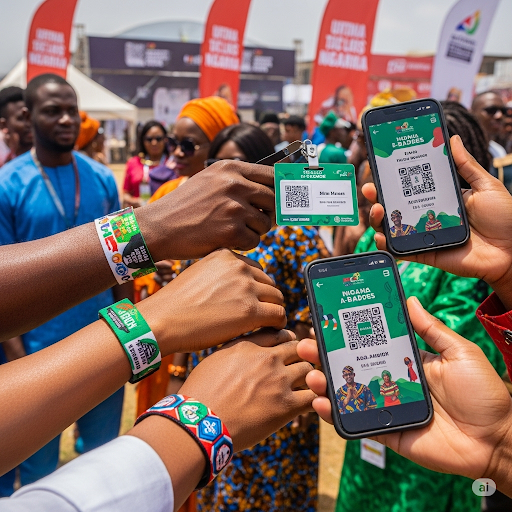
But at the right kind of event, that small item can do much more than show that you passed through the gate. It can help staff recognise ticket categories, control access to different areas, manage re-entry and, depending on the technology being used, even support attendee tracking or cashless purchases.
E-badges can serve a similar purpose at conferences, exhibitions, corporate events and other programmes where identifying attendees and managing different access levels matters.
The important question, though, is not whether digital wristbands and e-badges look modern.
It is whether your event actually has a problem they can solve.
Start With the Access Problem Before Choosing the Technology
An organiser can easily become excited about RFID wristbands, NFC badges and other event technology before deciding what they actually need them to do.
That is backwards.
Think about the event first.
Are attendees entering once and remaining inside until the event ends? Will people need to leave and return? Are there VIP lounges, backstage areas or separate conference rooms that require different access levels? Do exhibitors, speakers, staff and paying attendees all need to be identified differently?
A small workshop with one room and eighty guests may work perfectly well with ordinary digital tickets and name badges. Adding more sophisticated technology could increase cost and operational complexity without making the experience noticeably better.
A three-day festival with several zones, thousands of attendees and frequent re-entry has a very different problem.
That is where wristbands can become much more useful.
Choose the system according to the movement you need to manage rather than choosing the technology first and inventing reasons to use it afterwards.
Wristbands Can Make Access Easier to Recognise at a Glance
One practical advantage of a wristband is that staff can often identify access without asking a guest to pull out their phone repeatedly.
Imagine a festival where Regular attendees can access the general grounds, VIP guests have a separate lounge and artists need backstage access.
If every checkpoint requires people to search through their phones for the original ticket, movement can become frustrating.
A properly managed wristband system can give staff a quicker indication that someone has already been admitted and what type of access they have.
That does not mean colour alone should become the entire security system. A determined person may be able to copy a simple coloured band. The strength of the system depends on the type of wristband, how it is issued and whether access is being electronically verified where that level of security is required.
For some events, the wristband is simply a convenient visual identifier after the original ticket has been checked. For others, the wristband itself contains a code or chip used at access points.
Those are different systems and should not be treated as though they provide the same level of control.
Re-Entry Is Where Wristbands Can Become Particularly Useful
Some events expect guests to enter once and remain inside. Others cannot realistically operate that way.
At a multi-day conference, festival, university event or large exhibition, attendees may leave the main space and return several times.
If every re-entry requires somebody to search through the original booking from the beginning, the process becomes repetitive for both the guest and the gate team.
A wristband can indicate that the person has already completed the initial admission process.
If electronic verification is being used, the organiser can build re-entry rules around the system rather than relying entirely on whether a security officer remembers seeing someone earlier.
But decide those rules before the event.
Can all ticket holders leave and return? Is re-entry allowed only during certain hours? What happens if somebody removes or loses their wristband?
Technology does not remove the need for a policy. It simply gives your staff a clearer way to enforce the policy you already created.
E-Badges Make More Sense When Identity Matters as Much as Entry
Not every event needs something worn around the wrist.
At a conference, trade show, corporate summit or professional networking event, a badge may be more useful because attendees need to identify one another as well as prove they belong there.
A badge can display a person's name, organisation, role or attendee category while also carrying a QR code or another electronic identifier where the event requires it.
This can help distinguish speakers, exhibitors, media, sponsors, organisers and regular delegates without forcing staff to memorise everyone.
It also supports the social side of professional events.
If people are expected to network, being able to see someone's name and organisation can make starting a conversation much easier than asking everyone to introduce themselves from zero.
The useful distinction is that a badge is often doing two jobs at once: identification for humans and, where technology is included, verification for the event system.
Different Areas Can Have Different Access Rules
A ticket may get someone through the main entrance without giving them access to every part of the venue.
This is common at concerts, conferences, festivals and large corporate events.
A performer may need backstage access. A sponsor representative may have access to a hospitality area. A conference delegate may be registered for one workshop but not another. Staff may need to move through operational areas that guests should not enter.
Digital wristbands or badges can help make those distinctions easier to manage when the underlying system supports different access permissions.
Instead of relying on somebody at every door to recognise faces or study a complicated paper pass, the attendee's credential can indicate whether that particular access should be allowed.
This can also help with overcrowding.
If a VIP lounge was designed for 150 people, giving every friend of somebody important unofficial access can quickly destroy the purpose of having a controlled section.
The technology gives the team a stronger process, but staff still need the confidence to follow it. A sophisticated access system achieves very little if every restriction disappears the moment someone says, "The organiser knows me."
They Can Reduce Repeated Phone Checking Without Replacing the Original Ticketing Process
There is no need to think of wristbands and digital tickets as competing systems.
For many events, they work at different stages.
The attendee buys or reserves a ticket before the event. That ticket is verified at the entrance. Once admitted, the guest receives the wristband or badge associated with the access they purchased.
The wristband then becomes the easier credential to use while moving around the venue.
This can be more practical than expecting someone at a festival to keep opening an email or ticket file every time they move between sections.
It also means your original ticket remains important because that is often where the organiser establishes that the person should receive the wristband in the first place.
If your entrance process itself needs work, our guide on how to avoid messy event entry looks more closely at ticket verification and organising the gate before attendees arrive.
Do Not Assume a Wristband Automatically Eliminates Ticket Fraud
The old idea of simply printing thousands of identical paper tickets and trusting the gate team to recognise copies creates obvious weaknesses.
Digital credentials can improve verification because access can be connected to a unique record rather than appearance alone.
But no system should be described as impossible to copy or misuse.
A simple wristband can potentially be transferred. A badge can be handed to somebody else. A QR code can be photographed if it is left exposed. More advanced RFID or NFC credentials create different security possibilities, but how secure they are still depends on how the overall system has been designed.
The better goal is reducing the opportunities for unauthorised access.
Verify the original attendee properly. Use unique credentials where necessary. Decide what happens when a wristband is damaged or lost. Train staff not to issue replacements casually without checking the person requesting one.
Security usually fails through process gaps long before it fails because a wristband was not technologically impressive enough.
Our article on preventing fake tickets and unauthorised entry looks at the wider problem from the ticketing side.
Cashless Wristbands Can Be Useful, but They Create a Much Bigger Project
Some wristband systems allow attendees to load funds onto an account and pay for food, drinks or merchandise by tapping the wristband at participating vendors.
For a large festival, resort event or multi-day experience, this can be convenient. Guests do not have to repeatedly search for cash or complete a fresh payment process for every small transaction.
But cashless event payments should not be added casually because the idea sounds futuristic.
The organiser now has to think about how attendees add money, what happens when a transaction fails, whether unused balances can be refunded, how vendors receive their settlement and how the system behaves when network or power conditions change.
Customer support also becomes part of the project.
If somebody has ₦30,000 associated with a wristband they can no longer use, the problem is more serious than somebody losing an ordinary coloured access band.
For a smaller event with a handful of vendors already accepting normal payment methods effectively, the extra infrastructure may not be justified.
Cashless wristbands can be powerful, but they should solve a real transaction problem rather than exist simply so the event can advertise itself as cashless.
Data Can Be Useful When the System Is Actually Designed to Collect It
Another common promise around digital badges and wristbands is that organisers will suddenly know everything attendees did during the event.
That depends entirely on the technology and where it is being used.
A basic printed wristband does not automatically tell you how many people entered a particular session. A badge with a QR code only creates session-level data if someone actually scans it at those sessions. RFID or NFC systems may support more sophisticated tracking, but that requires the appropriate readers, software and event setup.
Be specific about the information you actually need.
A conference organiser might want to understand attendance at different sessions. A festival may care more about gate entry and re-entry. An exhibition may want to understand which experiences attracted the most participation.
Then decide whether collecting that data is valuable enough to justify the extra technology and operational work.
Do not collect information simply because the system makes collection possible.
Tell Attendees What You Are Tracking
If a badge or wristband is being used to record more than simple entry, attendees should not have to discover that accidentally.
Be clear about what the technology does.
If it records entry into particular sessions, explain that. If it is connected to cashless purchases, attendees should understand how those transactions work. If personal information is connected to the credential, only the people and systems that genuinely need that information should have access to it.
This is particularly important at professional and corporate events, where badges can easily become connected to attendee profiles, networking information or lead-capture tools.
Convenience should not come from making the attendee invisible inside the data process.
Trust improves when people understand how the system works and why particular information is being collected.
The Technology Still Needs a Human Backup Plan
Anything used heavily on event day should have an answer for failure.
What happens if a reader stops working? What if a badge is damaged? What if someone removes a wristband accidentally? What if power becomes unstable at one access point?
Your team should know how genuine attendees can be verified without simply opening the gate to everybody because one device developed a problem.
This may mean keeping access to the underlying attendee records, having replacement procedures and assigning somebody with enough authority to resolve unusual cases.
The backup should also protect against abuse.
If the unofficial solution for a lost wristband is simply giving anybody who complains loudly another one, you have created an obvious gap in the access system.
Prepare the exception process with the same care as the normal one.
Do Not Forget the Logistics of Issuing Thousands of Wristbands
The wristbands do not magically appear on people's wrists.
If 5,000 attendees need to receive them at the entrance, somebody still has to issue them.
Think about how the wristband connects to the verified ticket and how long that process takes. If the band needs to be activated or assigned electronically, test that process under realistic event conditions.
Different access categories should also be difficult for staff to confuse.
If your team has several nearly identical wristbands representing very different access levels, a simple distribution mistake can become a security problem later.
For a multi-day event, consider whether one wristband remains valid throughout the programme or whether attendees need something different on each day.
These may sound like minor details while the system is being purchased. At the gate, they determine whether the technology saves time or adds another stage to the queue.
Our guide on managing queues and crowd flow at events explains why every extra step at entry needs to be considered against the number of people arriving.
Branding Is a Bonus, Not the Main Reason to Use Them
Wristbands and badges can look good.
They can use the event colours, carry sponsor branding and become part of the visual identity of the experience. Some attendees even keep festival wristbands as souvenirs after the event.
That can be valuable.
But branding should remain secondary to functionality.
A beautifully designed badge that takes too long to issue is still slowing your entrance. A wristband covered in sponsor logos is not useful if security cannot tell which access category it represents.
Design the credential around how it needs to work first, then make it fit the event aesthetically.
The most polished event technology is usually the technology guests do not have to struggle with.
They Are Not Automatically the Greener Option
It is tempting to describe digital wristbands and badges as environmentally friendly simply because they can reduce paper tickets.
The reality depends on what they are made from, whether they contain electronic components, how many are produced and what happens to them afterwards.
A reusable credential used repeatedly may reduce some waste. A disposable plastic or electronic wristband handed to thousands of people for one evening creates a different environmental question.
If sustainability matters to your event, speak to the supplier about materials, reuse and disposal rather than assuming that anything described as digital must automatically be greener.
Sometimes the more sustainable decision may actually be using a digital ticket on the attendee's existing phone and not producing an additional physical credential at all.
For Some Events, a QR Ticket Is Already Enough
This is the part event technology conversations sometimes skip.
You may not need wristbands or e-badges.
If guests enter once, there are no complicated access zones and attendee identity does not need to remain visible throughout the event, a properly managed digital ticket may already solve the problem.
A QR-coded ticket can help verify admission without introducing another physical item that needs to be ordered, distributed and replaced when lost.
Shows.ng has a separate guide on using QR codes at events if your main requirement is simply making ticket verification easier.
The extra layer becomes more attractive when the event continues beyond the first scan and attendees need a convenient credential for movement inside the venue.
The Best System Is the Simplest One That Solves the Event
Digital wristbands and e-badges can be extremely useful, particularly for larger or more complex events.
They can make access categories easier to recognise, support re-entry, identify attendees and, with the right technology behind them, enable more advanced access control, tracking or cashless transactions.
But none of those benefits comes simply from putting the word digital in front of wristband.
The organiser still needs a sensible ticketing process, clear access rules, trained staff, reliable equipment and a plan for what happens when something fails.
Start with the event journey.
If ordinary digital tickets already give you everything you need, use them well. If guests will move between several zones, return over multiple days or need persistent identification, then wristbands or badges may genuinely improve the operation.
When you are preparing the wider event, you can create your event on Shows.ng and organise the booking process before deciding what additional access system makes sense once attendees reach the venue.
Good event technology should remove a problem guests would otherwise notice. If it creates more work than the problem it solves, it is probably the wrong technology for that event.