In this article
- Find the Bottlenecks Before the Crowd Finds Them for You
- The Entrance Should Have a Flow, Not Just a Gate
- Signage Should Answer Questions Before Guests Have to Ask Them
- Technology Can Speed Up Entry Only If the Operation Around It Is Ready
- Train Staff to Direct People Instead of Creating More Confusion
- Do Not Let the Programme Create a Crowd Problem Somewhere Else
- Comfort Changes How People Behave in a Queue
- Watch the Crowd While the Event Is Happening
- Your Exits Need Planning Too
- A Smooth Crowd Usually Comes From Many Small Decisions
A long queue does not always mean too many people showed up. Sometimes it simply means the event was not designed to move people properly.
One entrance is handling every ticket category. Security is checking bags in the same narrow space where tickets are being scanned. Guests reach the front before realising they joined the wrong line. Someone has a ticket problem and the entire queue stops while three people try to solve it. Meanwhile, the crowd behind them keeps growing.
By the time guests finally enter, the event has already given them an experience, just not the one the organiser intended.
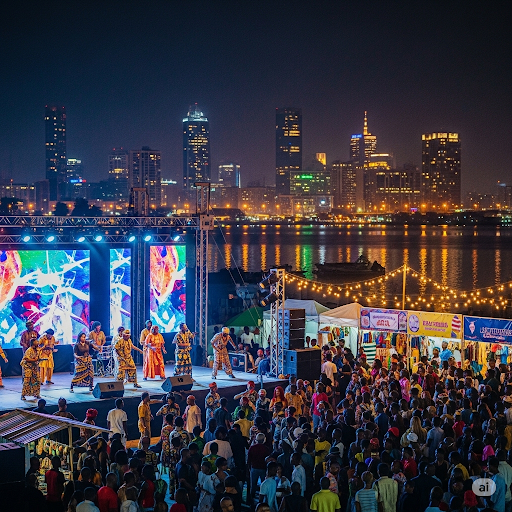
Good crowd flow is about understanding how people will move before they arrive. It includes the gate, but it also includes registration areas, walkways, food stations, toilets, seating sections, stages, exits and anywhere large numbers of people are likely to gather at the same time. Whether you are organising a concert, conference, wedding, church programme, festival or large private event, movement should be part of the plan from the beginning.
Find the Bottlenecks Before the Crowd Finds Them for You
Walk through the venue before event day and imagine it at full capacity rather than as an empty space. Where will guests naturally enter? Where will they stop to ask questions? What happens immediately after ticket verification? If everybody leaving registration turns towards the same narrow doorway, that doorway may become a problem even if the main entrance itself is large.
The same thinking should continue throughout the venue. A food vendor placed beside a major walkway can create a queue that blocks people trying to reach another section. A photo area positioned directly beside the entrance may encourage guests to stop before clearing the gate. Toilets can create unexpected congestion when the route to them crosses another high-traffic area.
Look especially closely at places where movement changes direction or where people need to make decisions. Entrances, stairs, barriers, narrow corridors and section boundaries deserve attention because people tend to slow down when they are trying to work out where to go.
Your layout should make the obvious route the correct route. The less explanation people need, the easier the crowd becomes to manage.
The Entrance Should Have a Flow, Not Just a Gate
Opening the doors is not the same as designing an entrance process.
Think about what happens from the moment somebody joins the queue until they are properly inside the event. They may need ticket verification, security screening, a wristband and directions towards a particular section. If all of those responsibilities happen at one small point, the slowest one controls the speed of the entire line.
Where the venue allows it, separate the stages enough that one delay does not stop everything else. Ticket checking can happen before guests reach the final security point. Once someone has been admitted, ushers can move them away from the entrance quickly rather than allowing groups to stand immediately inside the gate deciding where to go next.
Different ticket categories may also benefit from different lanes when attendance is large enough to justify them. A VIP guest should not necessarily stand in a general queue if the premium ticket includes priority entry, but do not create separate entrances simply because the words Regular and VIP exist. Each lane needs enough demand and staff to make the separation worthwhile.
Most importantly, have somewhere for unusual problems to go. A guest whose digital ticket is not validating should not hold up fifty people with valid tickets while the scanner operator investigates their purchase history. Move exceptional cases to a separate support point where somebody with the right information can help.
Our guide on how to avoid messy entries on event day goes deeper into the ticket-verification side of that process.
Signage Should Answer Questions Before Guests Have to Ask Them
Every question somebody asks an usher is information the venue could potentially have communicated more clearly.
If VIP guests repeatedly reach the General Admission queue, the problem may not be the guests. The VIP entrance may simply be difficult to identify. If people keep walking towards the wrong exit, another small directional sign near registration could save hundreds of individual conversations during the event.
Place signs where decisions happen, not only where they look attractive.
A giant entrance banner telling people the event name is useful for branding, but it does not replace a clear indication of where ticket holders should queue. Once inside, people should be able to identify major sections, toilets and exits without having to find a staff member every time.
The wording should be simple enough to understand immediately. This is not the place for clever copy that makes people stop and interpret what the sign means. Creativity can support the event brand, but direction needs to remain direction.
Visibility matters too. A beautifully designed sign placed below a crowd's shoulder level may disappear completely once people begin standing in front of it.
Technology Can Speed Up Entry Only If the Operation Around It Is Ready
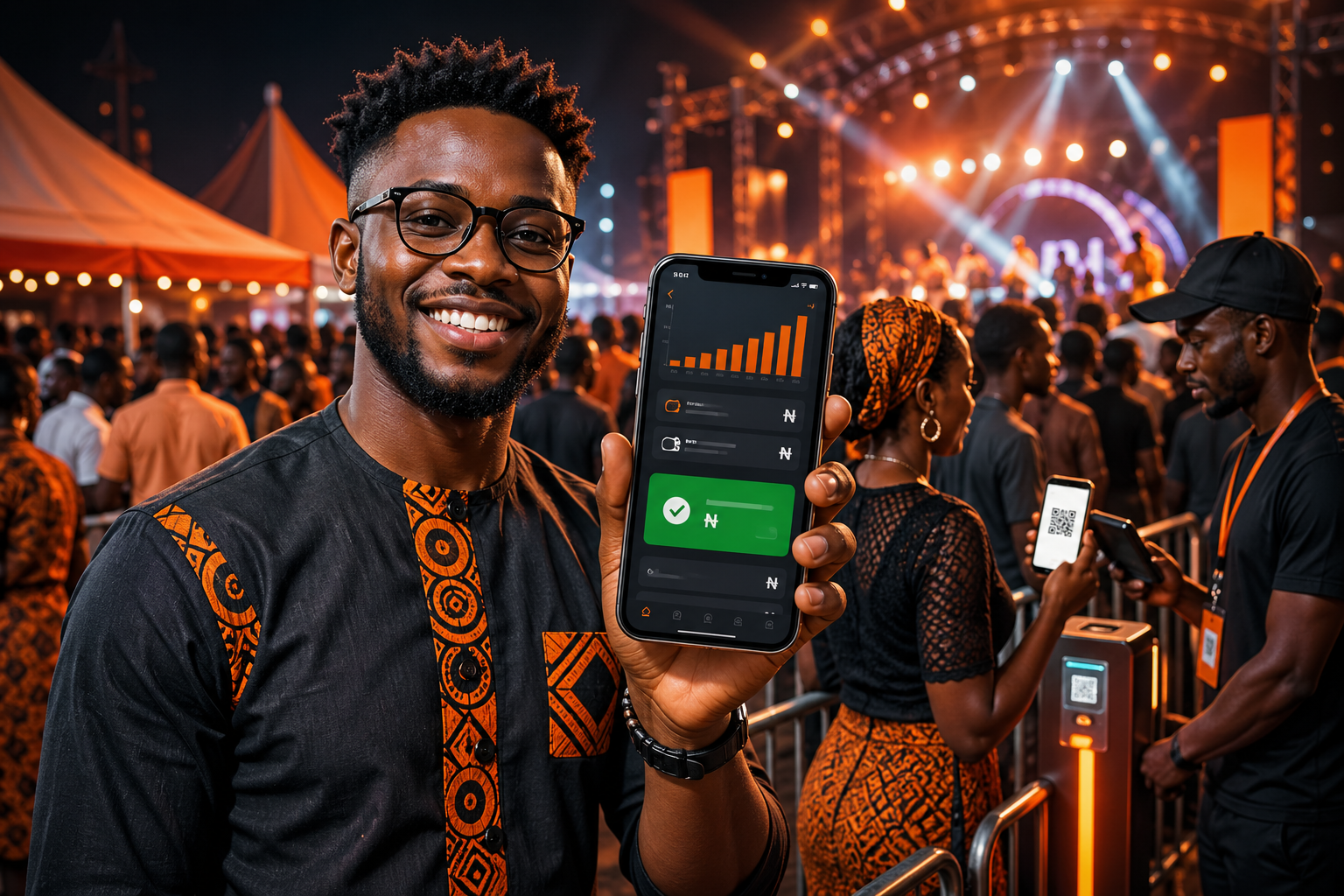
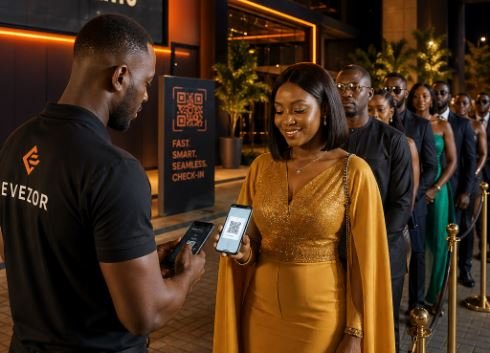
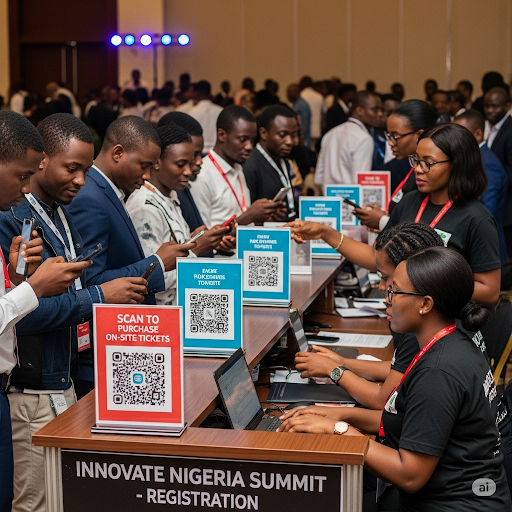
Digital ticket scanning can remove a lot of manual work from the gate. Instead of checking screenshots of transfers or searching through printed attendee lists, staff can verify the ticket presented by the guest.
Shows.ng currently provides ticket-scanning tools for event organisers, and its ticketing system supports digital verification at entry. (features)
But a scanner does not fix a badly designed gate by itself.
If one person is responsible for scanning 2,000 guests, the queue will still be slow. If the scanning device is not charged or staff are learning how the system works while guests are already waiting, technology has simply introduced a different delay.
Prepare the devices before the gate opens and let the people using them practise the process. They should understand what happens when a ticket validates, how different ticket categories appear and where to send somebody when there is a genuine problem.
Think about connectivity as well. If the event location has unreliable network coverage, understand beforehand how the ticketing system behaves in that environment rather than discovering the limitation in front of a growing crowd.
The goal is to make verification almost invisible to the normal guest. They present the ticket, it is checked, and they move forward.
Train Staff to Direct People Instead of Creating More Confusion
An event can have plenty of ushers and still have poor crowd flow if every usher gives a different instruction.
Before doors open, staff should understand the venue layout and the areas they are responsible for. Someone positioned at the entrance needs to know where each ticket category goes. Ushers inside the venue should understand the seating or standing sections. Security needs to know which routes must remain clear and where restricted access begins.
This is particularly important when the programme changes. If a certain entrance is temporarily closed or guests need to be redirected, the relevant staff should hear the same instruction quickly. Five people improvising five alternative routes can create more congestion than the original problem.
Staff should also know how to communicate firmly without shouting at guests unnecessarily. Crowd management works much better when instructions are clear and confident. Aggressive communication can make an already frustrated queue more difficult to control.
If your team needs more preparation, our guide on how to train event staff before event day covers venue walkthroughs, role clarity and escalation in more detail.
Do Not Let the Programme Create a Crowd Problem Somewhere Else
Crowd flow changes as the event changes.
During a conference, everyone may move towards catering at exactly the same moment a session ends. At a concert, a popular artist appearing can pull a large number of people towards the stage very quickly. At a church programme, several hundred people may try to leave immediately after the final prayer. At a wedding, food service can suddenly concentrate guests around one part of the venue.
Your programme therefore affects movement.
If you know everybody will be released for lunch at the same time, the food service area needs enough capacity to handle that movement. If merchandise or drinks are positioned beside a major exit route, a rush during the programme can create congestion in an area that should remain clear.
For large events, coordinate the programme team with operations and security. A major change to the run sheet can alter where people are likely to gather and when additional staff may be needed.
This is another reason a useful event run sheet should be understood by more than the MC. Timing affects the people managing the venue too.
Comfort Changes How People Behave in a Queue
Waiting feels very different in an air-conditioned lobby and under the afternoon sun.
If guests are likely to queue outdoors, consider the conditions realistically. Long exposure to heat or rain can turn an ordinary delay into a much more serious comfort and safety problem. Where practical, use shade or another suitable waiting arrangement and avoid creating a queue longer than the available waiting space can reasonably support.
The bigger solution, though, is still reducing the waiting itself.
Entertainment can make a short delay feel easier, but background music should not become the strategy for a forty-five-minute queue that could have been prevented by opening another scanning point.
People are usually more patient when they can see progress and understand what is happening. A line that moves consistently can feel more manageable than one that remains completely still while nobody explains the delay.
If a genuine problem is slowing entry, communicate. Staff saying that another entrance is being opened or that a technical issue is being resolved can reduce uncertainty. Silence encourages people to start forming their own explanations, and those explanations are rarely generous to the organiser.
Watch the Crowd While the Event Is Happening
No venue plan survives event day exactly as imagined.
A queue may form in a place you did not expect. One entrance may attract far more guests than another. A food vendor may suddenly become extremely popular. People may begin using a walkway as an unofficial standing area.
Someone needs to notice those changes while there is still time to respond.
For smaller events, a coordinator walking the venue may be enough. Larger events may need supervisors watching different sections and communicating changes through radios or another agreed system.
If one queue is growing much faster, determine why before simply telling people to wait. Another available entrance might be underused. One scanner may be slower because it is handling more ticket problems. Signage may be sending everybody towards the same place.
When the cause is understood, the solution becomes more useful.
This is also where crowd management and security meet. If movement begins creating pressure around a stage, exit or other sensitive area, the response should involve the people responsible for safety rather than relying only on ushers asking guests to move.
Our event security planning guide covers emergency routes, access control and crowd safety in more detail.
Your Exits Need Planning Too
Organisers spend a lot of time thinking about getting people into an event and surprisingly little time thinking about everyone leaving at once.
At the end of a concert or conference, hundreds or thousands of people may begin moving towards exits, parking areas and ride pick-up points within a short period. If those routes cross incoming vendor vehicles, narrow gates or other crowds, the final part of the event can become unnecessarily difficult.
Keep emergency exits clear throughout the event, but also think about normal guest departure. Make sure staff understand which exits attendees should use and that lighting remains adequate outside the main event space.
Transport can create congestion beyond the venue itself. Ride-hailing vehicles stopping directly in front of the only exit can block both people and cars. Where possible, identify suitable pick-up areas and communicate them to attendees.
The event experience does not finish when the MC says goodnight. Guests still have to leave safely and reasonably comfortably.
A Smooth Crowd Usually Comes From Many Small Decisions
There is rarely one dramatic trick that fixes event queues.
The entrance needs enough capacity. Signs need to be visible. Staff need to understand their roles. Ticket verification needs to be prepared. The venue layout should not create obvious bottlenecks, and somebody should be paying attention once real people begin moving through the space.
Those individual decisions add up.
When they work, guests move from arrival to entry without thinking much about the system behind it. They find their section, get food, use the facilities and eventually leave without spending half the event standing in unnecessary queues.
That is what good crowd flow should feel like.
Before your next event, walk the venue as though you were attending it for the first time. Follow the route from arrival through the gate and into the main experience, then follow it back out again. Look for every place where large numbers of people are likely to stop, cross or change direction, and decide what will keep those areas moving.
When you are ready to publish the event, you can create your event on Shows.ng and set up the ticketing or registration process while your event team prepares how those attendees will move once they reach the venue.
The best-managed crowd is not the one being constantly told where to go. It is the one moving through a space that already makes the next step obvious.