In this article
- Even a Free Event Has a Capacity
- Your Ticket Structure Should Reflect the Event You Are Actually Selling
- The Ticket Link Should Be Part of the Marketing Plan From the Beginning
- Your Ticketing Strategy Should Answer What Happens After Someone Pays
- Plan the Gate While You Are Planning the Tickets
- Digital Ticketing Is Also Part of Fraud Prevention
- A Private Event Can Still Benefit From Digital Access
- Ticket Sales Should Tell You Something Before Event Day
- The Data Still Matters After the Lights Go Off
- The Strategy Matters More Than the Technology
When organisers hear the words digital ticketing strategy, the first thing that often comes to mind is a large concert selling thousands of paid tickets online.
That is understandable, but it is also too narrow.
A church conference with free entry may still need to know how many people are coming. A private birthday may need a controlled guest list. A business workshop may have only eighty available seats and need to stop registrations once those seats are filled. A large concert may need several ticket categories, secure payments, live sales information and a gate process capable of admitting thousands of people without turning the entrance into another event entirely.
Those are all ticketing decisions.
A digital ticketing strategy is therefore not simply deciding to sell tickets online. It is deciding how people will reserve or purchase access, what information you need from them, how many people you can admit, how different ticket types will work, how attendees will receive their tickets and what happens when those same people arrive at the venue.
When you think about ticketing that way, it becomes part of event planning rather than something you add after the flyer is finished.
Even a Free Event Has a Capacity
One reason organisers sometimes avoid ticketing is because the event is free. If nobody is paying, it can feel unnecessary to create tickets at all.
But payment is only one reason to register people.
Imagine organising a free conference inside a venue that comfortably holds 500 guests. You announce that admission is free and tell everybody to come. The post travels through WhatsApp groups, churches, schools or professional communities and suddenly you have no reliable idea whether 200 people or 1,200 people intend to show up.
That uncertainty affects seating, refreshments, staffing, parking, security and almost everything else that depends on attendance.
A free digital ticket gives people a clear way to reserve their place while giving the organiser a much better understanding of demand. You can set a realistic capacity and stop treating free entry as unlimited entry.
Shows.ng currently supports both free and paid events, and its event-creation process can generate a free ticket when an organiser does not create a paid ticket. ([shows.ng](https://shows.ng/help/how-to-create-venue-event))
This can be useful for church programmes, community gatherings, workshops, exhibitions, networking events and other experiences where the organiser wants attendance to remain free without losing visibility over who intends to attend.
Your Ticket Structure Should Reflect the Event You Are Actually Selling
A ticketing strategy should begin before you create Regular, VIP and VVIP simply because those are the names everybody expects to see.
Think about whether the event genuinely needs multiple categories.
A small workshop may only need one admission type. A concert might benefit from Regular and VIP because there are clearly different sections or experiences. A conference could use an early-bird category to encourage people to commit sooner, followed by a regular price once the early allocation closes.
If the categories do not change what the attendee receives, adding more of them can create unnecessary confusion.
The same applies to quantities. Decide how many tickets are actually available in each category before sales begin. If VIP requires a reserved area, work out how many people that area can comfortably support. If tables are being sold, know how many tables physically fit before putting an unlimited quantity online.
Your ticket setup should reflect the layout and economics of the event rather than becoming a collection of attractive names on the checkout page.
If pricing itself is still being decided, our guide on how to set the right ticket price for your event goes deeper into balancing audience affordability, costs and perceived value.
The Ticket Link Should Be Part of the Marketing Plan From the Beginning
An organiser can run an excellent marketing campaign and still make the purchase unnecessarily difficult.
Someone sees a performer announcement on Instagram, decides they want to attend and then has to search the page for a booking link. The bio sends them somewhere else. That page tells them to send a WhatsApp message. The WhatsApp response provides an account number and asks for a payment screenshot.
Every extra step sits between interest and purchase.
A better ticketing strategy decides early where buyers should go and keeps that destination consistent throughout the campaign.
Your Instagram bio, WhatsApp promotion, influencer posts, emails, digital flyers and other advertising can all point to the same official event page. When somebody finally decides to buy, they do not need another conversation before completing the process.
This becomes especially important because people do not only buy tickets during working hours. A person may discover the event late at night, during a commute or while scrolling on the weekend. If the booking process can continue without waiting for somebody to manually approve each payment, you reduce the chance of losing the buyer while their interest is still fresh.
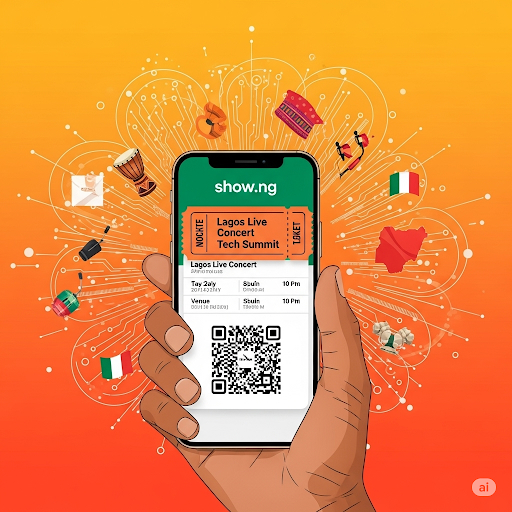
Shows.ng currently supports Nigerian card payments, bank transfer and USSD, alongside supported international card payments in USD, EUR and GBP. Confirmed purchases generate QR-coded tickets for attendees. ([shows.ng](https://shows.ng/payment-methods))
Your Ticketing Strategy Should Answer What Happens After Someone Pays
Payment confirmation should not be the end of your thinking.
Once somebody has successfully purchased or reserved a ticket, they need to know what they now possess and what they should do with it.
Does the ticket contain a QR code? Should they show it on their phone? Can they download it again if the original email gets lost? Which entrance should they use? Does the ticket admit one person? If they purchased VIP, how will the gate team know where to direct them?
The fewer unanswered questions you leave for event day, the easier the entrance becomes.
Digital ticketing is useful here because the ticket can become a clear link between the booking and admission process rather than relying on somebody to remember a transfer from several weeks earlier.
Shows.ng currently generates unique QR codes for tickets and provides real-time ticket verification through its scanner. The scanner also supports duplicate-ticket detection and offline scanning for environments where connectivity is unreliable. ([shows.ng](https://shows.ng/features))
The technology is only one part of the strategy, though. Your gate staff still need to know how the tickets work and what to do when something unusual happens.
Plan the Gate While You Are Planning the Tickets
Organisers naturally become excited when sales are moving quickly. But the better the sales campaign performs, the more important the entry plan becomes.
If you expect 2,000 attendees and most of them arrive within the same hour, one person scanning tickets will not become magically faster because the tickets are digital.
Think about how many entry points are required, where security screening happens, whether different ticket categories need different lanes and where guests with genuine ticket problems should go.
A normal attendee with a valid ticket should not spend twenty minutes waiting because the person in front of them cannot find the email address used for a booking. Move exceptional cases away from the main flow where possible so the majority of guests can continue entering.
For a larger event, let the gate team practise before doors open. Staff should know what a valid scan looks like, what happens when a ticket has already been used and where VIP or other special ticket holders should be directed.
Shows.ng's current scanner supports QR and barcode scanning, real-time attendee verification, duplicate detection and offline operation. Multiple staff members can therefore be prepared to scan where the event scale requires additional entry capacity. ([shows.ng](https://shows.ng/features))
Our guide on how to avoid messy entries on event day goes deeper into the operational side of getting people through the gate.
Digital Ticketing Is Also Part of Fraud Prevention
Ticket fraud becomes much harder to manage when entry depends entirely on whether a printed ticket or screenshot looks convincing.
A digital strategy gives the organiser a way to connect the ticket being presented at the gate with a booking record.
With unique QR tickets and scanner verification, the question becomes less about whether a member of staff believes a ticket looks genuine and more about whether the system recognises it as valid and unused.
That is particularly important for popular concerts and events where buyers may be approached by unofficial sellers. The organiser should clearly communicate the official booking link throughout the campaign so attendees know where genuine tickets are being sold.
Buyers also need to protect their own tickets. Posting a full QR-coded ticket on social media can expose information another person may attempt to use. Your pre-event communication can remind attendees to keep ticket codes private while still sharing the event flyer or other promotional material freely.
Our guide on how to buy event tickets safely and avoid fake tickets covers that issue from the attendee's perspective.
A Private Event Can Still Benefit From Digital Access
Digital ticketing does not automatically mean making your event public.
Some birthdays, corporate gatherings, weddings, private dinners and invitation-only events need controlled access precisely because the organiser does not want everybody discovering and attending them.
The strategy in that situation is different from a public concert. You may care less about broad discovery and more about having a defined guest list, knowing how many invitations have been accepted and making the gate easier to manage.
Shows.ng currently supports private events that can be hidden from public searches and accessed through a private event link. ([shows.ng](https://shows.ng/features))
That gives organisers another option between publishing an event to everybody and trying to control attendance entirely through screenshots, forwarded invitation cards and long WhatsApp lists.
The event can still feel personal. The technology is simply helping the organiser manage who should be there.
Ticket Sales Should Tell You Something Before Event Day
A useful ticketing strategy does not wait until the event is over before looking at the numbers.
Sales are feedback.
If early-bird tickets disappear quickly, the audience may be responding strongly to the price or initial announcement. If sales slow dramatically after launch, the campaign may need fresh reasons for people to pay attention. If VIP is moving faster than Regular, that can tell you something about how buyers see the experience.
You should not panic over every slow afternoon, because event sales rarely move at exactly the same pace every day. But you should know whether the event is moving towards the target you planned.
That information also affects operations. Stronger demand may influence staffing and entry preparation. A ticket category approaching capacity should not continue being advertised indefinitely. A sales campaign performing below expectation gives you time to adjust while there is still an event to promote.
Shows.ng currently provides real-time sales analytics, attendee insights and sales reporting for organisers. ([shows.ng](https://shows.ng/features))
If you want to explore that part further, our guide on understanding real-time event analytics and reporting explains how organisers can use those numbers while the campaign is still active.
The Data Still Matters After the Lights Go Off
Once the event ends, ticketing becomes a record of how people responded to what you created.
You can compare sales against your expectations, look at which ticket categories performed best and review when people actually decided to buy. You can also compare the number of bookings with the number of attendees who checked in.
Those patterns become useful when planning the next edition.
If almost everybody waited until the final week to purchase, perhaps the next campaign needs stronger early incentives. If one premium category repeatedly struggles, the value attached to that ticket may need to change. If free registrations significantly exceed actual attendance, your capacity planning for another free event may need to account for that behaviour.
This is where digital ticketing becomes more than a payment tool. It gives the organiser information that can improve future pricing, marketing, capacity and entry decisions.
The important thing is actually reviewing it. Collecting data and never looking at it is simply a more sophisticated way of guessing.
The Strategy Matters More Than the Technology
You can have digital tickets and still have a bad ticketing system.
You can create too many confusing ticket categories. You can oversell the venue. You can hide the booking link. You can fail to train the gate team. You can collect registrations and never look at the numbers until event day.
The technology cannot make those decisions for you.
A digital ticketing strategy means thinking about the complete journey. Who needs to register? What are they buying? How many people can attend? What payment or booking process will they use? What happens immediately after booking? How will the ticket be verified? What does the organiser learn from the information generated along the way?
Once those questions have clear answers, the technology becomes useful because it reduces the manual work around executing them.
This is why even a free, private or relatively small event can benefit from having a ticketing strategy. The purpose is not always to sell more tickets. Sometimes it is simply to know who is coming, prevent the venue from exceeding capacity and make sure the entrance works when guests arrive.
When you are ready to set up that process, you can create your event on Shows.ng, decide whether the event is free or paid, configure the ticket options and use the event link throughout your communication.
Digital ticketing is not only about replacing paper tickets with QR codes. The real advantage comes from knowing how people move from hearing about your event to booking it, entering it and becoming useful information for the event you organise next.