In this article
- Guests Expect the Event to Be Clear Before They Buy
- Guests Expect the Promotion and the Reality to Match
- Guests Expect Their Time to Be Respected
- Guests Expect Entry to Make Sense
- Digital Ticketing Should Make Entry Simpler, Not More Complicated
- Guests Expect Staff to Know What Is Happening
- Guests Expect to Be Treated Like Guests, Not Problems
- Guests Expect to Be Able to See and Hear What They Came For
- Guests Expect the Venue to Work for the Event
- Guests Expect Reasonable Comfort
- Guests Expect Clean and Functional Facilities
- Guests Expect Safety Without Unnecessary Hostility
- Guests Expect the Crowd to Feel Manageable
- Guests Expect the Programme to Have a Reason for Existing
- Guests Expect Speakers and Performers to Be Prepared
- Guests Expect Food Promises to Be Accurate
- Guests Expect Value, but Value Is Bigger Than Price
- Guests Expect Premium Tickets to Offer a Real Difference
- Guests Expect Accessibility to Be Considered
- Guests Expect Information When Something Important Changes
- Guests Expect Problems to Have Somewhere to Go
- Guests Expect the Organiser to Handle Mistakes Professionally
- Guests Expect to Know What Happens Next
- Guests Expect an Event to End Properly Too
- Guests Appreciate Follow-Up When It Has a Purpose
- Guests Do Not All Expect Exactly the Same Thing
- Do Not Guess Forever About What Your Guests Value
- A Well-Organised Event Makes the Difficult Work Feel Simple to the Guest
Guests do not see your planning spreadsheet.
They do not know how many calls it took to secure the venue, how many times a supplier changed their quote or how many problems your team solved before the doors opened.
They experience the result.
They notice whether they could understand what they were buying. They notice whether they found the venue easily, whether entry moved properly, whether the programme respected their time and whether somebody could help when they had a question.
They notice whether the sound worked, whether the room was comfortable, whether what they paid for actually appeared and whether the event felt safe enough for them to relax.
That is what a well-organised event looks like from the guest's side.
It is not necessarily the event with the most expensive décor, biggest celebrity or longest programme. It is the one where the important parts connect well enough that attendees can focus on the experience rather than constantly noticing organisational problems.
Guests Expect the Event to Be Clear Before They Buy
The guest experience begins before anybody reaches the venue.
People need to understand what the event is, when it is happening, where it is taking place and what their ticket or registration gives them.
If the event has several ticket categories, those differences should make sense. If food is not included, do not allow the marketing to imply that it is. If seating is first come, first served, that may be worth explaining where it affects the decision to buy.
If a conference ticket covers only one day of a multi-day programme, the attendee should know that before payment.
Clear expectations make the organiser's job easier later because guests are less likely to arrive expecting something that was never actually part of the offer.
A well-organised event starts by making a clear promise.
Guests Expect the Promotion and the Reality to Match
Marketing naturally presents an event attractively.
The problem begins when the campaign creates an experience the actual event cannot support.
If a small networking gathering is promoted like a major business summit, the attendee may judge a perfectly good intimate event as disappointing because the marketing set the wrong expectation.
If a ticket is sold as premium, there should be a meaningful reason it is premium.
If an event repeatedly promises an exact start time, guests should not discover that the organiser privately expected everybody to wait another two hours.
You do not need to undersell the event.
You need the experience to recognise the promises that convinced people to attend.
Guests Expect Their Time to Be Respected
Attendees have made a commitment before your event begins.
They may have travelled across the city, arranged childcare, changed a work schedule, booked accommodation or simply chosen your event instead of doing something else with the day.
Respecting their time does not mean every event must run with military precision.
It means the organiser has thought seriously about timing.
Doors should open when there is actually something ready behind them. Sessions should not continually overrun because nobody is willing to stop a speaker. Performers should have realistic changeover times. Meal breaks should not move indefinitely because earlier programme items were poorly controlled.
Events can still encounter genuine delays.
What distinguishes good organisation is how the delay is handled.
Our guide on what to do when an event runs behind schedule explains how to protect the important parts of the programme when the original timing can no longer be followed exactly.
Guests Expect Entry to Make Sense
The entrance is often the first physical interaction an attendee has with your event.
A confusing gate immediately creates doubt.
People should be able to identify where they need to go, what they need to present and what happens after they are checked in.
If there are different entrances for staff, performers, VIP guests or general attendees, signage and staff direction should make those differences understandable.
Do not make an attendee join one queue for twenty minutes only to discover that their ticket category belongs somewhere else.
Likewise, straightforward ticket holders should not be trapped behind complicated disputes that could have been handled at a separate support point.
A good gate is not memorable because something spectacular happened there.
It is memorable because very little went wrong.
Digital Ticketing Should Make Entry Simpler, Not More Complicated
Technology is useful when it reduces uncertainty.
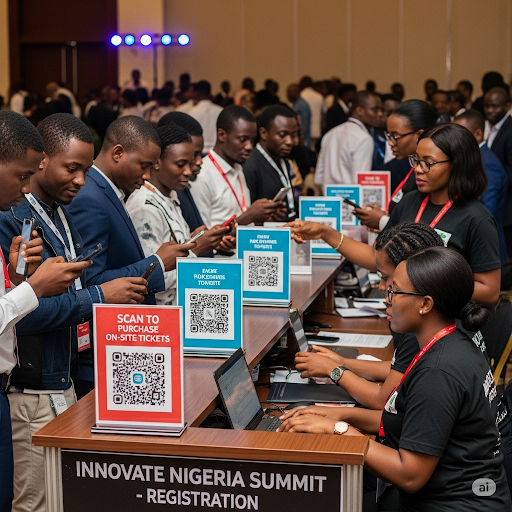
For Shows.ng-ticketed events, the Shows Ticket Scanner gives staff a defined way to verify the barcode on an attendee's ticket and retrieve the ticket details when the ticket is valid.
The guest's expectation remains simple.
They bought or registered for a ticket, they present that ticket and the event team knows what to do with it.
The attendee should not need to understand the technology behind the process.
They simply need the process to work.
Guests Expect Staff to Know What Is Happening
An organiser cannot personally answer every question during an event.
That is why the wider team matters.
Ushers should know where important areas are. Registration staff should understand the entry process. Security should know who has authority to approve an exception. Volunteers should know where to direct someone when they cannot solve a problem themselves.
Nothing makes an event feel disorganised faster than asking three members of staff the same simple question and receiving three different answers.
Brief your people.
They do not all need access to every confidential planning detail.
They need enough information to perform the role attendees will expect them to perform.
Guests Expect to Be Treated Like Guests, Not Problems
Hospitality is not limited to food and drinks.
It is the way people are treated while moving through the event.
Someone may arrive with a ticket problem. A guest may not know where a room is. An older attendee may need assistance finding a seat. Someone attending alone may ask a question that regular guests consider obvious.
Staff can still enforce rules without becoming dismissive.
The best event teams understand that being firm and being rude are not the same thing.
A guest asking for help should not feel that they interrupted something more important than the people the event was organised for.
Guests Expect to Be Able to See and Hear What They Came For
This sounds basic because it is basic.
It is also one of the easiest things to undermine.
A beautiful conference stage means little when people at the back cannot hear the speakers. An expensive concert lineup does not deliver much value if sound is distorted throughout the night. An elaborate wedding programme becomes frustrating when half the room cannot see what is happening.
Test the experience from different positions.
Do not judge sound only from beside the sound engineer. Do not judge visibility only while standing in front of an empty room.
Think about where actual attendees will be sitting or standing once the space is full.
Guests Expect the Venue to Work for the Event
A prestigious venue is not automatically an appropriate venue.
The space needs to support the audience and programme.
Capacity matters. Ventilation matters. Toilets matter. Access matters. Parking and transport may matter. The location of stages, food areas, registration desks and exits affects how people experience the space.
An event can look impressive online and still feel uncomfortable in person because the organiser selected the venue largely for appearance.
Guests experience the practical venue, not the venue brochure.
Guests Expect Reasonable Comfort
Comfort does not mean luxury.
It means the physical demands of attending should make sense for the event.
If people are expected to sit for several hours, seating quality matters. At an outdoor daytime event, shade and water may become important. At a standing concert, crowd density and movement matter.
A long conference programme needs sensible breaks. An event where food is not provided may need enough information beforehand for attendees to plan appropriately.
The longer people remain at the venue, the more the small physical details affect their overall impression.
Guests Expect Clean and Functional Facilities
Toilets may never appear in your promotional campaign, but they can appear repeatedly in attendee complaints.
Make sure facilities are adequate for the expected audience and checked during the event rather than only before doors open.
The same principle applies to seating areas, food zones and other frequently used parts of the venue.
An event can begin spotless and become unpleasant several hours later if nobody has responsibility for maintaining it.
Operational quality has to continue after the first photographs have been taken.
Guests Expect Safety Without Unnecessary Hostility
People should be able to relax because they believe the event is under control.
That requires appropriate security, access management, safe capacity, usable exits and staff who know what to do when something happens.
It does not require turning every entrance into an aggressive confrontation.
Security should match the risks of the event and behave professionally.
Guests should know where to get help and should be able to identify relevant staff when necessary.
Our guide on keeping attendees safe without killing the vibe looks specifically at designing safety measures that protect people without making an event feel hostile.
Guests Expect the Crowd to Feel Manageable
A successful event can attract many people.
That does not mean every part of the venue should feel packed.
Queues, stages, food areas, toilets and exits can all become local bottlenecks even when overall capacity is technically acceptable.
Watch where people are gathering.
If one entrance becomes overloaded while another is underused, redirect people. If a popular vendor creates a queue across a major walkway, reorganise the queue. If people are pressing tightly towards one stage, crowd management needs to respond before the situation becomes dangerous.
Attendees should be able to enjoy a popular event without feeling that popularity means losing the ability to move comfortably.
Guests Expect the Programme to Have a Reason for Existing
More activities do not automatically create more value.
A conference does not improve because every available minute has been filled with another speech. A concert does not need five unrelated performances simply because the organiser found five performers.
The programme should support the reason people came.
Ask what belongs, what can be shorter and what should disappear entirely.
Guests notice when an event feels padded.
A focused programme that finishes with energy can feel much stronger than a longer programme people begin leaving before it ends.
Guests Expect Speakers and Performers to Be Prepared
An impressive name does not guarantee an impressive contribution.
Speakers should understand the event, the audience and the time available to them. Performers should know their technical requirements and schedule. The MC needs enough information to guide transitions rather than improvising the entire structure.
Brief participants before event day.
The audience should not have to watch the organiser negotiate the programme in real time.
Guests Expect Food Promises to Be Accurate
Food is important at many events, but the expectation depends heavily on what was promised.
A conference ticket advertised as including lunch creates a different expectation from a festival where vendors sell food independently.
A wedding may have another service model entirely.
The organiser's job is not to provide identical catering at every event.
It is to make the food arrangement suitable for the occasion and reasonably clear.
If food is included, plan quantities and service properly. If it is sold separately, communicate that where guests might reasonably expect otherwise.
Guests Expect Value, but Value Is Bigger Than Price
A cheap ticket can still feel like poor value.
An expensive ticket can feel worthwhile.
Value is the relationship between what somebody gave and what they believe they received.
Money matters, but so do time, convenience and expectation.
A conference attendee may judge value by what they learned and who they met. A concert attendee may care about performances, sound and atmosphere. A workshop participant may care about practical skills. Someone paying for VIP access will compare the premium with whatever Regular attendees received.
You cannot define value only by saying your ticket was affordable.
Design the event around why people chose to pay or register in the first place.
Guests Expect Premium Tickets to Offer a Real Difference
If you sell Regular, VIP and VVIP access, the differences should be meaningful and deliverable.
A different wristband is not automatically a premium experience.
Perhaps the premium ticket includes reserved seating, faster entry, a particular viewing section or another genuine benefit.
Whatever the offer is, communicate it clearly and deliver it consistently.
An attendee should not need to negotiate at the venue for something the ticket description already promised.
Guests Expect Accessibility to Be Considered
A well-organised event should not work only for the easiest guest to accommodate.
Think about attendees with mobility, sensory or other accessibility needs.
Can they understand the venue before travelling? Are appropriate routes usable? Is there a way to ask questions before the event? Can seating or access arrangements accommodate people who cannot navigate the venue in the same way as everyone else?
You may not be able to remove every limitation from every venue.
You should understand the limitations you have and communicate useful information rather than leaving attendees to discover barriers at the entrance.
Guests Expect Information When Something Important Changes
A venue changes.
Doors open later than planned. An outdoor event moves inside. A major part of the programme changes.
If that information affects attendees, communicate it.
Do not assume that changing an Instagram caption means every ticket holder has received the update.
Shows.ng currently allows organisers to send an email directly to attendees associated with a specific event. From the organiser dashboard, the organiser can open the attendee list, choose Send Message to Attendees, enter a subject and message and send it to attendees by email.
The Shows.ng attendee messaging guide explains that process.
Use direct communication when information is important enough that registered attendees should reasonably know it.
Guests Expect Problems to Have Somewhere to Go
No event eliminates every problem.
A ticket may fail to verify. Someone loses a phone. A seat is occupied incorrectly. A guest needs medical help. Another person has an accessibility concern.
The difference is whether the attendee can identify somebody capable of dealing with the issue.
Give guests a clear support route.
At a large event, that may be an information desk or support point. At a smaller event, it may simply mean ensuring staff know which organiser has authority to make decisions.
The attendee should not have to find the event owner personally every time something unusual happens.
Guests Expect the Organiser to Handle Mistakes Professionally
Perfect events are rare.
A supplier can fail. Weather can change. Technology can develop a problem. A speaker can arrive late.
What guests often remember is how the organiser responded.
A clear explanation can be better than silence. A sincere apology can be better than pretending nothing happened. A practical solution can be better than finding somebody to blame publicly.
Professional recovery is part of the event experience.
Do not promise a resolution you cannot deliver merely to make a complaint disappear quickly.
Guests Expect to Know What Happens Next
Good event organisation reduces uncertainty.
When registration finishes, where does the guest go? When one session ends, what happens next? If the programme moves to another room, how do people know?
Transitions matter.
An MC, signage, screens or staff can help guide people depending on the type and size of event.
Do not assume everybody has memorised the programme.
The organising team has been living with the schedule for months. Guests have not.
Guests Expect an Event to End Properly Too
The experience does not finish the second the headline programme ends.
Hundreds or thousands of people may now be moving towards exits, vehicles and pickup points at the same time.
Think about departure.
Keep major routes clear. Maintain enough staff to help while guests are still leaving. If there are designated transport or pickup arrangements, communicate them.
An event that was excellent for four hours can still leave a poor final impression if the exit becomes uncontrolled chaos.
Guests Appreciate Follow-Up When It Has a Purpose
After the event, you do not need to disappear immediately.
A thank-you message can acknowledge attendance. A conference may share appropriate resources. Official photographs may be useful when they are ready. A feedback request can help the organising team understand what worked and what needs to change.
Shows.ng attendee messaging can also be used after an event because it provides a direct email route to the attendees attached to that event.
Use that access thoughtfully.
Not every follow-up needs to become another ticket-sales campaign.
Guests Do Not All Expect Exactly the Same Thing
This is where the original version of this article becomes too rigid.
A wedding guest, conference attendee, concertgoer and worshipper may have very different priorities.
Even within the same event, people value different things.
A first-time attendee may need more orientation. A returning guest may care about whether obvious previous problems were fixed. Someone attending for networking judges the experience differently from someone attending mainly for entertainment.
You cannot design around one imaginary “Nigerian guest”.
Understand the actual people the event is for.
The fundamentals remain useful, but the emphasis changes according to the audience and purpose.
Do Not Guess Forever About What Your Guests Value
Your team will have opinions about the event.
Attendees have information you do not.
Collect feedback after the event instead of relying entirely on what organisers observed backstage.
You may discover that the expensive stage was less important to attendees than the networking time. Perhaps people loved the programme but hated the entrance. Maybe something the team considered a minor feature became one of the strongest parts of the experience.
Our guide on collecting attendee feedback effectively explains how to design questions and choose collection methods that produce more useful responses.
A Well-Organised Event Makes the Difficult Work Feel Simple to the Guest
The organising team may have solved hundreds of problems.
The guest does not need to experience all of them.
They need clear information before the event, an entrance that makes sense, staff who can help, a venue that works for the audience and a programme that delivers what was promised.
They need reasonable comfort, appropriate safety, accurate timing and enough communication to understand what happens next.
If something changes, tell them what they genuinely need to know. If something goes wrong, have a process for resolving it.
Then listen afterwards instead of assuming that because the programme finished, everybody experienced it the way the organising team intended.
Shows.ng can support specific parts of that attendee journey. For ticketed events, the Shows Ticket Scanner gives organisers a defined digital verification process at entry, while attendee messaging provides a direct email route for relevant updates and follow-up.
When your next event is ready, you can create your event on Shows.ng and build the ticketing and attendee communication around an experience that has already been designed with the guest in mind.
Guests rarely know how difficult your event was to organise. What they remember is whether attending it felt difficult too.