In this article
- Start With the Question Nobody Likes Asking
- Walk Through the Venue Like a Guest, Then Like a Troublemaker
- Your Gate Can Become Your Biggest Security Problem
- Crowd Management Is Security Too
- Hire Security for the Job You Actually Need
- Your Ushers and Security Team Need to Know Each Other's Jobs
- Have a Medical Plan Before Somebody Needs One
- Do Not Forget Fire, Power and Weather
- Communication Can Stop Confusion From Becoming Panic
- Digital Tickets Help, but the Process Still Needs People
- Protect Attendee Information Too
- Insurance Is Worth Discussing Before Something Happens
- When Something Happens, One Person Needs to Lead
- Do One Last Walkthrough Before You Open the Gates
- A Safe Event Usually Feels Like a Well-Organised Event
Most event security problems do not begin when a fight breaks out or somebody tries to force their way through the gate.
They usually begin much earlier.
Maybe nobody checked how many people the venue could comfortably handle. Maybe the emergency exit ended up behind decorations. Maybe security arrived without knowing which entrance was for VIP guests. Maybe 800 people were told to arrive at the same time and there was only one person checking tickets.
Then the event starts, the crowd builds, and small planning mistakes suddenly become security problems.
A good event security plan is not about making your venue feel like an airport or surrounding your guests with intimidating guards. It is about understanding what could go wrong, deciding how you will prevent it, and making sure the right people know what to do if something still happens.
Whether you are organising a wedding, concert, conference, festival, campus event, product launch or large private party, security should be part of the planning from the beginning, not something you arrange a few days before guests arrive.
Start With the Question Nobody Likes Asking
What could realistically go wrong at this event?
It is not a pleasant question, but it is much more useful than simply deciding how many bouncers you need.
The risks at a 150-person business conference are different from the risks at a 5,000-person outdoor concert.
Your event may need to consider things such as:
- Overcrowding
- Gate-crashing
- Ticket fraud
- Theft
- Fights or aggressive behaviour
- Medical emergencies
- Fire
- Power failure
- Bad weather
- Blocked exits
- Traffic around the venue
- Lost children at family events
- Unauthorised access to backstage or restricted areas
- Problems involving alcohol
You do not need to imagine every disaster possible.
Focus on risks that make sense for your event, venue, audience and location.
A useful security plan answers three questions:
What are we trying to prevent?
Who is responsible if it happens?
What should the team do next?
Once those answers are clear, security stops being a vague instruction to "make sure everywhere is safe."
Walk Through the Venue Like a Guest, Then Like a Troublemaker
Venue inspection should happen before event day.
First, walk through the space as if you are attending the event.
Where do you enter?
Is it obvious where you should go after entering?
Can you find the toilets?
Are there areas where people are likely to gather and block movement?
How easily can someone leave?
Now look at the venue differently.
Could somebody enter from another side without passing through security? Are there dark areas around the building? Can somebody reach backstage from the general guest area? Is there a fence that can easily be crossed? Could parked vehicles block an emergency route?
Check:
- Main entrances
- Emergency exits
- Staff and vendor entrances
- Backstage access
- Parking areas
- Lighting
- Stairways
- Outdoor boundaries
- Fire equipment
- Medical access
- Areas where queues will form
Do not allow decoration, equipment, vendor stands, tables or storage to block an exit because the space looked convenient during setup.
An emergency route only works if people can actually use it.
For venues with formal safety requirements, confirm the applicable capacity, fire, insurance, permit and venue rules with the venue operator and relevant local authorities. Requirements can differ depending on the venue, location and type of event.
Your Gate Can Become Your Biggest Security Problem
A lot of event trouble starts at the entrance.
People arrive at once. Somebody cannot find their ticket. Another person claims the organiser invited them personally. VIP guests are standing in the same queue as everyone else. Someone wants to bring five friends with one invitation.
If your gate process is weak, security personnel spend the first hour arguing instead of actually watching the crowd.
Decide how entry will work before event day.
For a ticketed event, separate ticket verification from security screening where possible. If one person is scanning tickets, checking bags, answering questions and resolving payment issues, the queue will move painfully slowly.
For larger events, you may need separate lanes for:
- General admission
- VIP or premium tickets
- Guests and complimentary invitations
- Staff
- Vendors
- Performers or speakers
Your security team also needs a clear answer to a very Nigerian question:
"What happens when someone says they know the organiser?"
Do not leave individual guards to decide.
Create one escalation point. If a person's access cannot be verified normally, the issue goes to the designated gate manager. That person confirms whether they should enter.
This prevents five different people from calling you while you are trying to run the event.
For more on this part of the operation, see our guide to managing guest lists and avoiding problems at the gate.
Crowd Management Is Security Too
You do not need a fight for a crowd to become unsafe.
A badly positioned queue, narrow entrance or sudden rush towards a stage can create problems even when everyone arrived in a good mood.
Think about how people will move through the venue.
Where will queues form?
What happens when a popular performer comes on stage?
Will people leaving one area collide with people trying to enter?
Are food vendors positioned somewhere that will block a walkway?
If you are expecting a large audience, watch for choke points and give people enough room to move.
Barriers, signage and ushers can often prevent problems before security officers need to intervene.
It is also important not to oversell the space.
A sold-out event sounds good in marketing copy. An overcrowded venue does not feel good when you are standing inside it.
We have a separate guide on managing queues and crowd flow at events if you are planning for a high-volume entrance.
Hire Security for the Job You Actually Need
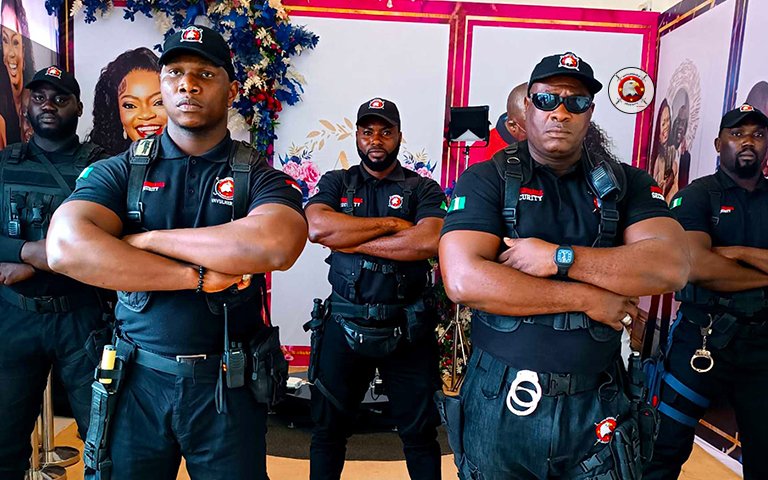
Security is not simply about finding physically imposing people and putting them in black shirts.
The team needs to understand access control, crowd behaviour, communication, de-escalation and emergency response.
The type and scale of personnel you require will depend on your event.
A private dinner may need discreet access control. A concert may require a much larger team covering entrances, stage areas, crowd zones and the venue perimeter.
When selecting a security provider, explain:
- Expected attendance
- Event type
- Venue layout
- Entry points
- Restricted areas
- Whether alcohol will be served
- Expected VIPs or performers
- Operating hours
- Any known concerns about the event
Then agree on exactly where personnel will be positioned.
Security standing together in one corner of the venue is not a security plan.
You may need people at the gate, backstage, around the stage, near VIP areas, in parking zones and moving through the crowd.
Where appropriate, work with properly trained and authorised security professionals and follow the requirements that apply to your event and location.
Your Ushers and Security Team Need to Know Each Other's Jobs
Not every difficult situation requires a security officer.
If a guest cannot find their table, that is an usher problem.
If someone is standing in the wrong queue, an usher or gate staff member may be able to redirect them.
If a guest is trying to enter a restricted area after repeatedly being told not to, security may need to become involved.
Clear roles prevent minor customer-service issues from unnecessarily turning into confrontations.
Before doors open, brief everyone together.
Security, ushers, ticket scanners, coordinators, medical staff, production crew and key venue staff should know:
- Who is in charge
- Where the exits are
- Who handles gate disputes
- Who handles medical incidents
- Who can authorise access to restricted areas
- How staff communicate during the event
- Where guests should be directed for help
If you are managing a larger team, read our guide on training event staff before event day.
Have a Medical Plan Before Somebody Needs One
Security and medical planning belong in the same conversation.
People faint. Guests can have allergic reactions. Someone may fall. Heat can become an issue at outdoor events. Crowds can create injuries.
You do not want the first discussion about medical response to happen after somebody has collapsed.
The level of medical support should match the size and nature of the event.
At minimum, your planning should consider:
- Who provides first aid
- Where medical assistance will be located
- How staff call for help
- How emergency services can reach the venue
- The nearest appropriate medical facility
Keep access routes clear.
An ambulance is not very useful if it cannot reach the venue because the emergency access road has become unofficial VIP parking.
Do Not Forget Fire, Power and Weather
Event security is not limited to human behaviour.
Your production setup creates risks too.
Generators, electrical cables, lighting equipment, cooking areas, temporary structures and overloaded power connections all need proper attention from people qualified to manage them.
Make sure fire equipment is available where required and that staff know where it is.
For outdoor events, weather deserves a plan of its own.
What happens if heavy rain starts?
Where will guests move?
What happens to electrical equipment?
Is there a point at which the event needs to pause?
The answers should exist before the clouds arrive.
Communication Can Stop Confusion From Becoming Panic
Imagine there is a problem near one entrance.
Security knows about it, but ushers do not. The MC has no idea. The organiser is backstage. Guests start seeing people move and nobody tells them what is happening.
Uncertainty spreads very quickly in a crowd.
Your team needs a simple communication system.
For some events, phones may be enough. Larger productions may need radios and designated communication channels.
Whatever you use, decide who communicates with whom.
Guests should also receive useful information before they arrive.
If certain items are prohibited, say so before event day. If bags will be searched, tell people. If parking is limited, communicate alternatives. If there are separate entrances for different ticket categories, include that information in pre-event messages.
Good communication reduces arguments at the gate because people know what to expect.
Digital Tickets Help, but the Process Still Needs People
Digital ticketing can make access control much cleaner.
Instead of relying on printed lists or screenshots of bank transfers, organisers can use unique tickets that are validated at entry.
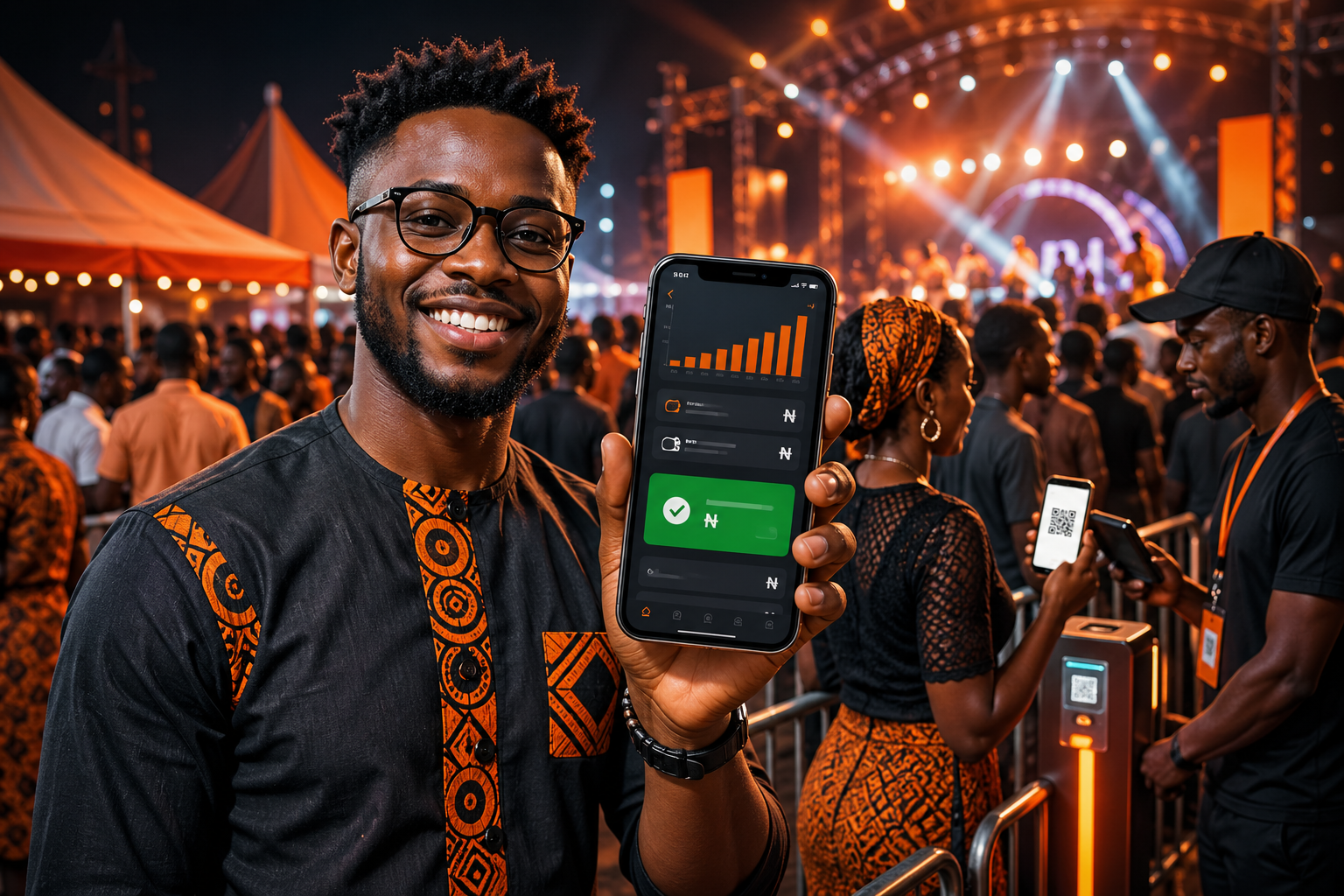
If you use Shows.ng for a ticketed event, your gate team can use ticket scanning to verify entry and reduce problems with duplicate tickets.
But technology does not replace planning.
Charge the scanning devices.
Test the process before the gates open.
Make sure the staff understand how to scan a ticket and what to do when a ticket does not validate.
Have someone responsible for resolving genuine ticket problems so the scanning queue can keep moving.
If you are still setting up your ticketing process, you can sell and manage event tickets with Shows.ng rather than handling every attendee manually.
Protect Attendee Information Too
The original idea of event security used to focus almost entirely on the physical venue.
Today, organisers also handle names, email addresses, phone numbers, ticket information and other attendee details.
Do not casually distribute that information.
Your entire volunteer team does not need a downloadable spreadsheet containing every attendee's personal details simply because they are helping at the event.
Give people access only to the information they need for their role.
Be especially careful when exporting guest information, sharing lists through personal devices or leaving printed attendee lists unattended at registration desks.
Security includes protecting people before, during and after they walk through the venue door.
Insurance Is Worth Discussing Before Something Happens
Depending on the scale and nature of your event, insurance may be an important part of managing financial risk.
The right coverage will depend on the event, venue, activities and existing policies, so speak to an appropriate insurance professional instead of assuming a general policy covers everything.
Ask what is covered and what is excluded.
If you already run an event company with an annual policy, confirm that the particular event and its activities fall within that coverage.
It is much easier to ask that question before the event than after an incident.
When Something Happens, One Person Needs to Lead
The worst time to decide who is in charge is during an emergency.
Your team should know who has authority to make important decisions.
Who can pause the event?
Who contacts emergency services?
Who communicates with the venue?
Who tells the MC what to announce?
Who deals with the affected guest or their family?
Who documents what happened?
This does not need to become a 70-page emergency manual for a small event.
It needs to be clear enough that people do not spend the first critical minutes looking at each other.
For major events, these procedures should be developed with the venue and qualified safety, security and emergency professionals appropriate to the event.
Do One Last Walkthrough Before You Open the Gates
Once setup is complete, walk the venue again.
This is important because the space you inspected two weeks ago is not the same space after decorators, vendors, sound equipment, stages and hundreds of chairs have been added.
Before guests enter, check:
- Entrances are ready
- Emergency exits are clear
- Security personnel are at their positions
- Ticket scanners are working
- Restricted areas are properly controlled
- Medical support is ready
- Walkways are clear
- Lighting is working
- Communication devices are working
- Staff understand who they report to
That final fifteen-minute walk can reveal problems nobody noticed during setup.
A Safe Event Usually Feels Like a Well-Organised Event
Guests should not have to spend the entire evening thinking about your security plan.
They should simply notice that entry was organised, staff knew where to direct them, queues moved properly, restricted areas were controlled and help was available when somebody needed it.
That kind of security does not kill the atmosphere.
It protects it.
Start planning early. Understand the risks that actually apply to your event. Inspect the venue properly. Brief your team. Control access. Prepare for medical and operational problems, and make sure somebody has clear authority when decisions need to be made quickly.
If you are running a ticketed event, Shows.ng can help you manage online ticket sales and attendee check-in, giving your gate team a cleaner way to verify who should be entering.
Good security is not about expecting trouble. It is about being organised enough that trouble does not get the opportunity to take over your event.