In this article
- Start With the Feeling Before You Start With the Features
- The Guest Experience Begins Before Event Day
- Walk Through the Event Like Someone Who Has Never Been There Before
- Arrival Deserves More Attention Than Most Organisers Give It
- The Venue Should Support the Experience Instead of Fighting It
- Participation Is More Powerful When It Has a Purpose
- Design for Different Ways of Enjoying the Same Event
- Do Not Confuse Experience With Decoration
- Small Details Become Memorable When They Arrive at the Right Moment
- Use Technology Where It Makes the Experience Easier
- The Programme Should Have Rhythm, Not Just Content
- Social Media Moments Work Better When They Come From the Experience
- Brands Should Contribute to the Experience Instead of Interrupting It
- Your Staff Are Part of the Experience Whether You Plan for It or Not
- Leave Some Space for the Event to Breathe
- The Departure Is Still Part of the Event
- Ask What People Remember Without Prompting Them
- Experience-First Does Not Mean Expensive
- Plan From the Memory Backwards
An event can have excellent decoration, expensive entertainment and a packed venue and still leave guests feeling strangely underwhelmed.
Nothing was obviously wrong. The food came out. The speakers spoke. The DJ played. People took pictures. Yet once everyone went home, there was very little about the experience that felt worth remembering.
This is the problem experience-first event planning tries to solve.
Instead of beginning with a list of things the organiser wants to include, you begin with the person attending. What will they experience from the moment they first hear about the event? What happens when they arrive? Where might they become confused, uncomfortable or bored? When will they feel most engaged? What should stay in their mind after they leave?
That does not mean logistics become less important. In fact, the opposite is true. Ticketing, timing, seating, sound, staffing and crowd movement become part of the experience rather than separate operational tasks happening behind it.
An experience-first event is not necessarily more elaborate. It is simply more intentional.
Start With the Feeling Before You Start With the Features
Organisers can easily begin planning by collecting ideas.
You want a photo booth. Someone suggests a 360 video stand. There will be a live band, a cocktail station, games, branded gifts and perhaps a surprise performance.
Each idea may be good individually, but together they do not automatically create a good event.
Before deciding what to add, decide what you want people to feel.
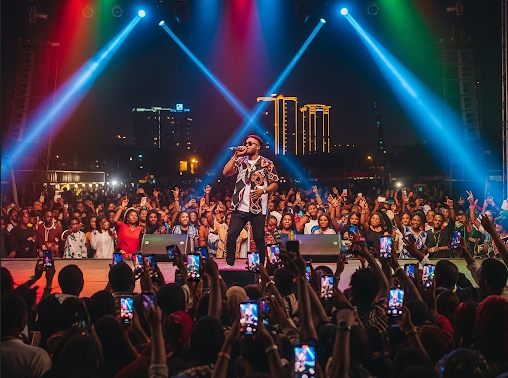
A networking event may want guests to feel comfortable enough to speak to people they did not arrive with. A premium dinner may want to feel intimate and considered. A youth conference might aim for energy, participation and connection. A concert may be built around anticipation and release.
Once that feeling is clear, ideas become easier to judge.
If intimacy is important, an enormous venue may work against you even if it looks impressive. If networking matters, filling every programme break with another performance may leave guests with no time to actually meet. If the event is meant to feel premium, a crowded entrance and confusing seating can undermine that feeling before the programme properly begins.
The experience should guide the features, not the other way around.
The Guest Experience Begins Before Event Day
Organisers sometimes think experience design begins when guests enter the venue.
By then, the attendee has already experienced part of your event.
They saw the announcement. They tried to understand what the event was about. They looked for the ticket price. They may have asked whether the venue was easy to reach, what the dress code meant or whether their ticket included something specific.
If finding those answers was unnecessarily difficult, that frustration is already part of the experience.
Your promotional material should therefore do more than look attractive. It should help somebody understand whether the event is for them.
The booking process should feel connected to that promise. If someone becomes interested through Instagram and then has to search through old posts, send a DM, request an account number and wait for somebody to confirm a transfer manually, the event has introduced friction at the exact moment the person wanted to act.
Clear information creates confidence.
Tell attendees where the event is happening, when they should arrive and what they are buying. If there are important restrictions or expectations, communicate them before payment rather than revealing them at the gate.
The experience has already started.
Walk Through the Event Like Someone Who Has Never Been There Before
Organisers know too much about their own events.
You know which entrance is being used. You know the registration table is around the corner. You know VIP is upstairs and the toilets are behind the catering area.
A first-time guest knows none of that.
Before event day, walk through the venue from their perspective.
Start where they arrive.
Can they tell where to go? If several activities are happening inside the same property, is your event easy to identify? Once they reach the entrance, is it obvious which queue they should join?
Continue through the venue.
After check-in, what happens next? Does someone direct them, or are they left standing near the entrance looking around? Can they identify their seating section? Can they find a toilet without asking three people?
Many of these details sound small because individually they are small.
Together, they determine whether the event feels organised.
Arrival Deserves More Attention Than Most Organisers Give It
The entrance creates one of the strongest early impressions because it is where anticipation meets reality.
If a guest has been excited about the event for three weeks and then spends forty minutes inside a confused queue, that frustration comes into the venue with them.
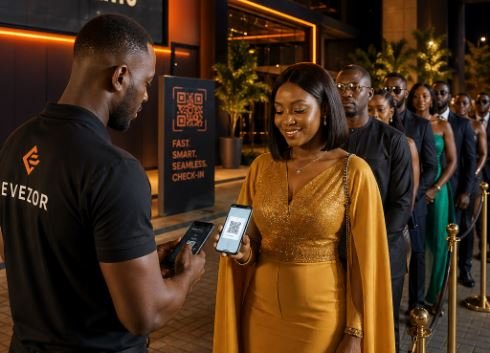
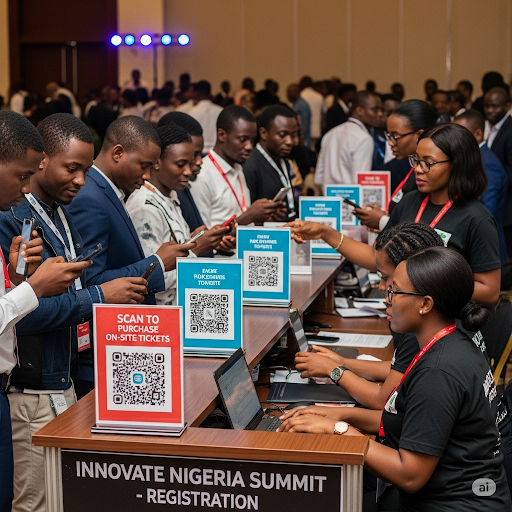
Think about how ticket verification, security screening and guest direction fit together.
The entrance should have enough capacity for the audience you expect. If hundreds of people are likely to arrive within the same hour, the operation needs to reflect that rather than relying on one person to solve every ticket problem.
Unusual cases should have somewhere separate to go when possible. A guest with a genuine booking problem should be helped, but investigating that problem should not stop an entire queue of people whose tickets are ready.
Once guests enter, keep them moving away from the entrance. If everyone stops immediately inside to take photographs, collect wristbands or decide where to sit, congestion simply moves from outside to inside.
Experience-first planning is often less glamorous than people imagine. Sometimes improving the experience means moving a table three metres away from a doorway.
The Venue Should Support the Experience Instead of Fighting It
A venue is not only the place where the event happens. It shapes how the event feels.
A beautiful hall with terrible acoustics may be wrong for a programme built around conversation. A large open venue may look impressive but weaken an intimate gathering because guests feel scattered. An outdoor setting may create exactly the atmosphere you want while introducing new questions around weather, power and guest comfort.
Think about the behaviour you want the venue to encourage.
If networking matters, are there spaces where people can actually talk without competing with extremely loud music? If audience participation matters, does the layout make people feel close enough to join in? If guests will spend several hours seated, are you designing primarily for photographs or for human bodies?
The venue should also give people enough room to move naturally.
If you are exploring spaces outside the usual hotel or event-hall format, our guide on unique event venue ideas in Nigeria looks at how rooftops, gardens, galleries and other spaces can change the character of an event.
Participation Is More Powerful When It Has a Purpose
Experience-first planning is often interpreted as making everything interactive.
That can become exhausting.
Not every guest needs to complete a challenge, scan something, vote in a poll, take a picture at five installations and join a game before being allowed to enjoy the event.
Participation works best when it supports what people came to do.
At a conference, a useful live question or smaller breakout conversation may help people engage more deeply with the subject. At a product launch, allowing guests to try the product can be more memorable than another speech describing it. At a social event, a shared activity may help strangers become comfortable with one another.
The interaction should make sense inside the experience.
If it exists only because someone told the organiser that modern events need engagement, guests can feel the effort being made to manufacture a moment.
Sometimes people want to participate. Sometimes they want to watch, listen, eat or simply enjoy being there.
A good experience gives them room to do both.
Design for Different Ways of Enjoying the Same Event
Not everybody experiences an event in the same way.
One guest wants to stand directly in front of the stage. Another wants to enjoy the music while still being able to hold a conversation. One conference attendee wants to ask questions publicly. Another gets more value from speaking privately with people afterwards.
Experience-first planning should leave some flexibility inside the event rather than forcing everyone through exactly the same journey.
This might mean having different areas for different energy levels. It could mean including quiet moments in a busy programme or making networking possible without requiring every person to perform an introduction in front of the entire room.
Accessibility belongs inside this thinking too.
If somebody cannot enter the venue comfortably, follow the programme, use the facilities or move through the space because of an avoidable barrier, the event was not designed around the full guest experience.
Good experience design asks who may find participation unnecessarily difficult and what can reasonably be changed before they arrive.
Do Not Confuse Experience With Decoration
Decoration contributes to atmosphere, but it is only one part of what attendees experience.
A room can photograph beautifully while guests are struggling with heat.
A dramatic stage can impress people for five minutes while poor sound makes the next two hours frustrating.
A beautiful dinner setup cannot compensate for food arriving extremely late.
This is where an experience-first mindset protects the budget.
Instead of asking what else you can add visually, ask where spending actually improves what guests will feel.
Sometimes better lighting is worth more than another decorative feature. Better sound may create more impact than an expensive photo installation. Additional staff at the entrance might improve the first thirty minutes more than another branded gift.
Spend around the experience you want to protect.
Small Details Become Memorable When They Arrive at the Right Moment
A memorable event does not necessarily need one enormous surprise.
Sometimes a small decision lands perfectly because it appears when the guest needs it.
Cold water available after a long outdoor arrival can feel more thoughtful than an expensive souvenir handed out at the end.
A comfortable place to sit during a long festival matters when somebody has been standing for hours.
A conference giving attendees a quiet area to continue conversations can be more useful than another flashy activation.
The power comes from context.
This is why planners should ask what guests are likely to need at different points in the journey rather than simply assembling a collection of impressive objects.
The best touch may not be the one people photograph most. It may be the one that makes them think, "They actually thought about this."
Use Technology Where It Makes the Experience Easier
Technology can improve events when it removes friction or creates something genuinely useful.
Digital tickets can make booking and verification easier. Screens can make information visible across a large venue. Live polls can give an audience a meaningful role in a discussion. A well-designed event app may make sense for a large multi-day conference with complicated schedules.
But technology does not become valuable simply because it exists.
If guests need to download an app for a two-hour event just to read information that could have been displayed clearly on a screen, the technology may be creating more effort rather than reducing it.
The same goes for VR booths, elaborate digital activations or complicated registration systems.
Ask what improves for the attendee.
If the answer is mainly that the event will look technologically advanced, reconsider whether the investment belongs somewhere more useful.
The Programme Should Have Rhythm, Not Just Content
You can book excellent speakers and performers and still create a tiring event if the programme has no rhythm.
Five speeches in a row may each be strong individually but become difficult for the audience to absorb as one long block.
An event needs changes in pace.
That can come from a break, a performance, audience participation, networking, food or simply a different type of session.
Transitions matter too.
Guests should not repeatedly watch the stage sit empty while the next person is being located backstage. A strong run sheet and prepared programme team help reduce those awkward gaps.
The programme should also respect the audience's energy.
If your most important session comes after several hours without a proper break, the speaker may technically be excellent while much of the room is mentally finished.
Design the sequence for humans, not only for the convenience of fitting everyone into a timetable.
Social Media Moments Work Better When They Come From the Experience
There is nothing wrong with designing something people will want to photograph.
Events have always created visual memories, and social media simply gives guests another place to share them.
The mistake is treating “Instagrammable” as the entire experience strategy.
A neon sign and flower wall may generate photographs, but if every event uses the same visual ideas, they stop contributing much identity.
Think about what people would naturally want to capture because it belongs specifically to your event.
It could be a stage moment, an unusual venue perspective, an interaction, a beautifully presented dish or an activity people enjoy participating in.
When the shareable moment grows naturally from the event, the content people post becomes evidence of the experience rather than a separate corner created purely for photographs.
Brands Should Contribute to the Experience Instead of Interrupting It
Sponsorship can strengthen an experience when the partnership gives attendees something useful, enjoyable or relevant.
It can weaken the experience when every surface has become another advertisement.
If a drinks brand sponsors a refreshment experience, the connection makes sense. A technology company supporting charging stations at a long conference can provide something attendees genuinely need. A financial brand sponsoring a useful entrepreneurship session may contribute more than placing another banner beside the stage.
The question should be what the sponsor helps make possible.
That creates a stronger partnership for the organiser too because the brand becomes connected with something guests actually experienced.
If sponsorship is part of the plan, our guide on working with event sponsors and delivering real value looks more closely at building those relationships without reducing sponsorship to logo placement.
Your Staff Are Part of the Experience Whether You Plan for It or Not
Guests may spend more time interacting with ushers, security personnel and registration staff than with the event organiser.
That makes staff behaviour part of the event design.
A beautifully branded entrance loses some of its effect when the first person a guest meets is visibly irritated and unable to answer a basic question.
Staff should understand the guest journey, not only their individual positions.
The person at registration should know where to send someone afterwards. Ushers should understand the important sections of the venue. Security should know when a situation needs firmness and when an ordinary guest simply needs direction.
Clear roles also make the event feel calmer because staff are solving problems instead of repeatedly sending everyone to find the organiser.
Guests do not normally describe that as experience design.
They simply say the event was organised.
Leave Some Space for the Event to Breathe
When organisers become excited about experience, there is a temptation to fill every moment.
Something is happening at the entrance. Another activation is beside the stage. Performers are moving through the crowd. Screens are flashing instructions. The MC is constantly talking and another activity begins as soon as the previous one ends.
Eventually, the audience needs a moment where nobody is asking anything from them.
Space can be part of the design.
Allow people to talk. Give them time to eat. Let them look around. At a conference, leave enough room for conversations that started during a session to continue afterwards.
An event does not become boring simply because every thirty seconds have not been programmed.
Some of the most meaningful experiences happen in the gaps the organiser did not completely control.
The Departure Is Still Part of the Event
It is easy to treat the event as finished once the final performance or closing remark ends.
The guest still has to leave.
Hundreds of people may move towards the same exit. Cars and ride-hailing vehicles begin arriving. People are trying to find friends, collect belongings or work out where their driver is waiting.
A chaotic departure can become the final memory attached to an otherwise excellent event.
Think about exits, lighting outside the venue, traffic movement and how guests will reach parking or pick-up areas.
If there is something attendees need to collect before leaving, avoid positioning it somewhere that blocks the main exit.
For larger events, staff may still need to remain visible and useful after the programme ends.
The guest journey ends when the guest has actually left, not when the microphone goes off.
Ask What People Remember Without Prompting Them
After the event, do not only ask whether people enjoyed themselves.
Ask what they remember.
The answer can reveal which parts of the experience actually landed.
You may have spent heavily on one feature that barely gets mentioned while attendees keep talking about an unexpected interaction or the way a particular space made them feel.
This is useful information.
It can help you understand which elements deserve to return and which ones were more important to the planning team than to the audience.
You should still review operational feedback too. Memorable does not always mean good. If everyone remembers the entrance because they spent an hour there, that is equally important information.
The next edition should build on the moments that worked and remove friction where the experience broke down.
Experience-First Does Not Mean Expensive
This may be the most important point.
A limited budget does not prevent you from thinking about the attendee.
Clear directions are experience design. Starting reasonably close to the advertised time is experience design. Comfortable seating is experience design. A thoughtful programme sequence is experience design.
Knowing where queues are likely to form and fixing the layout beforehand is experience design.
None of those requires an immersive projection room or expensive technology.
Large budgets can create possibilities, but they can also create more things competing for the guest's attention.
The organiser still has to decide what matters.
Plan From the Memory Backwards
Before finalising the event, imagine somebody talking about it one week later.
What do you hope they say?
If you want them to remember how connected they felt, make sure the programme creates opportunities for connection. If you want them to remember the energy, think about music, pacing and how the room builds towards its strongest moments.
If you want them to describe the event as premium, protect comfort, service and attention to detail rather than simply adding expensive decoration.
Then work backwards.
What needs to happen at the venue to produce that memory? What does the team need to know? What should attendees understand before arriving? Where might friction interrupt the feeling you are trying to create?
That is experience-first event planning.
It is not another layer added on top of the event after the venue, vendors and programme have already been decided. It is the perspective that helps you decide those things in the first place.
When your next event is ready to go public, you can create your event on Shows.ng and give attendees a clear place to find the details and register or purchase tickets while you concentrate on what the experience should feel like once they arrive.
Do not begin by asking what impressive things you can put inside the event. Begin by asking what you want people to experience, then build everything else around that answer.