In this article
- The Food Has to Be the Main Event, Not Decoration Around Another Event
- Vendor Variety Matters More Than Simply Having Many Vendors
- Choose Vendors for Operational Readiness as Well as Good Food
- Do Not Oversell Vendor Spaces
- Be Clear About What Vendors Are Paying For
- The Venue Has to Work as a Marketplace
- Do Not Put Every Popular Vendor Beside Each Other
- Queues Are Part of the Festival Design
- Ticketing Should Match What Admission Actually Gives the Guest
- Do Not Create VIP Just Because Other Festivals Have VIP
- Coupons Can Support Partnerships Without Changing the Public Price
- A Coupon Can Also Tell You Something About a Partnership
- Food Festivals Need Local Promotion More Than Empty National Reach
- Let the Vendors Become Part of the Marketing
- Food Creators Need Something Worth Filming
- Food Has to Be Photogenic Enough to Share, but Good Enough to Eat
- Entertainment Should Support the Food Experience
- Cooking Changes the Safety Requirements of the Venue
- Cleanliness Cannot Be Left Until the Festival Ends
- Toilets and Hand-Washing Are Part of the Food Experience
- Power Requirements Need to Be Collected Vendor by Vendor
- Payments Need a Backup Plan
- Entry Should Be Faster Than the Food Queues
- Do Not Ignore Capacity Because Guests Are Moving Around
- Watch Ticket Sales Before You Finalise Every Operational Decision
- The Vendor Experience Deserves Its Own Review
- Ask Guests What They Actually Came For
- The Next Edition Should Be Built From Evidence
- A Successful Food Festival Is an Ecosystem
A food festival looks simple when you experience it as a guest.
You arrive hungry, walk between stalls, discover dishes you have never tried, buy drinks, take photographs, listen to music and spend the afternoon deciding what to eat next.
Behind that relaxed experience is an event with more moving parts than many organisers expect.
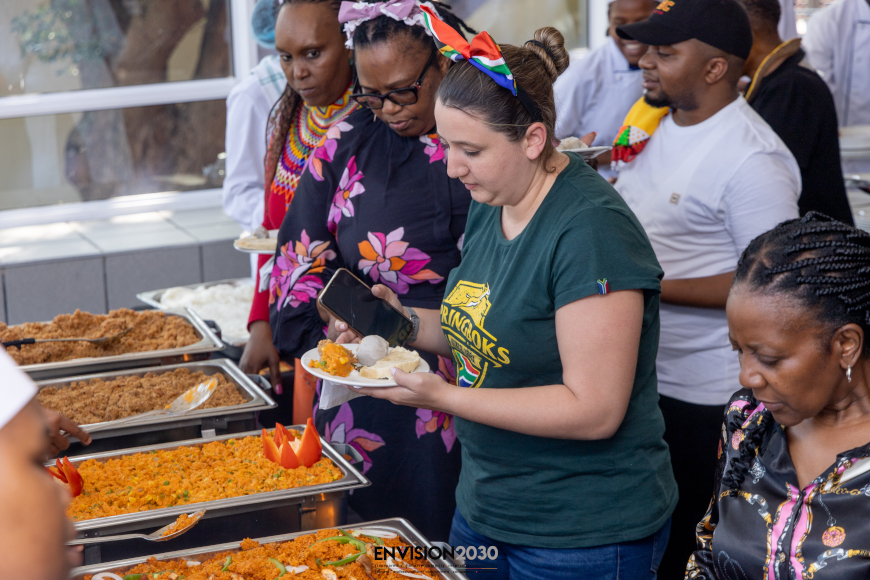
A food and drink festival is not simply a normal event with more caterers. The vendors are part of the programme. Queues affect the atmosphere. Power affects whether businesses can operate. Waste builds continuously. Cooking introduces additional safety concerns. Guests may move around the venue repeatedly rather than sitting through one programme, and a vendor having a terrible day can affect how people describe the entire festival even when that vendor is an independent business.
Abuja has hosted several food-focused festivals and culinary gatherings over the years, showing how naturally food, culture, entertainment and community can come together as an event format.
The useful lesson for organisers is not that every food festival automatically becomes a massive success. It is that the format works best when the organiser treats the marketplace, guest journey and vendor operation as one connected experience.
The Food Has to Be the Main Event, Not Decoration Around Another Event
If you are calling something a food festival, people should discover enough variety and quality to justify that description.
Music, games, influencers and attractive installations can make the experience stronger, but they should not be compensating for a weak vendor lineup.
Start by deciding what kind of food experience you are actually creating.
A festival celebrating African cuisine needs a different vendor strategy from a street-food gathering, dessert festival, barbecue event or premium tasting experience. An event may focus on independent restaurants, home-grown food businesses, chefs, regional cuisines or a mixture of established and emerging vendors.
That identity helps you decide who belongs inside the festival.
Without it, vendor selection can become whoever paid for a stall first, leaving guests with twelve businesses selling almost the same thing and very little reason to explore the rest of the venue.
Vendor Variety Matters More Than Simply Having Many Vendors
Fifty food businesses do not automatically create variety.
If thirty of them are selling almost identical rice, grilled meat and small chops, the guest experience may still feel repetitive.
Think about the mix before approving stalls.
You may want substantial meals, snacks, desserts, grills, drinks and specialist products represented without creating unnecessary duplication. Depending on the concept, regional dishes, vegetarian options, baked products or less familiar food experiences can give guests more reasons to keep exploring.
The aim is not to eliminate competition between vendors. Healthy competition is part of a marketplace.
The aim is making sure the festival itself offers discovery.
A guest should be able to walk from one section to another and feel that they have entered another part of the food experience rather than seeing the same menu repeatedly under different business names.
Choose Vendors for Operational Readiness as Well as Good Food
A restaurant that works beautifully from a permanent kitchen may struggle inside a temporary outdoor stall.
Ask vendors how they intend to operate.
What equipment are they bringing? How much power do they need? Are they cooking from scratch at the venue or finishing prepared items? What storage do they require? How quickly can they reasonably serve one customer?
A vendor may make excellent food and still be unsuitable for the event if their serving process creates a forty-minute queue for every order.
This is especially important for vendors expecting high demand.
Talk about preparation quantities, packaging, staffing and what happens if a popular item sells out. The organiser does not need to run each vendor's business, but the festival becomes easier to manage when vendors arrive with realistic operating plans rather than discovering their requirements after gates open.
Do Not Oversell Vendor Spaces
Vendor fees can look like easy revenue before the festival begins.
That can tempt an organiser to squeeze as many stalls as possible into the venue.
The result may be bad for everybody.
Too many vendors competing for the same audience can leave businesses disappointed with sales. Too many stalls can reduce walking space, create congestion and make queues overlap. Additional cooking equipment can also increase demands on power, waste systems and other infrastructure.
Decide vendor capacity from the venue and expected audience rather than from how many businesses are willing to pay.
A smaller, well-curated marketplace where businesses have enough opportunity to trade can build a stronger reputation with vendors than an overcrowded event where everyone feels they were promised demand that never existed.
Be Clear About What Vendors Are Paying For
If businesses are paying for stalls, spell out what the fee includes.
Will you provide a table, tent, chairs, electricity or branding? Are vendors expected to bring extension cables and lighting? Is there a standard stall size? When can setup begin? What time must they stop selling and remove equipment?
Clarify what the organiser is promoting too.
A vendor paying for space should not automatically assume they have also purchased guaranteed individual advertising across every event channel unless that is actually part of the package.
Clear expectations reduce arguments during setup and after the festival.
This is particularly important when one vendor has been promised something different because they are also a sponsor or strategic partner.
The Venue Has to Work as a Marketplace
A visually attractive Abuja venue can still be wrong for a food festival.
People need to move.
They stop to read menus, wait for orders, hold plates, look for somewhere to sit and then move again. A pathway that looks spacious during setup can become difficult once every stall has a queue.
Walk the venue while imagining real behaviour.
Where will popular vendors attract queues? Where do guests enter? Can someone carrying food move past somebody waiting to order? Are toilets reasonably accessible without guests walking through cooking areas?
Think about emergency access and operational movement too.
The delivery vehicle, waste team or technical staff may still need to move through parts of the venue after guests arrive.
Designing a food festival only from the perspective of how the empty venue looks is one of the quickest ways to create congestion later.
Do Not Put Every Popular Vendor Beside Each Other
Layout can influence how traffic spreads around the festival.
If the businesses expected to draw the largest crowds are concentrated inside one corner, that area can become uncomfortable while other parts of the venue remain relatively quiet.
Use the layout deliberately.
Popular attractions can help pull guests through different sections. Drinks, desserts and other categories can be distributed according to how people are likely to move rather than being placed randomly.
Give people reasons to explore the full space.
At the same time, avoid deliberately hiding highly demanded vendors in awkward locations simply to force foot traffic. The layout should feel intuitive to the guest.
Queues Are Part of the Festival Design
A queue outside one very popular food stall may be a good sign for that business.
Ten queues merging into one another are an event-management problem.
Give vendors enough space in front of their stalls to serve people without blocking circulation. Where practical, separate ordering and collection points for businesses whose meals take time to finish.
Watch queues during the event instead of assuming vendors will manage everything themselves.
If one section begins becoming congested, event staff may need to redirect movement, improve signage or work with the vendor to organise the queue more clearly.
Our guide on managing queues and crowd flow at events goes deeper into the wider entrance and movement strategy.
Ticketing Should Match What Admission Actually Gives the Guest
Food festivals can use several admission models.
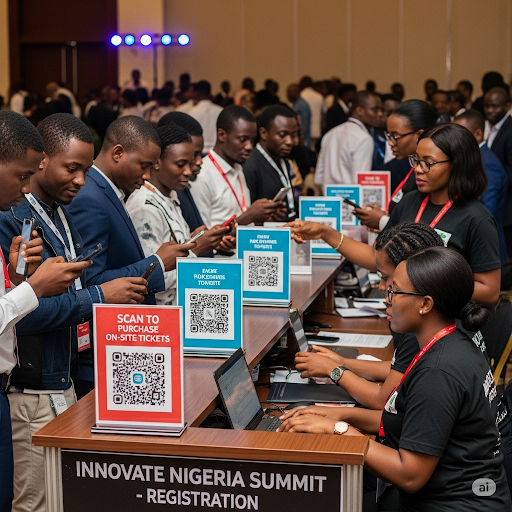
Some are completely free to enter because vendor activity, sponsorship and brand objectives support the event financially. Others charge admission while food and drinks are purchased separately. A premium festival might include tastings, vouchers or specific experiences inside the ticket price.
None of these models is automatically correct.
The buyer simply needs to understand what the ticket includes.
If ₦5,000 gets someone through the gate but every meal inside must still be purchased separately, say so clearly. If a higher-priced ticket includes tasting credits, drinks or another benefit, explain exactly what the attendee receives.
Do not allow guests to discover at the venue that “food festival ticket” did not mean what they assumed it meant.
Do Not Create VIP Just Because Other Festivals Have VIP
Premium tickets can work at a food and drink festival when the experience is genuinely different.
Perhaps there is reserved seating, a private tasting, chef interaction, hospitality or another benefit that has real value.
Simply putting VIP guests behind another rope while they buy the same food from the same vendors may not justify a much higher price.
Think about the festival experience first and ticket categories second.
If everybody should have approximately the same marketplace experience, one clear admission type may be stronger than creating unnecessary tiers.
Coupons Can Support Partnerships Without Changing the Public Price
Food festivals usually involve communities, vendors, creators, sponsors and other partners who may help bring an audience.
There are times when you may want one of those groups to receive a specific ticket offer without reducing the public ticket price for everybody.
Shows.ng allows organisers to create coupons and vouchers with a monetary value, quantity and validity period. General codes can be reused until their quantity is exhausted, while unique codes can be generated for one-time use.
That can support a controlled partner campaign.
A food community could receive a limited offer. A sponsor might have a defined promotional allocation. Previous attendees could receive an early offer for a later edition.
The code should have a reason rather than becoming another permanent discount circulating through WhatsApp.
A Coupon Can Also Tell You Something About a Partnership
If you give one defined community or collaborator a specific promotional code, usage can tell you whether people actually redeemed that offer.
Do not overstate what that proves.
Somebody might first discover the festival through one creator and later buy without using their code. Another buyer may receive a code from a friend rather than directly from the original partner.
Coupon redemption is therefore useful evidence, not perfect marketing attribution.
Still, it is stronger than assuming a partnership worked because the promotional post received many likes.
Food Festivals Need Local Promotion More Than Empty National Reach
A physical festival in Abuja needs people who can realistically get to Abuja.
Large social media numbers from an audience spread across the country may look impressive while doing very little for attendance.
Begin with the communities connected to the festival.
Vendors should have reasons to promote their participation. Food creators and relevant local media can introduce the event to audiences already interested in dining and lifestyle content. Participating chefs, sponsors and other collaborators can widen the conversation when their audiences genuinely fit.
If organic promotion needs additional reach, Shows.ng also provides event advertising options with targeting choices that include audience, location and age bracket.
For an Abuja festival, geography should remain part of the strategy. Reach matters much more when the people seeing the campaign can reasonably attend.
Let the Vendors Become Part of the Marketing
A food festival has an unusual promotional advantage: many of the businesses inside it already create their own content.
Use that.
Give approved vendors the correct festival artwork, event link, dates and location information. Encourage them to show what they are preparing rather than forcing every business to post one identical flyer.
A grill business might show preparation. A dessert vendor can reveal something being created specifically for the festival. A chef can explain the dish they are bringing.
This gives the campaign variety while keeping everybody connected to the same event.
The festival's audience begins seeing the experience through several businesses they may already trust.
Food Creators Need Something Worth Filming
Influencers and food creators can help a festival reach relevant audiences, but simply inviting them to walk around holding plates is a missed opportunity.
Think about what can become content.
There may be chef demonstrations, food challenges, tastings, unusual dishes or stories behind particular vendors. A creator who understands food can make those elements much more interesting than a generic event shout-out.
If you are paying or formally partnering with creators, agree on the arrangement before event day.
Complimentary access does not automatically mean a creator has agreed to produce a specific number of posts.
Food Has to Be Photogenic Enough to Share, but Good Enough to Eat
Food festivals naturally generate social content.
Colourful dishes, live cooking and busy stalls give attendees plenty to photograph.
Do not let presentation become more important than the food itself.
A highly photogenic meal that tastes disappointing may generate one post and a poor memory.
The stronger result is when the food looks interesting enough to attract attention and tastes good enough for the attendee to recommend the vendor afterwards.
That is one reason good vendor curation matters more than installing endless photo booths.
Entertainment Should Support the Food Experience
Music can help a festival feel lively, but volume deserves attention.
People need to order food, speak to vendors and have conversations.
A DJ or live performance can add energy without forcing every guest to shout across a food stall.
Think about where entertainment sits inside the overall experience.
A central stage may host performances, chef demonstrations or competitions at different times. Smaller activities can create moments of attention without making the festival feel as though the food is happening somewhere behind a concert.
The programme should give people reasons to stay after they have eaten while still protecting the reason they came.
Cooking Changes the Safety Requirements of the Venue
A festival where businesses are actively cooking requires more operational attention than an event where all food arrives already prepared.
Understand what vendors are bringing into the venue.
There may be grills, gas, electrical equipment, hot oil, cooking surfaces and storage requirements. Vendors should operate according to applicable safety and food-handling requirements, and the organiser should understand any venue restrictions affecting cooking.
Do not discover during setup that the property does not permit equipment several vendors planned to use.
Keep cooking operations away from areas where uncontrolled crowd movement creates unnecessary risk.
Cleanliness Cannot Be Left Until the Festival Ends
A food festival produces waste continuously.
Plates, cups, bottles, napkins, packaging and food scraps accumulate while guests are still moving around the venue.
If the cleaning plan begins after everybody goes home, the environment can deteriorate quickly during the event itself.
Place waste points where people actually need them and have a team removing waste throughout the day.
Think about vendors too.
The waste generated behind stalls may be very different from what appears in guest areas.
A clean festival feels more comfortable, protects the visual experience and makes it easier for food businesses to operate professionally.
Toilets and Hand-Washing Are Part of the Food Experience
Guests are eating with their hands, handling plates and spending several hours inside the venue.
Basic facilities therefore matter considerably.
Make sure the venue has appropriate toilet capacity and that facilities can be maintained throughout the event.
Where the concept and venue require additional hand-washing facilities, plan them deliberately rather than assuming one distant tap is enough for an entire festival.
These details rarely appear on the flyer, but guests notice when they are missing.
Power Requirements Need to Be Collected Vendor by Vendor
Do not ask whether vendors “need power” and stop there.
A blender, freezer, refrigerator, warmer and lighting setup have different requirements. Several vendors connecting high-demand equipment to the same supply can create problems quickly.
Collect equipment requirements before event day.
Work with the venue or technical team to understand how power should be distributed and what backup is necessary for the festival you are actually running.
This is also a reason to restrict unapproved equipment.
A vendor turning up with something they never mentioned can affect more than their own stall.
Payments Need a Backup Plan
Most food festival vendors will have their own payment arrangements, but the organiser should still think about the wider customer experience.
If network problems affect several vendors at once, queues can become longer while transfers remain pending or POS terminals struggle.
Encourage vendors to think through reasonable alternatives before the event.
The organiser does not necessarily need to control every vendor transaction, but a festival where guests repeatedly cannot pay for food will quickly become frustrating regardless of how good the programming is.
If the event ticket itself is paid, keep that transaction separate from the vendor-payment confusion by giving attendees a clear official ticketing route before they arrive.
Entry Should Be Faster Than the Food Queues
Guests are already expecting to queue occasionally for popular dishes.
They should not spend unnecessary time in another badly organised queue simply to enter the festival.
For ticketed events on Shows.ng, the Shows Ticket Scanner can verify ticket barcodes at entry and display the ticket details when the ticket is valid.
Plan the physical gate around the technology.
Have enough scanning capacity for the expected arrival pattern. Separate ticket problems from the main queue where possible. Make the entrance wide and clear enough that people who have already been verified can move away quickly.
A smooth arrival gives guests more time to spend inside the festival, which also benefits vendors.
Do Not Ignore Capacity Because Guests Are Moving Around
Food festivals often feel less formal than seated events, which can make capacity seem flexible.
It is not unlimited.
People need room to queue, eat, move between stalls and gather around entertainment. Vendor teams, staff and other working personnel also occupy space.
Know what the venue can reasonably support and control admission accordingly.
Overcrowding may produce photographs that look popular while creating a poor experience for the people actually inside.
Watch Ticket Sales Before You Finalise Every Operational Decision
Ticket sales provide more than revenue.
They give you an evolving picture of demand.
Shows.ng's organiser analytics currently include real-time ticket sales, ticket-type performance, revenue information and a sales timeline.
That can help a festival organiser understand whether the campaign is moving towards the attendance plan rather than waiting until event morning to discover the answer.
If demand is stronger than expected, that may affect how you think about entry staffing and crowd preparation within the limits of the venue. If sales are slower, there may still be time to adjust promotion.
Do not react emotionally to every quiet afternoon. Look at the wider pattern.
The Vendor Experience Deserves Its Own Review
After the festival, do not ask only whether attendees had fun.
Talk to vendors.
Was setup clear? Did the layout work? Were power arrangements reliable enough for their operation? Did they understand what they were paying for? Were there parts of the organiser's communication that created unnecessary difficulty?
You do not need every vendor to report huge sales before the festival can be considered valuable, because business performance depends on pricing, product, demand and many other factors.
But repeated complaints about the same operational issue are worth examining.
Strong vendor relationships can make future editions easier because good businesses are more willing to return when they trust the organiser.
Ask Guests What They Actually Came For
A food festival may discover that guests valued something differently from the way the organiser expected.
Perhaps vendor variety mattered most. Maybe people loved chef demonstrations. The family audience might have valued activities beyond food, while younger attendees cared strongly about music and social atmosphere.
Use post-event feedback to understand those patterns.
If attendees booked through Shows.ng, the platform's attendee messaging feature can be used to send them a post-event email containing a feedback link or another relevant follow-up.
Our guide on collecting and using event feedback explains how to separate isolated opinions from patterns worth acting on.
The Next Edition Should Be Built From Evidence
A recurring food festival should not begin every year from the same assumptions.
Review ticket performance, attendance, vendor experience, queues and guest feedback.
Which vendors attracted sustained interest? Where did the venue become congested? Which ticket options made sense? When did the majority of buyers commit? Were particular promotional partnerships useful?
Then decide what to change.
You may need more space between stalls rather than a bigger venue. The next edition could benefit from fewer vendors in one category and more variety elsewhere. A programme activity may deserve expansion because guests repeatedly mentioned it.
Growth does not always mean adding more of everything.
Sometimes a better second edition comes from removing the parts that did not contribute enough.
A Successful Food Festival Is an Ecosystem
The strongest food festival is not simply a collection of stalls surrounded by music.
The organiser is creating an environment where several different groups need to succeed at the same time.
Guests need enough variety, comfort and entertainment to feel that attending was worthwhile. Vendors need workable spaces and a realistic opportunity to trade. Sponsors need whatever value was genuinely agreed with them. Staff need a venue they can operate safely. The organising team needs a financial model that can sustain the event.
That balance is the real lesson worth taking from food festivals in Abuja and elsewhere in Nigeria.
Curate vendors instead of simply filling stalls. Design the venue around queues and movement. Think through cooking, power, waste and payments before gates open. Build promotion around the actual food experience, and let vendors and relevant creators become genuine parts of the campaign.
Where it supports the strategy, Shows.ng can handle some of the ticketing side. Coupons can support controlled partner promotions, the ticket scanner can help verify paid entry, and real-time ticket reporting can help the organising team understand sales while the campaign is still active.
When your own festival is ready to move from concept to a real date, you can create your event on Shows.ng and build the ticket structure around the experience you actually intend to deliver.
People may arrive because they are hungry, but a strong food festival gives them enough reasons to stay, explore, spend, share the experience and want another edition.