In this article
- Complimentary Access and Media Access Are Not Exactly the Same Thing
- Decide How Many Complimentary Tickets You Can Afford Before People Start Asking
- Every Complimentary Ticket Should Have a Reason Behind It
- Do Not Let Everyone on the Team Promise Free Entry
- Shows.ng Coupons Can Make Complimentary Access Much Easier to Control
- Unique Coupons Make More Sense for Individual Media Invitations
- General Coupons Can Still Be Useful for Controlled Group Allocations
- Set Expiry Dates So Old Complimentary Offers Do Not Keep Circulating
- A Coupon Is Better Than Telling Someone to “Mention My Name at the Gate”
- Do Not Publish Your Complimentary Coupon Code Publicly
- Do Not Give Someone a Media Ticket Just Because They Say They Are a Blogger
- Ask Who the Media Person Represents
- Press Accreditation Is Not the Same Thing as Paying for Promotion
- Creators and Influencers Need Clear Agreements Too
- Media Tickets Should Include the Access the Media Actually Needs
- Do Not Give Away VIP When Standard Media Access Would Do the Job
- Protect Sponsor Complimentary Tickets Early
- A Plus-One Is Still Another Ticket
- Issue the Ticket Before Event Day Where Possible
- Ticket Scanning Gives Complimentary Guests the Same Clear Gate Process
- Brief the Gate Team About Different Credentials
- Complimentary Guests Still Need Important Event Information
- Track Whether Complimentary Tickets Were Actually Used
- Review the Coverage After the Event
- Include Complimentary Attendance in Your Event Report
- Use Coupons for Control, Not as a Substitute for a Complimentary Strategy
- Free for the Guest Should Still Mean Organised for the Event
A complimentary ticket may cost the guest nothing, but it still has value to the organiser.
It occupies space inside the venue. It may replace a ticket that could have been sold. It can include access to seating, hospitality or other benefits your team is paying to provide. And if too many complimentary invitations are handed out casually, what started as a small media or partner allocation can become a surprisingly large part of your event capacity.
That does not mean complimentary tickets are a bad idea.
They can be extremely useful when they have a clear purpose.
You may want journalists to experience the event before writing about it. A photographer or media crew may need access to cover the programme. Sponsors may have complimentary tickets included in their agreement. Speakers, performers and partners may have approved guest allocations. You might also invite selected industry professionals, creators or people who have contributed meaningfully to the event.
The problem begins when complimentary access becomes something anybody on the organising team can promise.
One person tells a blogger to mention their name at the gate. Another promises five friends free entry. A sponsor requests more tickets than originally agreed. Several people arrive saying they are “media”, and suddenly security is calling the organiser every five minutes while paying attendees wait in the same queue.
Professional complimentary ticketing is not about refusing to invite people.
It is about making sure every free entry has a reason, an owner and a clear way to be verified.
Complimentary Access and Media Access Are Not Exactly the Same Thing
It helps to separate these ideas before you start issuing tickets.
A complimentary guest may simply be somebody the organiser has chosen to invite without charging them. Perhaps they are an industry contact, partner, sponsor guest or someone who supported the event.
A media attendee usually has a job connected to being there.
They may be reporting for a publication, taking photographs, recording interviews, creating editorial content or covering the programme for a relevant platform.
That means the media person may need more than entry.
They could need earlier access, somewhere appropriate to photograph from, information about important programme moments or permission to bring professional equipment.
Putting everybody under one vague “free VIP” category makes those different requirements harder to manage.
You may eventually use the same digital ticketing process for both groups, but the organiser should still understand why each person is attending.
Decide How Many Complimentary Tickets You Can Afford Before People Start Asking
Complimentary allocations become much easier to control when you decide the limit before the requests begin.
Look at your total capacity, ticket-sales target and existing obligations.
A media launch may intentionally reserve a substantial part of the room for press. A commercial concert depending heavily on paid admission may have a much tighter complimentary allocation. A conference with major sponsors may already have several contracted guest allocations before the organiser personally invites anybody.
There is no universal number that works for every event.
The useful question is how much capacity you can allocate without damaging the event's financial model or making the venue unnecessarily crowded.
Remember that free guests still count towards capacity.
If the venue comfortably holds 500 people, it does not suddenly hold 550 because fifty attendees entered without paying.
Every Complimentary Ticket Should Have a Reason Behind It
Before approving a free ticket, ask why that person is being invited.
A journalist covering the event has an obvious reason. A sponsor's guest may be part of the value promised in a partnership agreement. A performer may have an agreed number of personal passes. An industry professional might be invited because building that relationship is useful to the organiser.
Sometimes the reason is simply courtesy, and that can be perfectly reasonable too.
What becomes dangerous is issuing complimentary tickets mainly because saying no feels uncomfortable.
If every person who knows somebody on the team receives free access, the complimentary list can become much larger than anybody intended.
You do not need to demand a financial return from every invitation. You simply need to know why you are giving up that piece of your event capacity.
Do Not Let Everyone on the Team Promise Free Entry
One of the easiest ways to lose control is allowing every person working on the event to create their own guest list.
The PR person invites creators. The social media manager promises tickets to friends. A committee member brings relatives. Someone working with the performer promises access to another group.
Individually, each request sounds small.
Together, they become fifty people nobody included in the original capacity plan.
Give one person or a small authorised team responsibility for approving complimentary access.
Other members of the team can still request tickets, but somebody should be able to see the complete allocation and know how much remains.
This also creates accountability when somebody arrives at the gate claiming they were invited.
Shows.ng Coupons Can Make Complimentary Access Much Easier to Control
This is one area where the Shows.ng coupon feature can be particularly useful.
Shows.ng allows organisers to create coupons for an event with a specified monetary value, quantity and validity date. Coupons can be created as General codes or Unique codes.
A general coupon uses one code that can be redeemed multiple times until the quantity allocated to that coupon has been exhausted.
A unique coupon creates separate codes, with each code intended for a single use.
For complimentary media or individually approved guests, unique coupons can provide much more control.
Instead of publicly creating a ticket called Free Media Pass that anybody might try to select, you can keep the normal ticket structure and issue an approved person their own coupon code for the relevant ticket.
The organiser chooses the coupon amount within the limits allowed by the ticket price, specifies how many coupons should exist and sets the validity period. The recipient can then use the code through the normal booking process rather than asking somebody at the gate to believe a WhatsApp message.
You can see the current setup process in the Shows.ng coupon and voucher guide.
This gives complimentary access something extremely important: structure.
Unique Coupons Make More Sense for Individual Media Invitations
Imagine you have approved ten journalists for an event.
You could create one general code and send the same code to all ten people.
That may work, but the code can also be forwarded.
Someone sends it to a colleague, that colleague sends it to somebody else and suddenly the organiser has less control over who is using the complimentary allocation.
Unique coupons reduce that problem because each approved recipient can receive a different single-use code.
If you have invited a journalist from one publication, a photographer from another and two creators under separate arrangements, individual codes give you a cleaner system than one universal word such as MEDIAFREE circulating through WhatsApp.
The code does not replace accreditation.
You should still know who the recipient is and why they were approved.
It simply gives you a better way to convert that approval into an actual ticket.
General Coupons Can Still Be Useful for Controlled Group Allocations
There are situations where one reusable code makes more sense.
A sponsor may have an agreed allocation of ten tickets. A recognised partner organisation might have a small number of complimentary spaces for its members. A media organisation may be sending a defined team rather than one person.
In those cases, a general coupon with a controlled quantity can simplify distribution.
The important word is controlled.
If a sponsor has ten passes, the code should not quietly become a way for thirty people to enter because nobody set or monitored the allocation.
Shows.ng's coupon system allows organisers to specify the number of coupons and revisit the Coupons section to manage them. According to the current help documentation, coupons can also be edited or deactivated when necessary.
That makes a coupon more useful than a static screenshot somebody can continue forwarding indefinitely.
Set Expiry Dates So Old Complimentary Offers Do Not Keep Circulating
Complimentary codes do not necessarily need to remain valid until somebody reaches the gate.
You may want approved media to confirm attendance several days before the event so the team can finalise seating, credentials or working areas.
Shows.ng coupons support validity dates.
That means an organiser can create an acceptance window rather than leaving every invitation open indefinitely.
For example, media accreditation could be approved and the recipient asked to claim their ticket before a stated deadline. Once that period closes, the organiser has a better idea of how many media seats are genuinely being used.
This becomes especially valuable at events where public tickets are selling strongly.
There is little reason to protect thirty complimentary seats until event day for people who never confirmed they were attending.
A Coupon Is Better Than Telling Someone to “Mention My Name at the Gate”
That phrase creates more problems than organisers realise.
The guest arrives and tells security that the organiser invited them. Security calls an usher. The usher calls somebody backstage. That person calls the organiser, who is trying to deal with another problem while the event is already starting.
Now multiply the process by fifteen guests.
A proper ticket removes much of that uncertainty.
The approved person uses their coupon, receives the appropriate ticket through the normal process and arrives with something the entry team can verify.
Your personal relationship with the guest does not need to become the access-control system.
Do Not Publish Your Complimentary Coupon Code Publicly
A media or partner coupon only remains controlled while the people receiving it are controlled.
Do not post an unrestricted complimentary code on a public social account unless the promotion is genuinely meant for everybody who sees it.
If the code is intended for one journalist, send it directly to that journalist.
If a unique code is intended for one creator, do not put the code inside a group chat containing fifty people.
This sounds obvious, but event codes spread very quickly once screenshots begin moving through WhatsApp.
Treat a complimentary coupon like access information, not promotional artwork.
Do Not Give Someone a Media Ticket Just Because They Say They Are a Blogger
The definition of media has expanded considerably.
Alongside newspapers, television and radio, organisers now deal with digital publications, podcasts, YouTube channels, TikTok creators, newsletters, photographers and independent journalists.
That is good for events because useful coverage can come from many different places.
It also means the organiser needs some criteria.
Having an Instagram page does not automatically create a right to free admission.
Look at what the person actually covers.
Does their audience have a genuine relationship with your type of event? Have they produced original event coverage before? Is their platform active? Are they attending as a journalist, photographer, reviewer or commercial creator?
A small specialist publication can sometimes be more relevant than an enormous entertainment page.
The decision should come from fit, not simply follower count.
Ask Who the Media Person Represents
You do not need to turn a small event into an international press-accreditation bureaucracy.
You do need enough information to know who you are approving.
Ask for the person's name, publication or platform and what kind of coverage they intend to produce where appropriate.
If somebody is coming with another person, understand that person's role too.
A journalist bringing a photographer is different from someone requesting an extra complimentary ticket for a friend.
The level of checking can match the event.
A major festival may require formal accreditation. A small industry gathering may only need a direct conversation with known media contacts.
What you should avoid is instructing security to admit anybody who introduces themselves as press.
Press Accreditation Is Not the Same Thing as Paying for Promotion
Inviting a journalist does not automatically mean you are purchasing positive coverage.
A journalist may attend and publish an article. They might write a review that includes criticism. They may decide there is not enough editorial value for a full story.
If you need guaranteed content, that may be a commercial media partnership or paid creator agreement instead.
Make the distinction clear before the ticket is issued.
Do not give someone complimentary access without discussing deliverables and then become angry afterwards because they did not post three Instagram Stories you never agreed on.
If the arrangement involves guaranteed promotional content, discuss exactly what is expected.
Creators and Influencers Need Clear Agreements Too
A content creator may receive complimentary access because their event-day content is valuable to the campaign.
That arrangement should still be clear.
Are they attending simply as an invited guest? Are they producing a Reel? Do you expect Stories during the programme? Is the complimentary ticket their entire compensation or is a separate fee involved?
Agree before event day.
The organiser should not assume the creator understands the ticket as payment, while the creator assumes the ticket is simply a nice invitation.
A coupon can still handle the access itself once the commercial or promotional arrangement has been agreed.
Media Tickets Should Include the Access the Media Actually Needs
Entry is only the beginning for some media attendees.
A photographer may need an appropriate shooting position. A journalist might need access to a short post-event interview. A television crew may require enough room to work with equipment.
Define what the media credential includes.
General media access does not automatically mean backstage access.
Backstage, interview areas, photo pits and restricted spaces can all have separate rules.
That protects performers and speakers while making it easier for accredited media to understand where they can work.
Do Not Give Away VIP When Standard Media Access Would Do the Job
Complimentary tickets become unnecessarily expensive when every invited person automatically receives the highest ticket category.
A journalist may need a good view of the stage. That does not necessarily mean they need the premium drinks, merchandise, lounge access or hospitality package being sold commercially to VIP buyers.
Think about what access actually supports their role.
For some events, a dedicated media section may make more sense than using commercial VIP inventory.
This becomes particularly important when premium capacity is limited.
If twenty ₦50,000 seats are given away unnecessarily, that represents a meaningful amount of potential inventory even if not every one of those seats would necessarily have sold.
Protect Sponsor Complimentary Tickets Early
Sponsor allocations should be part of the ticket plan from the beginning.
If a sponsor agreement includes eight tickets, those tickets should not become an unpleasant surprise after public sales have almost filled the venue.
Record the allocation.
You can use an appropriate controlled coupon approach where that works with your setup, or otherwise reserve the required access through your ticket-management process.
The important thing is that the sponsor receives what was agreed without the organiser scrambling to remove seats from somebody else days before the event.
A Plus-One Is Still Another Ticket
Media guests sometimes ask whether they can bring somebody.
Sometimes that is entirely reasonable.
A journalist may work with a photographer. A creator could genuinely need another person to help with equipment. An invited professional may have been explicitly offered a guest.
But a plus-one still occupies event capacity.
You can approve it where appropriate without making it an automatic right attached to every free ticket.
Where the additional person needs their own credential, issue it properly rather than allowing one ticket to become an informal two-person pass.
Issue the Ticket Before Event Day Where Possible
The gate should verify decisions, not make them.
If you have already approved someone for media or complimentary access, complete that process before they arrive where practical.
Send the appropriate coupon or ticket instructions early enough for the guest to claim their ticket.
If they encounter a problem, there is still time to resolve it without a queue forming behind them.
Last-minute additions will always happen, but they should be exceptions rather than the whole system.
Ticket Scanning Gives Complimentary Guests the Same Clear Gate Process
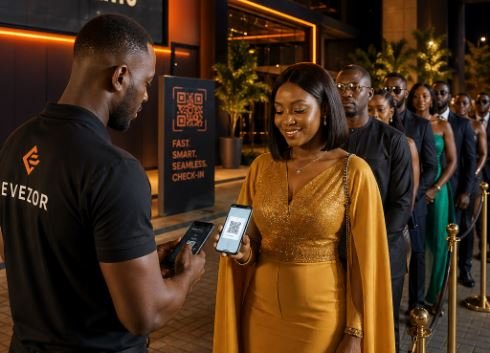
Once a complimentary guest has received a proper Shows.ng ticket, that ticket can move through the same entry-verification process as other digital tickets.
The Shows Ticket Scanner supports QR code and barcode scanning and displays ticket information when a valid ticket is checked.
You can see how that works in the Shows.ng ticket scanner guide.
This is one of the strongest reasons to bring complimentary guests into the normal ticketing system.
The gate team does not need one process for people who paid and another process based on screenshots, names and personal phone calls for everybody who did not.
Paid or complimentary, authorised access should be easy to recognise.
Brief the Gate Team About Different Credentials
Technology does not replace staff preparation.
If media guests enter through a different route, tell the team. If photographers can carry professional equipment, security needs to know. If certain credentials provide backstage or restricted-area access, make those distinctions clear.
Do not put the journalist through an accreditation process and then leave them arguing with a second security team that has never heard of media accreditation.
The physical operation has to match whatever digital access you created.
Complimentary Guests Still Need Important Event Information
Free attendees sometimes receive less information because the organiser assumes they are already connected closely enough to know what is happening.
That creates unnecessary confusion.
Tell them when to arrive, where check-in happens and whether there are special media instructions.
If approved complimentary guests booked through Shows.ng and are part of the attendee list, the platform also provides organiser-to-attendee communication features for relevant updates.
Use that communication for information they genuinely need rather than treating a complimentary ticket as another reason to send promotional messages constantly.
Track Whether Complimentary Tickets Were Actually Used
Issuing fifty complimentary tickets does not mean fifty people attended.
Review actual usage afterwards.
How many media tickets were issued? How many were scanned? Which sponsor allocations were claimed? How many approved guests never showed up?
This information can help you make better decisions next time.
If you consistently reserve thirty press places and only ten are used, you may decide to require earlier confirmation or release unused capacity sooner.
If certain creators repeatedly request tickets but never attend, you can factor that history into future invitations.
Complimentary access should become smarter across editions rather than remaining the same informal list forever.
Review the Coverage After the Event
When media were invited for editorial purposes, see what happened afterwards.
Did relevant outlets publish coverage? Were photographs released? Did a niche publication reach exactly the audience you wanted even though its overall following was relatively small?
You are not evaluating whether every journalist “paid back” the cost of their ticket in a simple transaction.
You are learning which relationships make sense for future events.
Media relationships can become more valuable over time when both sides understand each other.
If your wider challenge is attracting that coverage in the first place, our guide on getting media coverage for your event without a large PR budget focuses specifically on approaching journalists, creators and relevant publications.
Include Complimentary Attendance in Your Event Report
Do not report total attendance as though every person bought a ticket.
If 2,000 people were inside the venue but 300 attended through media, sponsor and other complimentary allocations, the event had 1,700 other attendees, not automatically 2,000 paid ticket sales.
That distinction matters when evaluating revenue, pricing and future capacity.
Complimentary attendance can still provide real value.
The organiser simply needs to understand what part of the audience was revenue-generating and what part was intentionally allocated for another reason.
Use Coupons for Control, Not as a Substitute for a Complimentary Strategy
Shows.ng's coupon feature can make the practical process much cleaner, but the tool cannot decide who deserves a free ticket.
That decision still belongs to the organiser.
Decide the complimentary allocation first. Decide which media, partners, creators or guests have a genuine reason to receive access. Then choose whether a unique or general coupon makes the most sense for distributing that access.
For individual media invitations, unique codes can reduce uncontrolled sharing. For a defined group allocation, a quantity-limited general code may be more convenient. Validity dates can also help you require confirmation before the event gets too close.
Once somebody uses the approved route and receives their ticket, they can enter through the same structured verification process as other authorised attendees.
Free for the Guest Should Still Mean Organised for the Event
The professional way to manage complimentary and media tickets is not making the process unnecessarily complicated.
It is removing uncertainty.
Know how much complimentary capacity exists. Know who can approve it. Understand the difference between journalists, creators, sponsor guests and ordinary complimentary attendees. Give media the access they need without automatically giving everybody your most expensive commercial ticket.
Then use the tools available to make that access easier to control.
Shows.ng's current Shows features include coupon management and digital ticket scanning. For complimentary allocations, the coupon feature can help you issue controlled general or unique codes with quantity and validity settings, while the Shows Ticket Scanner gives the gate team a consistent way to verify the ticket after it has been issued.
When the wider event is ready, you can create your event on Shows.ng and decide how paid, media, sponsor and other complimentary access should work before anybody starts telling guests to mention their name at the entrance.
A complimentary ticket should remove the price for the guest, not remove the organiser's control over who gets in.