In this article
- Decide What You Need to Learn Before Writing the Survey
- Do Not Ask Attendees Questions You Have No Intention of Using
- Ask While the Experience Is Still Fresh, but Not Always at the Exact Same Moment
- Collect Some Feedback During the Event When You Can Still Fix the Problem
- Keep Surveys Short Enough That Finishing Them Feels Realistic
- Start With Questions People Can Answer Easily
- Ask About Specific Parts of the Experience
- Avoid Questions That Tell Attendees Which Answer You Want
- Do Not Combine Two Different Questions Into One
- Use Open Questions Selectively
- Give People Space to Mention Something You Did Not Ask About
- Use the Same Rating Scale Consistently
- Make It Clear Whether Feedback Is Anonymous
- Do Not Force Attendees to Praise You Before They Can Submit Criticism
- Use QR Codes Where They Reduce Friction, Not Because QR Codes Look Modern
- Do Not Depend Entirely on QR Codes
- Short Interviews Can Explain What Survey Scores Cannot
- Social Media Polls Are Useful, but They Are Not the Same as Attendee Feedback
- Shows.ng Attendee Messaging Gives You a Direct Route to Registered Attendees
- Write a Feedback Request That Respects the Attendee's Time
- A Reminder Can Help, but Do Not Chase People Indefinitely
- Incentives Can Increase Participation, but They Can Also Change Who Responds
- Do Not Confuse More Responses With a Better Sample
- Do Not Ask Only Your VIPs What They Thought
- Make Feedback Accessible Enough to Complete
- Separate Feedback Collection From Customer Support
- Do Not Publicly Argue With Negative Feedback
- Close the Survey When the Feedback Is No Longer Timely
- Collection Ends Where the Next Feedback Article Begins
- Useful Feedback Starts With Better Questions
Asking attendees whether they enjoyed your event is easy.
Getting feedback that actually helps you improve the next one is harder.
A guest can say the event was “nice” and leave you knowing almost nothing. Another person can give a long complaint about one unusual incident that affected nobody else. A post-event survey can collect hundreds of ratings while still failing to explain why people felt the way they did.
Useful attendee feedback does not happen simply because an organiser created a form.
You need to ask at the right time, choose questions that people can realistically answer, make participation easy and collect enough context to understand what the responses actually mean.
The goal is not to convince attendees to praise the event.
It is to learn something you did not already know.
Decide What You Need to Learn Before Writing the Survey
A common mistake is opening a survey tool and immediately writing every question that comes to mind.
Start somewhere else.
What decision are you trying to improve?
Perhaps you want to understand whether attendees thought the ticket was worth the price. Maybe check-in felt slow and you want to know how widespread the problem was. A conference organiser may want to learn which sessions were genuinely useful, while a festival organiser may be more interested in food, queues, toilets, entertainment and movement around the venue.
Once you know what you want to learn, the questions become easier to choose.
A survey built around five real decisions is usually more valuable than twenty-five generic questions included because they seem professional.
Do Not Ask Attendees Questions You Have No Intention of Using
Every additional question asks for more of the attendee's time.
If the answer cannot influence anything, consider whether you need it.
Suppose an organiser asks guests which city they would prefer for the next edition even though the next three events are contractually fixed in Lagos. The question creates an expectation of influence that does not really exist.
The same applies to programme choices.
If a particular part of the event cannot change, asking people to vote on whether it should exist may not be useful.
Feedback works best when it is connected to genuine decisions rather than becoming a ritual performed after every event.
Ask While the Experience Is Still Fresh, but Not Always at the Exact Same Moment
The current version of this article recommends collecting feedback immediately, and there is good logic behind that. People remember details more clearly when the event is recent.
But “immediately” should not become a rigid rule.
If someone is leaving a crowded concert at midnight and trying to find their transport, that may be a terrible moment to ask them to complete a survey.
At a conference, asking for a quick session rating immediately after a workshop may make sense because the content is still fresh. A broader event survey may work better later that evening or the following day.
Think about the type of feedback you want and the attendee's situation when you ask for it.
The closer you get to the experience, the stronger the memory may be. The more inconvenient the moment becomes, the less thoughtful the response may be.
Collect Some Feedback During the Event When You Can Still Fix the Problem
Not every piece of feedback needs to wait until the event ends.
If attendees are struggling to find a room, complaining that one entrance is overloaded or repeatedly asking the same question, that information is already available.
Listen while the event is happening.
Ushers, registration staff, security personnel, volunteers and other front-of-house team members often hear problems before senior organisers do.
Create a simple way for those observations to reach whoever can act on them.
There is little value in discovering through a survey three days later that the toilets ran out of supplies by 4pm if somebody at the venue could have solved the problem at 4:10pm.
Real-time feedback is operational information first and research second.
Keep Surveys Short Enough That Finishing Them Feels Realistic
There is no perfect number of questions for every event.
The useful principle is that the survey should be only as long as necessary for what you genuinely need to learn.
A small social event may need only a few carefully chosen questions. A multi-day professional conference may justify a more detailed survey because attendees experienced several sessions, speakers and services.
Do not confuse a longer survey with a more serious survey.
If fifteen questions produce rushed answers while six questions produce thoughtful ones, the shorter survey gave you better information.
Be especially cautious with multiple questions that are essentially asking the same thing in different language.
Start With Questions People Can Answer Easily
The first question should not feel like an essay assignment.
A simple overall rating or clear experience question can help someone begin quickly.
You can then move towards more detailed responses.
For example, asking someone how they would rate the entry experience gives you a broad signal. Following that with an optional question asking what influenced their rating can provide the explanation.
This combination is often more useful than asking only, “What did you think about entry?”
Some attendees will write several paragraphs. Many will write one vague sentence.
A structured rating plus a carefully chosen open question gives you both something comparable and somewhere for context to appear.
Ask About Specific Parts of the Experience
“How was the event?” is easy to ask and difficult to interpret.
An attendee may have loved the performer but hated the queue. They may have enjoyed the programme while thinking the ticket was overpriced. They could have found the venue beautiful but uncomfortable.
One overall question cannot show those differences.
Ask about the parts of the experience that matter to the event you actually organised.
For a conference, that could include registration, speakers, session usefulness, networking and venue comfort. A concert may care more about entry, sound, visibility, timing and overall value. A food festival may need feedback about vendor variety, queues, seating, cleanliness and entertainment.
Do not ask about every imaginable event element.
Ask about the components you need to understand.
Avoid Questions That Tell Attendees Which Answer You Want
A survey should not behave like promotional copy.
Consider the difference between asking:
How amazing was our entertainment?
and asking:
How would you rate the entertainment?
The first question already assumes the entertainment was amazing.
You may unintentionally encourage respondents to agree with the organiser rather than describe their experience.
Keep important evaluation questions as neutral as possible.
The purpose is to discover what attendees thought, not persuade them to validate what the organising team already believes.
Do Not Combine Two Different Questions Into One
Questions such as “How would you rate the venue and organisation?” create a problem.
What if the attendee loved the venue and disliked the organisation?
The same issue appears with questions about “sound and lighting”, “food and drinks” or “security and entry”.
If you need to understand two separate things, ask separately.
This becomes especially important when you plan to compare responses later.
A rating of three out of five tells you very little when it represents two completely different experiences bundled together.
Use Open Questions Selectively
Open-ended questions can produce some of the most valuable feedback because attendees can raise things you never thought to ask about.
They also require more effort to answer.
Use them where explanation matters most.
A question such as “What is one thing we should improve before the next edition?” can reveal priorities that rating scales miss.
Another useful approach is asking what attendees valued most.
Positive feedback matters too because you need to know what should be protected rather than changing everything simply because change feels productive.
A survey containing ten compulsory essay boxes will discourage many people from completing it.
Give People Space to Mention Something You Did Not Ask About
No survey anticipates every experience.
Consider ending with an optional space where attendees can mention anything important that was not covered.
This is particularly useful when an unusual issue occurred or one part of the attendee journey escaped the organiser's attention entirely.
You may discover that everybody understood the programme but struggled with parking, that staff were especially helpful or that an unexpected part of the event became one of the strongest experiences.
Structured questions show you what you decided to investigate.
An open final question gives attendees a chance to show you what you forgot to investigate.
Use the Same Rating Scale Consistently
If one question asks for a score from one to five, another from one to ten and a third uses a completely different set of labels, responding becomes unnecessarily harder.
Consistency also makes later interpretation easier.
Choose a scale that makes sense and use it consistently across comparable questions.
More points do not automatically produce more precision.
If attendees cannot meaningfully distinguish between giving your registration process 8 rather than 9 out of 10, the additional options may not add much value.
What matters is that the scale is understandable and interpreted consistently.
Make It Clear Whether Feedback Is Anonymous
Some people will be more candid when their comments are not directly attached to their identity.
Others may be happy to provide their name because they want a response or have a specific issue that needs resolving.
Decide which type of feedback you need.
If the survey is anonymous, say so only if it genuinely is.
Do not describe responses as anonymous while quietly collecting information that clearly identifies each respondent.
If contact information is optional, explain why somebody might choose to provide it.
For example, an attendee reporting a particular unresolved problem may want the organiser to contact them afterwards.
Do Not Force Attendees to Praise You Before They Can Submit Criticism
Some feedback forms become defensive.
The attendee is required to rate several areas positively before being allowed to explain a problem, or the organiser responds to every negative comment by arguing with the person's experience.
That discourages honest feedback.
You do not have to agree with every criticism.
An attendee may misunderstand something, have an unusual expectation or simply prefer something your event does not intend to provide.
Collection comes before judgement.
Let people describe their experience first. The organiser can decide later how representative and actionable the response is.
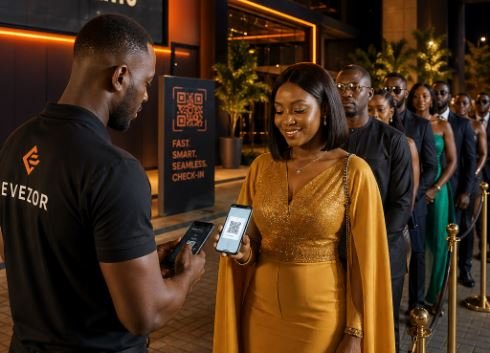
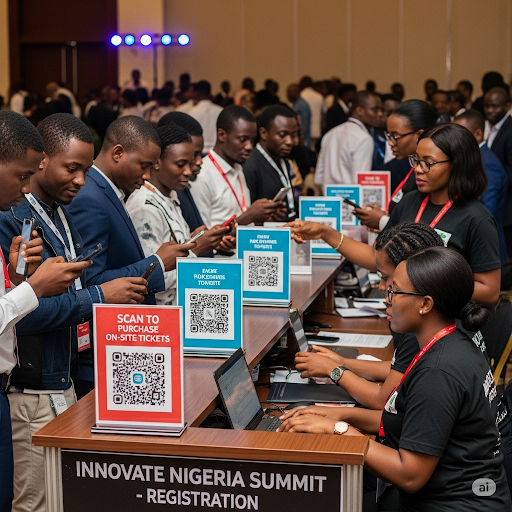
Use QR Codes Where They Reduce Friction, Not Because QR Codes Look Modern
A QR code can provide an easy route to an online feedback form.
You might display one near the exit, on a programme card or on a screen at an appropriate point.
The code itself does not collect better feedback.
Its value is reducing the steps between deciding to respond and reaching the survey.
Test it before the event. Make sure it opens the correct page and that the form works properly on a phone.
Also give enough context around the code. A mysterious square labelled only SCAN ME gives attendees little reason to interact with it.
Do Not Depend Entirely on QR Codes
One collection method rarely suits everybody.
Some people will happily scan a code before leaving. Others will ignore anything presented during the event and respond to an email later.
For smaller events, brief conversations can reveal details that surveys miss. At professional events, session-specific questions may be collected separately from the overall post-event survey.
Choose collection methods according to the audience and the information you need rather than assuming everyone behaves the same way.
Digital collection is useful because responses can be organised efficiently, but personal observation and conversation still have value.
Short Interviews Can Explain What Survey Scores Cannot
Suppose forty attendees rate networking three out of five.
You now know networking was not especially strong, but you still do not know why.
Was there too little time? Was the room too loud? Did people arrive in established groups? Was there no structure? Did attendees simply care more about the programme than networking?
A few short conversations can help explain the pattern.
This does not mean interviewing every attendee.
Qualitative conversations are especially useful when you need depth rather than another number.
They can also help you write better survey questions for future editions because attendees use language and identify problems the organising team may not have considered.
Social Media Polls Are Useful, but They Are Not the Same as Attendee Feedback
Instagram Stories, X polls and other social questions can create easy interaction.
They are useful for quick opinions and community engagement.
But the people responding may include followers who never attended the event.
That does not make the information worthless.
It means you need to understand what population you are listening to.
If you specifically need to know what paying attendees thought about check-in, asking your entire Instagram audience may not give you the answer.
Use public social feedback for the questions it can genuinely answer.
Shows.ng Attendee Messaging Gives You a Direct Route to Registered Attendees
When attendees registered or purchased tickets through Shows.ng, organisers can communicate with the people attached to that specific event.
From the organiser dashboard, you can select the event, open View Attendees and choose Send Message to Attendees. Shows.ng lets you enter a subject and message and delivers that communication to attendees by email.
This makes it useful for post-event feedback collection.
You can thank attendees for coming, briefly explain why their input matters and include a link to whichever survey or feedback form you are using.
The distinction matters: Shows.ng provides the attendee messaging route. You still need to create the actual feedback form using an appropriate survey or form tool.
The full process for sending the message is documented in the Shows.ng attendee messaging guide.
Write a Feedback Request That Respects the Attendee's Time
You do not need a long speech before the survey link.
Thank the person for attending, tell them roughly what you want to learn and give them a realistic idea of the effort involved where useful.
If the form really takes two minutes, saying so can reduce uncertainty.
Do not describe a twelve-minute survey as a “quick one-minute form”.
Trust carries over from the event into the follow-up.
The request should feel like an invitation to help improve the experience, not another marketing message disguised as research.
A Reminder Can Help, but Do Not Chase People Indefinitely
Some attendees intend to respond and forget.
A reasonable reminder can increase participation, particularly if the feedback genuinely matters and the survey is still open.
Repeated reminders eventually become annoying.
If somebody ignores several requests, accept that they may not want to participate.
The objective is collecting voluntary feedback from attendees, not wearing people down until they complete the form to stop receiving messages.
Incentives Can Increase Participation, but They Can Also Change Who Responds
Offering something small can encourage more people to complete a survey.
That does not automatically mean you should incentivise every feedback request.
If the reward is too large, people may rush through the survey only to qualify. You can end up with more responses and worse information.
If you choose to use an incentive, make the conditions clear and do not connect the reward to giving positive feedback.
A person should not need to give five stars in order to qualify.
The organiser wants honest participation, not purchased praise.
For recurring ticketed events, a modest future-event benefit can sometimes make sense. Shows.ng supports coupons and vouchers if you decide to provide a controlled ticket discount later, but the incentive should serve the feedback strategy rather than becoming the main reason the survey exists.
Do Not Confuse More Responses With a Better Sample
A survey can collect a large number of responses and still give a distorted picture.
Perhaps only your most loyal attendees responded. Maybe people who experienced one serious problem were especially motivated to complain. An incentive could attract people who cared mainly about receiving the reward.
Pay attention to who had the opportunity and motivation to respond.
This does not mean dismissing inconvenient feedback by saying the sample was imperfect.
It means recognising that voluntary surveys rarely represent every attendee equally.
A smaller but thoughtful set of responses can sometimes teach you more than a large number of rushed answers.
Do Not Ask Only Your VIPs What They Thought
VIPs, sponsors, speakers and familiar regulars are often the easiest people for organisers to contact personally.
Their perspective can be useful.
It is not necessarily representative of the wider event.
A VIP guest using a separate entrance may have no idea that Regular attendees waited forty minutes at another gate. A sponsor sitting in a reserved area may experience the venue completely differently from somebody with general admission.
Collect feedback from the parts of the audience whose experience you are trying to understand.
Make Feedback Accessible Enough to Complete
A survey should not create avoidable barriers.
Check how it behaves on a mobile phone. Avoid enormous pages that are difficult to navigate. Use readable language and explain specialist terms when they are necessary.
If your event serves audiences with different accessibility needs, consider whether the method you chose allows those attendees to participate comfortably.
Good feedback collection reflects the same inclusion principles as good event planning.
Separate Feedback Collection From Customer Support
Sometimes a survey response reveals an issue that needs an individual resolution.
An attendee may say they were charged incorrectly, lost an item, experienced inappropriate treatment or have another problem requiring direct follow-up.
That is no longer only research.
Make sure serious individual issues have a route towards the person capable of dealing with them.
Do not leave somebody's unresolved support problem sitting inside a spreadsheet simply because it arrived through a feedback form.
Do Not Publicly Argue With Negative Feedback
Some attendees will post their opinions publicly rather than use your survey.
Listen before reacting.
If a factual correction is genuinely necessary, communicate it professionally. If the person had a poor experience, immediately becoming defensive can turn one complaint into a much larger conversation about how your organisation responds to criticism.
Not every public comment requires a detailed response.
The purpose of feedback collection is learning, not winning an argument with the attendee.
Close the Survey When the Feedback Is No Longer Timely
Feedback forms do not necessarily need to remain open forever.
A defined response period can make analysis easier and encourage the organising team to move from collection into action.
The exact window depends on the event.
A short entertainment event may gather most useful responses within days. A professional conference could reasonably leave its survey open longer, particularly where attendees need time to reflect on the programme.
The important thing is eventually doing something with what you collected.
Collection Ends Where the Next Feedback Article Begins
Once responses arrive, a different set of questions begins.
Which comments represent patterns? Which complaints are severe even if only one person experienced them? What should be fixed first? How should ratings be compared with ticket, sales or attendance data? Which positive parts of the experience should remain unchanged?
Those are analysis and decision-making questions.
Our separate guide on how to collect and use event feedback for growth focuses more heavily on turning what attendees tell you into practical improvements and future-event decisions.
This distinction is important.
A good collection process gives that later analysis better material to work with.
Useful Feedback Starts With Better Questions
You do not need a massive research programme after every event.
Decide what you actually need to understand. Ask attendees close enough to the experience that the details are still clear, but choose a moment when responding is realistic. Keep the survey focused, combine comparable ratings with a small number of useful open questions and avoid language that pushes respondents towards the answer you want.
Use more than one feedback route where the event justifies it. A short conversation can explain something a score cannot. A QR code can make an on-site survey easier to reach. Social polls can reveal broader audience opinion, while a post-event email can reach people who actually registered.
For events managed through Shows.ng, the attendee messaging feature gives organisers a direct email route to attendees of that specific event, making it useful for sending a thank-you and an external survey link after the event.
When you are preparing the next event, you can create your event on Shows.ng and build attendee communication into the process from the beginning rather than trying to find everyone again after the event is over.
Good feedback collection is not about getting everybody to say something. It is about making it easy for the right attendees to tell you something you can genuinely learn from.