In this article
- Start With the Festival You Are Actually Trying to Create
- Get Institutional Approval Before Building a Campaign Around the Event
- Clarify Who Is Actually Organising the Festival
- Build a Core Team Around Responsibilities, Not Titles
- Separate the Core Team From the Wider Workforce
- Choose the Venue Based on Capacity and Operations, Not Convenience Alone
- Do Not Treat “3,000 People” as One Crowd
- Design the Entrance While You Are Designing the Ticket Strategy
- Use Digital Verification Instead of Judging Screenshots by Appearance
- Practise the Gate Before Thousands of People Arrive
- Build the Budget Before the Festival Becomes Expensive
- Build a Contingency Into the Budget
- Do Not Build the Entire Event Around Sponsorship That Is Not Yet Confirmed
- Protect the Event From Becoming a Collection of Sponsor Activations
- Choose the Ticket Model Based on the Economics of the Festival
- Even a Free Festival Needs Capacity Control
- Use Sales Data to Manage the Campaign, Not Just Celebrate It
- Build the Marketing Around Student Behaviour Without Stereotyping Students
- Give Every Promotional Channel the Same Official Destination
- Campus Ambassadors Need a Clear Job
- Choose Creators for Audience Fit, Not Follower Count Alone
- Book Performers for the Festival You Are Building
- Do Not Announce Talent Before the Agreement Is Real
- Think About the Programme as a Whole
- Give Food and Other Vendors an Operational Plan
- Do Not Oversell Vendor Space
- Power Needs a Proper Plan
- Weather Planning Is More Than Ordering Tents
- Security Needs to Be Designed Around the Festival
- Medical Planning Cannot Be an Afterthought
- Manage Alcohol According to the Rules of the Campus and Event
- Plan the Toilets Before the Audience Arrives
- Water and Food Availability Affect How Long People Can Stay Comfortably
- Give the Site a Clear Layout
- Signage Saves Staff From Answering the Same Question Hundreds of Times
- Control Backstage Access
- Prepare for the Event to Run Late Without Planning for It to Run Late
- Event-Day Communication Should Be Structured
- Do Not Let the Organiser Become the Help Desk
- Have a Decision Point for Serious Problems
- The Festival Is Not Finished When the Headline Act Leaves
- Reconcile Tickets, Money and Vendors After the Event
- Debrief While People Still Remember What Happened
- Do Not Turn an Unverified Attendance Estimate Into a Case Study
- A Large Campus Festival Is an Operations Project Disguised as Entertainment
A campus festival can look simple from the audience side.
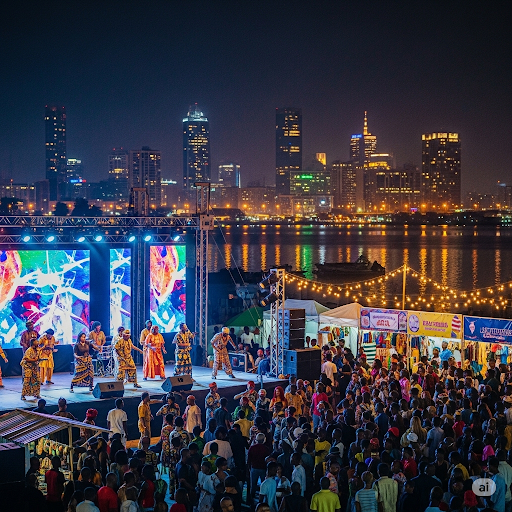
Students arrive, music plays, vendors sell food, performers come on stage and thousands of people spend a few hours enjoying themselves.
Behind that experience is a much more complicated operation.
A large campus festival has to work within the rules of the institution while managing students, invited guests, vendors, performers, sponsors, production teams, security, ticketing, power, weather, transport and crowd movement inside a space that may not have been designed specifically for a festival.
That is why planning one should not begin with a list of artists or an Instagram flyer.
It begins with understanding what kind of event the campus can safely support, who has authority to approve it, what the audience is actually coming for and what operational structure will keep the experience under control once attendance begins to grow.
The bigger the expected crowd becomes, the less room there is for improvisation.
Start With the Festival You Are Actually Trying to Create
Campus festival can mean very different things.
One organiser may be planning a music-led evening with DJs and performers. Another may want a full-day student festival combining food, games, entrepreneurship, fashion, comedy and music. A faculty event could be centred around culture and community, while a university-wide festival may need to attract students across several departments and institutions.
Define the experience before building the logistics around it.
What is the central reason people should attend?
If the answer is music, the stage, sound and headline programme become major priorities. If food and lifestyle are central, vendor layout, seating, hygiene and movement may require more attention. If brands and student businesses are part of the concept, activation space and sponsor visibility become more important.
You can include several activities, but there should still be a clear identity connecting them.
A campus festival becomes difficult to market and difficult to run when it is simply every entertainment idea the committee could think of placed inside the same venue.
Get Institutional Approval Before Building a Campaign Around the Event
A university is not just another event venue.
There may be rules around venue use, external guests, sound, security, commercial activity, alcohol, branding, opening hours, student organisations, performers and sponsorship.
Those requirements differ between institutions, so confirm the actual process with the relevant school authorities instead of assuming what worked at another campus will automatically be permitted at yours.
Understand who needs to approve the event and what information they require.
A student association may support the idea while venue management, campus security or another university office still needs to sign off on important parts of the plan.
Do this early.
Announcing performers and selling tickets before receiving the approvals required to run the event can place the organiser in a very difficult position if the proposed venue, closing time or event format is later rejected.
Clarify Who Is Actually Organising the Festival
Large student events can become confusing when several groups believe they are jointly in charge but nobody knows who has final responsibility.
A faculty association may be involved. The student union may have a role. An external promoter may be financing part of the production. Brand sponsors may have activation requirements. A committee may have been formed around the event.
Define the structure.
Who owns the event? Who can approve spending? Who signs supplier agreements? Who speaks to the institution? Who controls the programme? Who can make a serious event-day decision?
These questions matter more as the event becomes larger.
If a security issue develops, five committee members should not be giving five different instructions.
The organising structure needs a clear operational lead.
Build a Core Team Around Responsibilities, Not Titles
A large festival needs more than hardworking friends.
Someone needs to own operations. Someone needs to control the programme. Marketing needs clear ownership. Vendor relationships need coordination. Ticketing and entry need an operational lead. Security and medical planning need responsible people who understand those areas.
The exact structure depends on the festival.
The important thing is that each major area has one clear owner.
Do not make everybody jointly responsible for everything.
Shared responsibility can sound collaborative during planning meetings and become extremely confusing when something fails.
If you are still building the organising structure, our guide on building an event team that delivers without stress goes deeper into ownership, decision rights and event-day reporting lines.
Separate the Core Team From the Wider Workforce
A festival may eventually involve many people without needing an enormous planning committee.
The core team should contain the people making and coordinating major decisions.
Outside that group, you may have ushers, volunteers, security personnel, stage crew, vendor staff, photographers, ticket-scanning staff, runners and other temporary roles.
That distinction keeps communication manageable.
A volunteer directing attendees does not need to participate in sponsorship negotiations. A food vendor does not need access to internal budget discussions. A performer does not need every version of the logistics plan.
Give each person the information required to perform their role rather than inviting everyone into every planning conversation.
Choose the Venue Based on Capacity and Operations, Not Convenience Alone
A central campus location can be useful because students already know how to reach it.
Convenience is not enough.
You need to understand how many people the space can appropriately accommodate and how the festival will function once those people arrive.
Where will the stage go?
How will attendees enter and leave? Where will vendors operate? Where will toilets be located? Can emergency routes remain clear? Is there enough space for queues without blocking normal movement?
If the venue is outdoors, how does the ground behave after rain? If it is a sports field, what restrictions apply to structures and equipment? If it is a hall, can the sound and electrical infrastructure support the production?
The right venue is not simply the one that looks large when it is empty.
It is the one that can support the event once thousands of people, equipment and temporary activities are using it simultaneously.
Do Not Treat “3,000 People” as One Crowd
A large crowd is made up of smaller crowds behaving differently throughout the venue.
Two thousand attendees may be distributed comfortably until the headline performer appears and most of them move towards the same stage.
A food vendor can attract a dense queue while nearby areas remain empty. Rain can push an outdoor audience towards the same shelter. A popular photo installation may begin blocking a major walkway.
Plan for those local concentrations.
Think about where people are likely to gather, where bottlenecks could form and how staff will recognise when one area becomes too dense.
This matters much more than simply saying the venue can hold several thousand people.
Design the Entrance While You Are Designing the Ticket Strategy
The better the promotion works, the harder the entrance has to work.
If thousands of students are expected and a large percentage arrive shortly before a headline programme begins, one narrow gate will not become efficient simply because the tickets are digital.
Estimate how attendees are likely to arrive.
Decide how many entry lanes or scanning positions are appropriate, where security screening happens and where attendees with genuine ticket problems are sent.
A normal attendee with a valid ticket should not remain trapped behind one complicated problem while several staff members attempt to investigate it.
Move exceptions away from the main entry flow where possible.
Use Digital Verification Instead of Judging Screenshots by Appearance
Large events increase the risk of duplicate, copied or otherwise problematic tickets appearing at the gate.
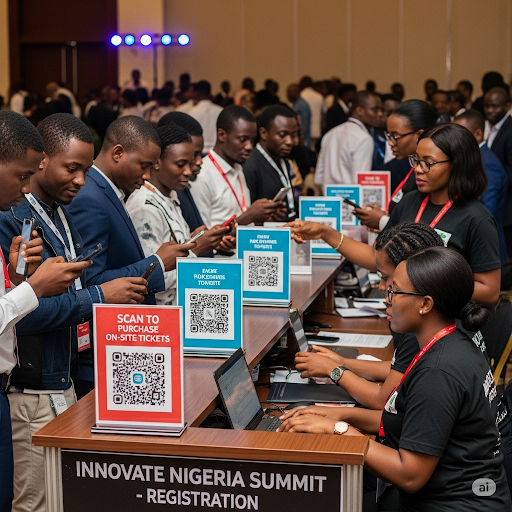
For Shows.ng-ticketed events, the Shows Ticket Scanner provides a defined verification process. Staff can scan the barcode on an attendee's ticket and retrieve the ticket information when it is valid. Current Shows.ng material also documents unique QR tickets, duplicate-ticket detection and offline scanning capability.
That can support a large festival where several staff members need a consistent way to check tickets.
The scanner still needs an operational plan around it.
Staff must know which tickets they are checking, what a successful verification looks like and where to send somebody whose ticket needs further investigation.
Practise the Gate Before Thousands of People Arrive
Do a dry run.
Give the gate team sample tickets and let them practise the expected process.
Walk through a normal attendee, a VIP attendee, somebody at the wrong entrance and a ticket that requires support.
Then look at the physical layout.
Can several people scan simultaneously without queues crossing one another? Is security screening slowing down ticket verification? Can attendees tell which line to join?
The first real ticket scanned on event day should not also be the first time the team has seen the process.
Build the Budget Before the Festival Becomes Expensive
Large campus festivals can accumulate costs rapidly.
Venue-related charges, production, artists, DJs, security, medical support, toilets, temporary structures, power, branding, staff, transport, accommodation, marketing and permits or institutional requirements can all affect the budget depending on the event.
Start with realistic estimates.
Separate what is essential to operating the festival from what would simply be nice to add.
Also distinguish amounts quoted from amounts actually committed and paid.
A sponsorship conversation is not cash in the event account. An expected ticket rush is not cash either.
Do not commit major non-refundable spending entirely against money you hope to receive later.
Build a Contingency Into the Budget
A large outdoor or production-heavy event has many opportunities for costs to change.
Extra power may be required. Weather may change the site setup. A supplier may need additional equipment. Transport costs may increase. A damaged item may need replacement.
A contingency gives the organising team some ability to respond without immediately cutting something essential.
The amount depends on the complexity and risk of the festival.
The principle is simply that spending the full budget on the original plan leaves very little room for reality.
Do Not Build the Entire Event Around Sponsorship That Is Not Yet Confirmed
Sponsors can be important to campus festivals because the student audience may be attractive to brands.
That does not mean every conversation will become a signed agreement.
Keep potential, verbal and confirmed sponsorship clearly separated.
Do not announce a sponsor's involvement before the arrangement is final. Do not make production commitments against an amount a brand has not formally approved.
When pitching, explain what the sponsor is actually receiving.
That could involve visibility, an activation space, an agreed programme integration or another defined benefit appropriate to the event.
A sponsor is not simply donating money because students will attend.
They need a credible reason the partnership makes sense for them.
Protect the Event From Becoming a Collection of Sponsor Activations
Sponsorship should support the festival.
It should not make attendees feel they entered a trade exhibition by accident.
Coordinate brand activity with the overall layout and programme.
If every sponsor independently wants a loud activation, giveaway, stage mention and queue in the same area, the event can become fragmented.
Decide where brand activity belongs and how it supports rather than interrupts the attendee experience.
A useful sponsor integration gives the partner value without making the audience feel that every part of their day is being sold to them.
Choose the Ticket Model Based on the Economics of the Festival
A campus festival does not automatically need to be paid.
It also does not automatically need to be free.
A free registration model may make sense when sponsors cover most costs and the primary objective is participation or community. A paid ticket may be necessary where production costs require substantial attendee revenue or the programme offers enough value to justify the price.
You can also use several ticket categories where the experience genuinely differs.
Do not create VIP simply because festivals are expected to have VIP.
If somebody pays more, they should understand what the additional ticket provides.
Even a Free Festival Needs Capacity Control
Free does not mean unlimited.
If the venue has a safe operating capacity, the organiser still needs a way to understand how many people may attend and how access will be controlled.
Free digital registration can therefore be useful even where no money changes hands.
The important thing is remembering that registrations and actual attendance are not always identical.
Build your gate and site operations around realistic attendance expectations rather than assuming every registered person will definitely arrive or that unregistered guests will never attempt to attend.
Use Sales Data to Manage the Campaign, Not Just Celebrate It
If the festival is ticketed, sales data should influence decisions before event day.
Shows.ng currently documents live ticket-sales counts, revenue tracking, ticket-type breakdowns and a sales timeline in the organiser dashboard.
That information can help the team understand how demand is developing.
If sales are significantly behind the required pace, there is still time to investigate. If a particular category is approaching its allocation quickly, the team can protect the remaining inventory and prepare the relevant area operationally.
Do not describe the dashboard as monitoring physical festival attendance in real time unless you have a separate verified check-in metric that supports that claim.
Ticket sales and people physically inside the venue are not automatically the same number.
Build the Marketing Around Student Behaviour Without Stereotyping Students
Students are not one identical audience.
Different campuses, faculties, interests and social groups behave differently.
Use the channels where your actual audience already communicates.
WhatsApp groups and broadcasts may be useful. Instagram and short-form video may work for visually strong festival content. Physical posters can still help where campus foot traffic is concentrated. Student societies, departmental communities and campus creators may provide credible access to particular groups.
The strategy should follow the audience.
Do not simply use every platform because someone said students are “always online”.
Give Every Promotional Channel the Same Official Destination
A strong marketing campaign can still lose buyers when the path to tickets is confusing.
If a student sees a performer announcement on Instagram, they should not need to send three DMs and request an account number before discovering how to attend.
Use one official event or ticket link consistently.
That same link can appear in WhatsApp campaigns, creator posts, digital flyers, campus community messages and other promotions.
The easier it is to move from interest to the actual event information, the less your marketing depends on somebody being available to answer manually.
Campus Ambassadors Need a Clear Job
A campus ambassador programme can work when ambassadors have access to communities the central marketing team cannot reach efficiently.
But giving fifty students a flyer and telling them to “push the event” is not much of a strategy.
Explain what you want them to communicate, what material they can use and what claims they should not make.
If there is a reward structure, define it clearly.
Do not encourage ambassadors to promise benefits, ticket discounts or performer appearances that the organiser has not approved simply because they are trying to drive interest.
The ambassador represents the event every time they speak about it.
Choose Creators for Audience Fit, Not Follower Count Alone
Student creators and local influencers can help spread awareness, especially when their audience overlaps naturally with the campus community.
Look beyond total follower numbers.
A creator strongly connected to the relevant university or interest community may be more useful than a much larger account whose audience has little reason to attend.
Clarify the relationship too.
Are they being paid for content, receiving tickets, acting as an ambassador or simply supporting the event?
Do not assume that sending somebody a complimentary ticket automatically commits them to promotional work.
Book Performers for the Festival You Are Building
A large artist can increase interest.
That does not automatically make them the right booking.
Consider audience fit, budget, technical requirements, timing, security implications and how much of the event's identity depends on the performer.
A festival with a strong mix of music, comedy, games and social activities may not need one expensive headline act consuming most of the entertainment budget.
Another festival may rely heavily on a particular performer because that artist is central to the ticket proposition.
Understand the role the booking plays before negotiating.
Do Not Announce Talent Before the Agreement Is Real
Few things damage event credibility faster than promoting an artist who was never properly confirmed.
Get the relevant booking agreement in place before building the campaign around the name.
Understand the fee, payment schedule, performance duration, travel requirements, accommodation where necessary, technical rider and any other important obligations.
A WhatsApp conversation saying “we should be able to make it work” is not the same as a confirmed performance.
Think About the Programme as a Whole
A campus festival should not feel like unrelated activities competing for attention.
Decide when people are likely to arrive and what happens before the biggest programme moments.
Think about transitions between DJs, performers, competitions, sponsor activity and other stage segments.
Some activities can run continuously away from the stage while others need specific time slots.
A working run sheet should connect the stage programme with production, performers, MC, security and other teams affected by timing.
Leave enough flexibility for the live environment without allowing every segment to expand indefinitely.
Give Food and Other Vendors an Operational Plan
Vendor recruitment is not finished when somebody pays for a stall.
Vendors need to know when they can load in, where they are positioned, what equipment they can bring, what power is available and what campus or venue requirements apply.
Food vendors may create additional requirements around waste, water, heat sources and food-safety practices depending on the event and venue.
Think about queues too.
A popular food stall placed beside the only major pedestrian route can become a crowd-management problem.
Vendor layout should be part of the site plan rather than something decided when everybody arrives.
Do Not Oversell Vendor Space
More vendors do not automatically create a better festival.
Too many similar vendors can make the commercial experience poor for everyone while consuming valuable space.
Think about variety and expected attendance.
If five vendors are selling nearly identical products to a relatively small audience, all five may struggle.
A better vendor mix considers what attendees are likely to need and how those stalls fit the wider event.
Power Needs a Proper Plan
A large festival may depend on power for sound, lighting, stage equipment, vendor needs, ticketing devices and other infrastructure.
Do not reduce the plan to “we will have a generator”.
Production professionals should understand the expected load and suitable distribution arrangements.
Critical systems may need appropriate backup depending on the scale of the event.
Cables and equipment also need to be positioned so they do not create hazards for attendees moving around the site.
This is an area where qualified technical professionals matter much more than improvised solutions.
Weather Planning Is More Than Ordering Tents
If the event is outdoors, rain affects more than whether people get wet.
It can affect electrical systems, ground conditions, equipment, stage safety, vendor operations, vehicle access and the way crowds move towards shelter.
Strong sun and heat can create another set of problems around shade and hydration.
Monitor the forecast as event day approaches and decide what conditions would trigger meaningful changes.
If shelter is part of the contingency, make sure its capacity and positioning actually support the expected audience.
Trying to push thousands of people under a small number of tents can create a new crowd problem instead of solving the weather problem.
Security Needs to Be Designed Around the Festival
A large student event needs a serious security plan appropriate to the audience, venue and programme.
That includes the perimeter and access points, crowd behaviour, backstage areas, performers, vendors and the routes guests use to arrive and leave.
Work with suitable security personnel and the relevant campus authorities rather than assuming volunteers can perform every security function.
Volunteers can help with directions and guest information.
They should not be casually placed into specialist security roles they are not trained to perform.
Medical Planning Cannot Be an Afterthought
Large crowds, outdoor conditions, long programme hours and physical activity can all lead to people becoming unwell.
Plan appropriate first-aid or medical support according to the scale and risk of the event, using suitable professionals and the institution's requirements where relevant.
Staff should know how to reach that support quickly.
Do not wait for someone to collapse before asking whether anybody brought a first-aid kit.
Manage Alcohol According to the Rules of the Campus and Event
Do not assume an event can sell or serve alcohol simply because similar festivals elsewhere do.
University policies, venue requirements and applicable rules may restrict it.
If alcohol is permitted, it introduces additional considerations around age restrictions, service, intoxication, security and attendee welfare.
Confirm what applies before sponsors or vendors build a campaign around something the institution will not allow.
Plan the Toilets Before the Audience Arrives
Toilets are easy to ignore during creative planning and impossible to ignore once thousands of people are onsite.
Understand what facilities already exist, whether they can support the expected audience and how they will be maintained throughout the festival.
Temporary facilities may be required depending on the venue and event scale.
Think about accessibility and lighting around the routes too.
The quality of the stage will not stop attendees complaining if basic facilities become unusable halfway through the programme.
Water and Food Availability Affect How Long People Can Stay Comfortably
A festival lasting several hours needs a realistic plan for refreshments.
This becomes especially important outdoors and in hot weather.
Ensure the event's commercial model and venue rules still allow people reasonable access to water.
If vendors are the main food source, make sure there are enough appropriate options and that queues do not overwhelm the space.
Guests cannot enjoy a programme indefinitely while their basic physical needs are ignored.
Give the Site a Clear Layout
Map the festival physically before setup begins.
Identify the stage, entrances, exits, vendor zones, toilets, first aid, security positions, sponsor areas, ticket support, backstage areas and any other significant activity.
Then look at the routes between them.
Can a food queue block the path to the toilets? Will sponsor activity interfere with entry? Can production vehicles access the stage without moving through the audience?
A site plan allows several teams to coordinate around the same physical reality.
Without one, each vendor may arrange their own area sensibly while the combined festival layout makes no sense at all.
Signage Saves Staff From Answering the Same Question Hundreds of Times
People need to know where to enter, where to get support and where important facilities are located.
A large festival should not depend entirely on ushers repeating directions.
Place signs where attendees make decisions.
A toilet sign beside the toilet is less useful than one where the route splits. A VIP entrance sign becomes useful before somebody has already waited in the Regular queue.
Clear navigation improves the guest experience and reduces unnecessary pressure on staff.
Control Backstage Access
Backstage can become chaotic very quickly at student events.
Performers arrive with friends. Committee members want access. Sponsors bring additional representatives. People claim they are photographers, managers or members of the artist's team.
Decide who actually needs backstage access.
Use an appropriate credential or access list and brief security.
A backstage area should support the programme, not become another social venue more crowded than the audience area.
Prepare for the Event to Run Late Without Planning for It to Run Late
Build a realistic schedule and aim to follow it.
At the same time, identify which parts can be shortened, moved or removed if delays develop.
Do not assume every scheduled item must happen in full regardless of how late the event becomes.
Campus rules, venue agreements, sound restrictions or security requirements may create a hard closing time.
The programme needs to respect that.
A strong organiser protects the most important festival moments rather than allowing early delays to consume the time needed for everything that follows.
Event-Day Communication Should Be Structured
A large festival team may use radios, messaging groups or a combination of communication methods.
Whatever you choose, define who needs access to which channel.
The core operational team needs a way to communicate quickly without hundreds of unrelated messages drowning out important updates.
Security may need its own operational structure. Production will have another. Volunteers may receive instructions through their coordinator.
Not everybody needs to hear everything.
The organiser needs important information to travel to the right person quickly.
Do Not Let the Organiser Become the Help Desk
Give common problems somewhere to go.
Ticket questions need a ticket-support process. Vendors should know their coordinator. Performers should have a talent or backstage contact. Volunteers should report through their lead.
If every issue ends with somebody calling the main organiser, that organiser cannot effectively oversee the festival.
The larger the event gets, the more important distributed responsibility becomes.
Have a Decision Point for Serious Problems
Some issues genuinely require senior authority.
Weather may make part of the site unsafe. Crowd density may require access to a section to be slowed. A major performer may fail to arrive. A security issue could affect the programme.
Know who can make those decisions.
A crisis becomes harder when several people are debating who has authority while conditions continue changing.
The event lead, relevant institutional authority and specialist teams should understand how significant decisions are escalated.
The Festival Is Not Finished When the Headline Act Leaves
Departure is part of the operation.
A large number of students may begin leaving within a very short period.
Keep exits clear and appropriately staffed. Think about vehicle movement, pedestrian routes and areas where people are likely to wait for transport or friends.
Do not dismantle essential lighting or crowd-management infrastructure while large numbers of attendees are still onsite.
Staffing plans need to cover the exit period, not just the programme.
Reconcile Tickets, Money and Vendors After the Event
Once the site is secure and guests have left, the administrative work continues.
Reconcile ticket revenue, vendor payments, supplier balances and other financial commitments.
If Shows.ng was used for ticket sales, the organiser dashboard retains ticket, revenue and attendee information that can support the ticketing side of the review.
Compare that information with the wider festival budget.
Strong revenue does not automatically mean strong profit if production and operating costs were also high.
Debrief While People Still Remember What Happened
Bring the key team together after the event.
Ask where queues formed, which vendor arrangements worked, what caused programme delays and where security or attendee support became difficult.
Review the good parts too.
Perhaps one entrance design worked especially well. A sponsor activation may have integrated naturally. A particular type of content may have produced strong ticket activity. One vendor zone could have handled crowds much better than expected.
Those lessons become valuable when the next edition begins.
Do Not Turn an Unverified Attendance Estimate Into a Case Study
Large attendance figures make attractive headlines.
They should still be defensible.
If you intend to publish afterwards that 3,000 people attended, decide what that number represents.
Is it tickets sold, registrations, verified check-ins, a venue estimate or people counted through another system?
Those numbers are not interchangeable.
Likewise, avoid claiming that entry was completely smooth, the event had no overcrowding or a particular campaign caused the turnout unless you have evidence that supports those conclusions.
A credible festival report is more useful than an impressive story nobody can verify.
A Large Campus Festival Is an Operations Project Disguised as Entertainment
The audience should see the performances, food, games, brand experiences and atmosphere.
The organising team needs to see everything underneath them.
Approvals, budgets, responsibilities, supplier agreements, ticket inventory, entry capacity, crowd movement, power, toilets, medical support, security, weather planning and event-day communication all affect whether the visible festival can happen safely and smoothly.
Start with the event's purpose and the rules of the institution. Build a team with clear ownership. Choose a venue based on how it functions when full rather than how impressive it looks empty. Design the gate before tickets begin moving quickly and give the site enough operational structure that attendees can understand where to go.
For a ticketed festival using Shows.ng, the ticket scanner can support digital verification at entry, while the organiser dashboard provides sales and ticket-type information during the campaign. Those tools should sit inside the wider operational plan rather than being expected to replace it.
When the approvals, programme, budget and operating structure are ready, you can create your campus event on Shows.ng and give students one official place to understand the event and get their tickets.
A large campus festival succeeds when thousands of people can enjoy the visible event because the organising team has already solved the invisible problems underneath it.