In this article
- The Work Started Long Before Anyone Saw a Flyer
- Speakers Are Part of the Experience, but They Are Also Part of the Logistics
- Reliable Vendors Make Organisers Look Calm
- Promotion Was Not One Announcement and a Prayer
- Event Day Is Where the Planning Becomes Visible
- Backup Plans Are Not a Sign That You Expect Failure
- Networking Needed Space to Happen Naturally
- The Conference Did Not End When the Last Speaker Left the Stage
- What Made the Conference Successful Was Not Perfection
When guests walk into a successful conference, most of what they see looks simple. The registration desk is ready, speakers arrive on stage at the right time, the microphones work, people know where to sit and the programme seems to move naturally from one session to the next.
What they do not see is everything that had to happen before the doors opened.
Behind a well-run conference are weeks or months of calls, budgets, venue inspections, speaker conversations, vendor negotiations, programme changes, promotional campaigns and backup plans for problems everybody hopes will never happen. In Nigeria, that preparation also has to account for familiar realities such as traffic, power, internet reliability and weather that can change an otherwise perfect schedule very quickly.
Looking back at one of our conference experiences, the biggest lesson was not that everything went exactly according to plan. It did not. There was rain. One speaker was delayed in Lagos traffic. There were the usual last-minute pressures that come with bringing many people and moving parts together in one place.
What made the event successful was that those problems did not become the event.
The Work Started Long Before Anyone Saw a Flyer
Planning began months ahead, which gave the team time to make the decisions that would eventually shape everything guests experienced. The venue, budget and speakers were among the first priorities because those choices affected almost every other part of the conference.
A conference venue has to do more than hold the expected number of people. It needs to work for the programme. If speakers will be presenting slides, the room layout and screens matter. If networking is part of the experience, people need enough space to move and talk. If attendees will be arriving from different parts of the city, location and traffic become part of the decision whether you like it or not.
Budgeting had to happen at the same time because conference planning becomes dangerous when every new idea is approved before anyone calculates what it costs. Venue, production, sound, speakers, marketing, food, staff and logistics can quickly turn a reasonable idea into an expensive one.
Starting early allowed the team to decide what the conference really needed and where money would make the biggest difference. That is a much better position than reaching the final week and discovering that several essential costs were never included in the original estimate.
If you are still working through that side of your own event, our guide on how to budget for an event in Nigeria goes deeper into controlling costs without cutting the parts guests actually experience.
Speakers Are Part of the Experience, but They Are Also Part of the Logistics
It is easy to think about speakers mainly in terms of names and topics. The planning team has to think about everything around them too.
When are they arriving? Do they need transport? Are they bringing their own presentation? Who receives them when they reach the venue? Does the technical team have their slides? How long is each session supposed to run? Who tells a speaker that the programme has moved forward or fallen behind?
Those details matter because conferences are built around timing. A thirty-minute delay in one session can quietly move every session that follows it.
During this event, one speaker was delayed by Lagos traffic. That is exactly the kind of situation you cannot completely eliminate with planning. You can tell someone to leave early, arrange transport and confirm their movement, but Lagos can still decide to remind everybody that it has its own timetable.
The useful question is what the programme does while you wait.
A strong event team should be able to adjust without making the audience feel that something has gone terribly wrong. A panel can sometimes move forward, a break can shift slightly or another part of the programme can be brought in earlier. The exact response depends on the event, but flexibility is easier when the programme was properly planned in the first place.
This is where an event timeline becomes more than a document somebody creates because planners are supposed to have one. It gives the team enough visibility to make intelligent adjustments when something changes. Our article on creating an event timeline that survives real-life delays covers that process in more detail.
Reliable Vendors Make Organisers Look Calm
Guests rarely know which sound company supplied the microphones or who delivered the stage furniture. They simply notice whether the microphone stops working halfway through a keynote or whether the coffee break appears when it is supposed to.
That is why vendor selection mattered so much behind the scenes.
The conference team worked with decorators, caterers, sound professionals and other suppliers, but the important part was not merely hiring them. Expectations were confirmed, agreements were made and details were checked again before the event.
That repeated confirmation can feel excessive when everything appears to be under control, but event planning is one of those situations where assuming something is happening is not the same as knowing it is happening.
The caterer saying, "No problem, we are ready" does not tell you what time food will arrive. The sound provider saying, "Everything is sorted" does not tell you whether the number of microphones changed after two new panelists were added. A decorator knowing the venue does not mean they know what time they are allowed to enter for setup.
Good vendor management means making those details explicit before everyone is under pressure.
It also means having conversations early enough to fix problems. Discovering three days before the event that a vendor misunderstood the brief is stressful. Discovering it three hours before guests arrive is a completely different experience.
Promotion Was Not One Announcement and a Prayer
A conference can be organised beautifully and still have an empty room if the right audience never hears about it.
Promotion for the event used several channels, including WhatsApp, Instagram and LinkedIn. Speaker announcements, event information and reminders helped keep the conference visible as the date approached. Influencers and brand ambassadors also supported the campaign.
The important part of using several channels is understanding that they do not all behave the same way.
LinkedIn can be particularly useful when the conference is professional or industry-focused because potential attendees may already be thinking about careers, business and professional development when they encounter the content. Instagram gives organisers more room to build the visual story around speakers, preparation and what the day will feel like. WhatsApp works differently again because messages often travel through personal networks and communities where a recommendation can feel more direct.
None of those channels should depend entirely on one flyer.
A conference campaign becomes stronger when people gradually learn more about why they should attend. A speaker reveal gives one reason. A useful topic from the programme gives another. A short video from an organiser or speaker can explain the value in a way a static poster cannot. As the date gets closer, reminders help people who were interested earlier finally make a decision.
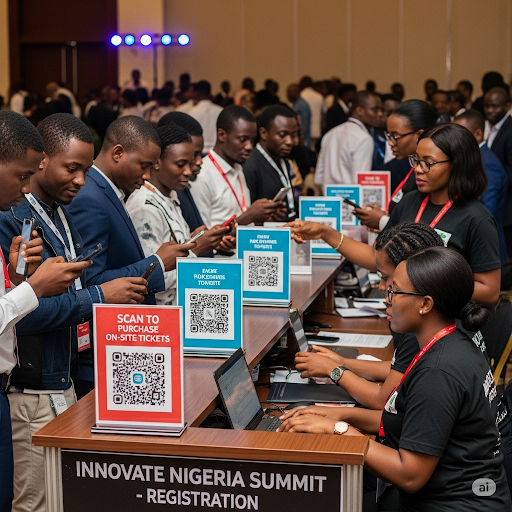
If the conference is ticketed or requires registration, all of that promotion should eventually lead somewhere straightforward. You can publish a conference and manage ticketing or registrations with Shows.ng rather than asking interested attendees to move between flyers, DMs and manual payment confirmation.
Event Day Is Where the Planning Becomes Visible
On the morning of the conference, the work changed.
The question was no longer whether the event had been planned. It was whether all of those plans could survive contact with actual guests, actual weather and actual Lagos traffic.
Rain arrived early. One speaker was delayed. Those were not part of the ideal schedule, but events do not happen inside ideal schedules.
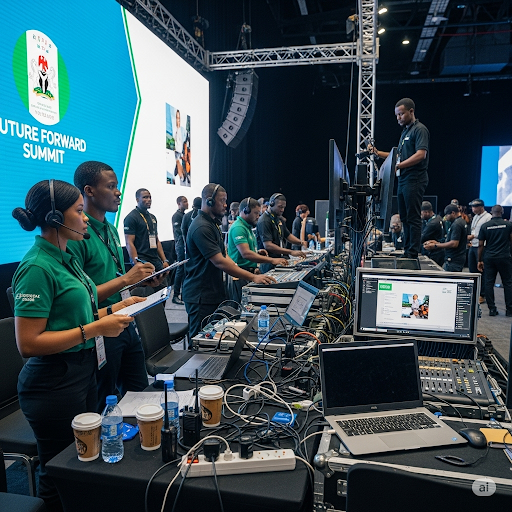
Volunteers became especially important at this stage. They helped direct guests, support check-in and keep different parts of the event moving while the programme continued.
This is one reason a conference team should never receive its first proper briefing while guests are already entering the venue.
People need to know what they are responsible for. Someone handling registration should know where to send a guest with a booking problem. Someone guiding speakers should know who is expected next. Ushers should understand the venue layout. The person communicating with vendors should not also be trying to solve every attendee question.
A good event team makes the organiser look less busy because responsibility has been distributed properly.
Our guide on building a reliable event team in Nigeria explains why role clarity and communication matter so much when the event finally goes live.
Backup Plans Are Not a Sign That You Expect Failure
Power, internet and traffic were considered during planning because pretending those risks do not exist would not make them disappear.
This is one of the most useful habits an organiser can develop. For every part of the conference that absolutely has to work, ask what happens if the first option does not.
If a presentation depends on internet access, can it also run locally? If the venue experiences a power interruption, what takes over? If one speaker is late, can the programme adjust? If a vendor has a problem, who is the first person on the team who needs to know?
Not every issue needs an elaborate Plan B, Plan C and emergency command centre. The goal is simply to identify the things that could seriously affect the experience and avoid leaving the response to improvisation.
This also changes the atmosphere within the organising team. When people know there is another option, they are less likely to panic when the first one fails.
Guests often interpret calm responses as evidence that nothing went wrong. Sometimes plenty went wrong. The team simply handled it without allowing the entire room to feel the problem.
Networking Needed Space to Happen Naturally
Conferences are rarely valuable only because of what happens on stage.
Some attendees come because of the speakers, but many of the relationships that make a conference worthwhile begin before a session, during a break or immediately after the programme ends. People meet potential clients, colleagues, collaborators and others working through similar problems.
That means networking should not be treated as the five minutes left after every other activity has overrun.
The programme needs enough breathing room for people to speak to one another. The venue should also make those conversations possible. If music is too loud in every part of the building or every minute has been filled with another presentation, people may leave having consumed plenty of information without connecting with anybody else.
The original event recap notes that attendees were able to network and that the organisers received positive feedback afterwards. That is important because a conference should be judged not only by whether the programme finished, but also by whether the people who attended felt that their time was well spent.
We have explored this further in our article on how events can create meaningful networking and personal-growth opportunities.
The Conference Did Not End When the Last Speaker Left the Stage
One of the easiest mistakes after a demanding event is to pack everything up, pay the remaining vendors and avoid thinking about the conference again for a few weeks.
That wastes useful information.
The days immediately after an event are when the team can still remember what happened clearly. Which parts of registration worked? Where did the programme lose time? Which vendor made the team's work easier? Which communication caused confusion? What did attendees keep mentioning?
Not every issue needs to become a crisis. The point is to learn while the experience is still fresh.
Feedback is particularly valuable when the conference is expected to return. The next edition should not begin from exactly the same knowledge as the first one. Every event gives the team information that can make the next version smoother.
The same applies to ticketing and registration data. Knowing how many people booked, when registrations accelerated and what categories performed well can inform future marketing and capacity decisions instead of disappearing into an old spreadsheet.
What Made the Conference Successful Was Not Perfection
There was rain. There was traffic. There were the usual pressures that appear when an event moves from a plan into the real world.
Success did not mean none of those things happened.
It meant the venue, vendors, speakers, promotion and event team had been prepared well enough that the unexpected moments did not overwhelm everything else.
That is the part of conference planning guests rarely see.
They see the finished stage. The organisers see the months of preparation behind it. Guests hear the speaker. The team remembers the calls required to confirm the session. Guests enjoy networking over a break. Somebody behind the scenes was watching the time, coordinating catering and making sure the next part of the programme was ready.
A successful conference is really the result of hundreds of small decisions working together.
If you are planning your own conference, start earlier than feels necessary. Choose vendors you can communicate with, build a programme that can handle small changes and give your team enough information to make decisions without constantly waiting for you.
Then give attendees a clear way to find and register for the event. You can create and publish your conference on Shows.ng, manage registrations or ticket sales and keep the attendee side of the experience organised while your team concentrates on everything happening behind the scenes.
The mark of a well-planned conference is not that nothing unexpected happens. It is that the audience rarely has to know how much work it took to keep the event moving.