In this article
- Start Improving the Experience Before Event Day
- Make Ticket Options Easy to Understand
- Send Useful Information Before Attendees Start Travelling
- Walk Through the Arrival Like a Guest
- Make Entry Fast Enough for the Crowd You Expect
- Move Complicated Entry Problems Away From the Main Flow
- Brief Staff Around the Guest Journey, Not Only Their Individual Task
- Hospitality Is More Than Smiling at the Entrance
- Manage Capacity According to the Space People Actually Use
- Design the Venue Around What Guests Need to Do
- Schedule Around Human Attention, Not Just Available Minutes
- Do Not Make Guests Queue When You Could Change the Process
- Protect the Basic Comfort of the Audience
- Accessibility Should Be Part of the Normal Experience
- Keep Important Information Visible During the Event
- Give Guests Somewhere to Ask for Help
- Fix Problems While the Event Is Still Happening
- How You Handle a Mistake Becomes Part of the Experience
- Do Not Forget the Experience of Leaving
- Ask Attendees What You Missed
- Do Not Try to Improve Everything at Once
- Guest Experience Is Usually the Sum of Small Decisions
A memorable event is not created only by what happens on the stage.
Guests experience everything around it too.
They experience how easy it was to understand the event before buying a ticket, whether they could find the venue, how long entry took, whether staff knew what they were doing, whether the room was comfortable and what happened when they needed help.
They notice whether the programme flowed naturally or felt like a collection of unrelated activities. They notice whether food queues blocked walkways, whether the sound worked and whether leaving the venue was significantly harder than getting inside.
This is why improving guest experience does not always require a larger décor budget, another performer or an expensive new attraction.
Many of the biggest improvements come from removing friction.
A better sign can solve a problem. So can another check-in position, a clearer ticket description, a properly briefed usher, a more realistic programme or an email sent before attendees leave home.
The goal is to make the event easier to understand, easier to enter and easier to enjoy.
Start Improving the Experience Before Event Day
Organisers often think guest experience begins when the attendee reaches the venue.
By then, part of the experience has already happened.
The guest saw your promotion. They tried to understand the event. They looked at the ticket categories, venue, date and programme. They may have searched for directions or asked whether their ticket included food, seating or another benefit.
If all of that was confusing, the event has already introduced friction.
Review your event information from the perspective of someone seeing it for the first time. Does the person understand what they are attending? Can they tell what the ticket includes? Are the important timing and venue details clear?
Do not make attendees investigate several Instagram posts, old flyers and WhatsApp messages to construct the basic event information for themselves.
A clearer pre-event experience reduces questions later and helps guests arrive with expectations that your event can actually meet.
Make Ticket Options Easy to Understand
Ticket categories affect guest experience long before entry.
If you sell Regular, Premium, VIP and VVIP tickets, explain what changes between them.
Do not assume the names are self-explanatory.
Someone paying more should understand whether the difference involves seating, access, refreshments, entry priority or another real benefit.
The same principle applies to Early Bird and Regular tickets. A lower Early Bird price normally represents a different purchasing period, not necessarily a different event experience.
Confusing pricing creates avoidable disappointment because attendees begin filling the information gap with their own assumptions.
Clarity before payment is part of hospitality.
Send Useful Information Before Attendees Start Travelling
A pre-event message should do more than create excitement.
It can make attendance easier.
If there is a specific entrance, parking arrangement, registration time or important item guests need to bring, tell them before they reach the venue.
If the venue is difficult to find, provide enough information for somebody unfamiliar with the location to arrive confidently.
For events managed through Shows.ng, organisers can send an email directly to attendees associated with a specific event. From the organiser dashboard, the organiser can open the attendee list, choose Send Message to Attendees, write a subject and message and send it to attendees by email.
The Shows.ng attendee messaging guide explains the process.
Use communication to reduce uncertainty, not simply to remind somebody for the fifth time that your event is exciting.
Walk Through the Arrival Like a Guest
Before doors open, physically walk the route an attendee will take.
Start where a vehicle or pedestrian is likely to approach the venue. Look for the entrance. Move towards registration. Continue from check-in towards the main event area.
Do not judge the route using the knowledge you gained from weeks of site visits.
Ask what would be obvious to somebody who has never been there.
Can they tell which gate is correct? Is registration visible? Are stairs, lifts or different halls clearly identified? Can someone find the toilets without asking three people?
Simple signage placed where decisions actually happen can remove a surprising amount of frustration.
The most useful sign is not necessarily the most beautiful one. It is the one people can see before they take the wrong turn.
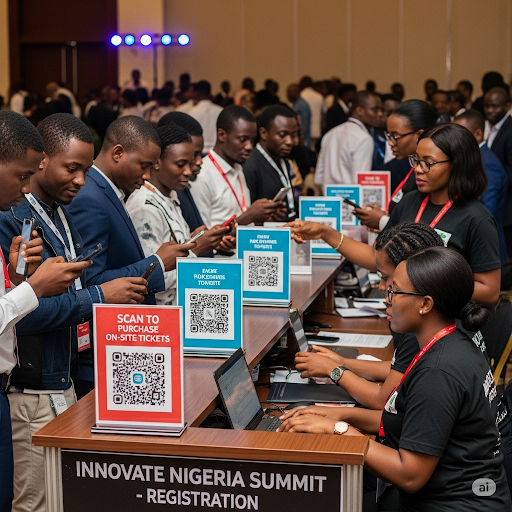
Make Entry Fast Enough for the Crowd You Expect
A long queue can damage the experience before the programme begins.
The solution is not automatically “faster technology”.
You need enough entry capacity for the arrival pattern.
If several hundred people are likely to arrive within the same thirty-minute window, plan for that concentration. Make sure there are enough people checking tickets, enough physical space for queues and a separate process for unusual problems where possible.
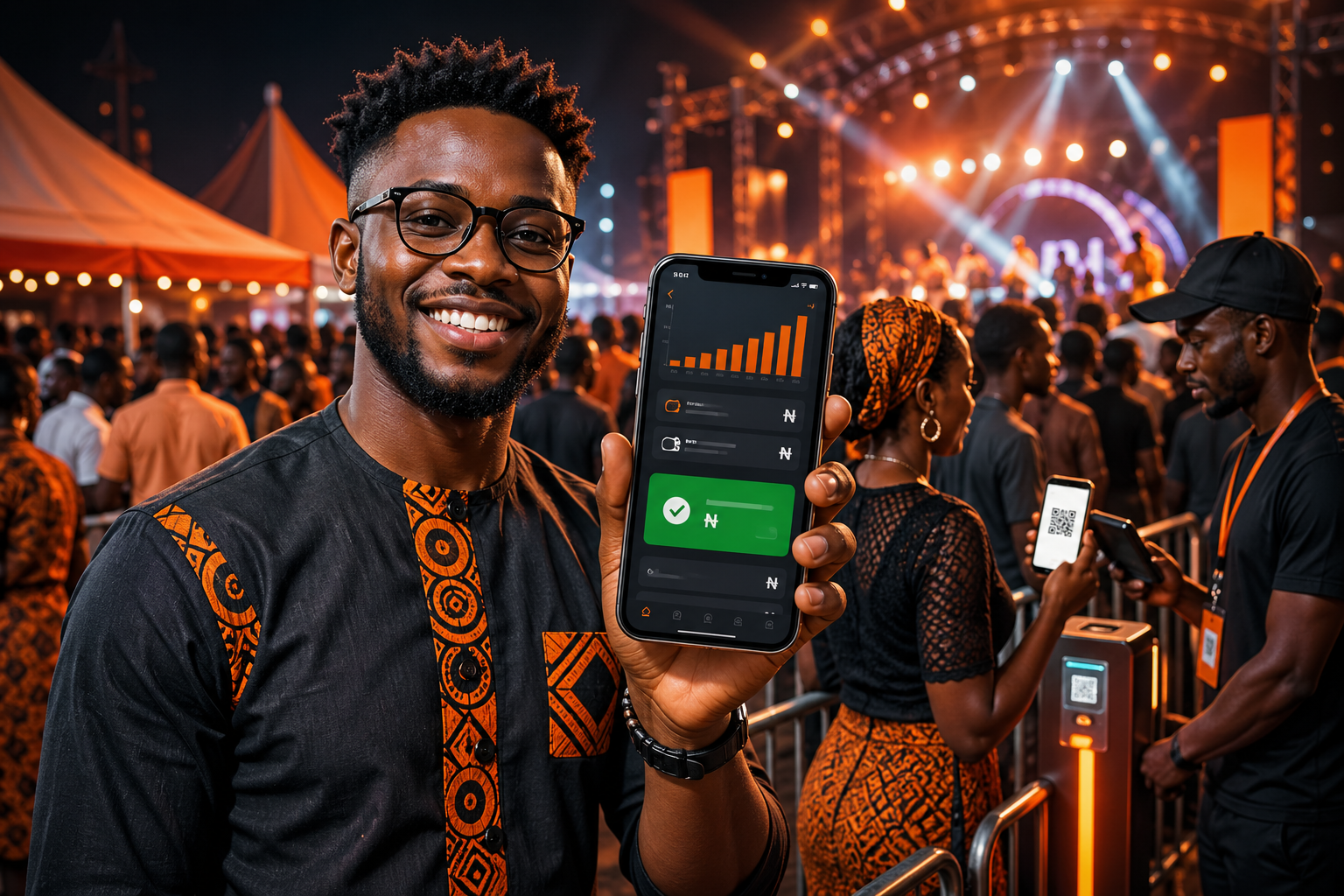
For Shows.ng-ticketed events, the Shows Ticket Scanner provides a digital ticket-verification process rather than relying entirely on manual ticket inspection.
The technology is useful because it can make verification more structured, but it still needs a sensible physical setup around it.
One scanner cannot comfortably process an unlimited crowd simply because QR scanning is digital.
Move Complicated Entry Problems Away From the Main Flow
Most attendees should be straightforward to admit.
They arrive with the correct ticket, it is verified and they enter.
A smaller number may have an unusual problem. Their name appears to be missing. Their ticket needs investigation. A complimentary allocation was not communicated properly. Someone believes they should have VIP access.
Do not allow one complicated case to stop everybody else.
Create an exception or support process where the scale of the event requires it.
The main check-in team can continue moving straightforward attendees while another person investigates the unusual issue.
This protects the experience for both groups. The person with a genuine problem receives more focused support, while everyone behind them does not spend twenty minutes watching the argument.
Brief Staff Around the Guest Journey, Not Only Their Individual Task
An usher may technically be responsible only for seating.
Guests will still ask that usher where the toilet is.
A ticket-scanning team may be responsible only for entry, but attendees may ask them where VIP guests should go next.
Brief staff on enough of the wider event that they can guide people appropriately.
They should know the main programme areas, toilets, emergency routes, help points and important ticket or seating distinctions relevant to their work.
They should also know what they are not authorised to decide.
If only one event manager can approve a guest-list exception, tell everyone that rather than allowing five staff members to invent five different answers.
Good guest experience often comes from consistency.
Hospitality Is More Than Smiling at the Entrance
Warmth matters, but useful hospitality goes further.
A staff member who smiles while giving incorrect directions has not improved the experience very much.
Hospitality means noticing what attendees need and making it reasonably easy for them to receive help.
Someone attending alone may need orientation. An older guest may need seating assistance. A first-time attendee may not understand a recurring event tradition. A guest with an accessibility requirement may need a route that differs from everyone else's.
Train the team to help without making people feel foolish for asking.
Rules can still be enforced. Security can still be firm. The event can still have boundaries.
Guests simply should not be treated as an inconvenience for needing information.
Manage Capacity According to the Space People Actually Use
Capacity is not only a ticket-sales number.
An event can remain within the venue's overall limit and still create uncomfortable crowding in particular areas.
Perhaps everyone wants to stand close to one stage. A popular food vendor develops a long queue. Rain pushes an outdoor audience under the same covered space. A photo area begins blocking the main walkway.
Watch how people actually use the venue.
If one area becomes too dense, redirect movement before it becomes a larger problem.
Do not depend on unverified “Busy” indicators or other digital features to solve this automatically. Staff observation, sensible layouts and active crowd management remain important.
Our guide on managing queues and crowd flow goes deeper into entrance design, bottlenecks and movement around busy events.
Design the Venue Around What Guests Need to Do
Venue layout should reflect behaviour.
If networking is important, give people somewhere conversations can actually happen. If food service is likely to attract long queues, do not position it across the only major route between two programme areas.
If attendees will spend hours sitting, comfort matters more than how photogenic empty chairs look before the event.
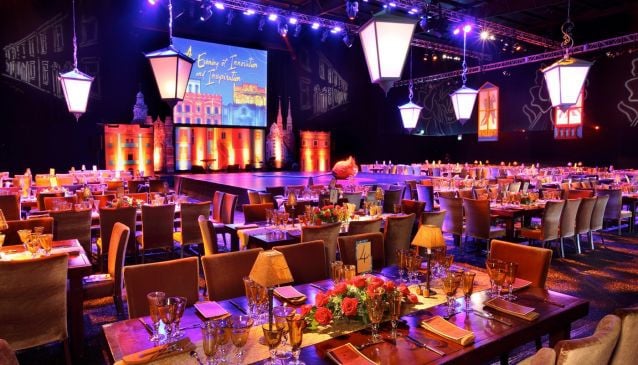
Think about toilets, water, seating, shade, ventilation, sound, lighting and the distance between important areas.
The experience is shaped by how people move through the space, not merely by how the venue looks in photographs.
Schedule Around Human Attention, Not Just Available Minutes
A programme can be technically full and still be badly paced.
Attendees cannot give the same level of attention indefinitely.
A conference containing hours of uninterrupted speeches will eventually lose the room. A social event with long unexplained gaps can create restlessness. A festival where several desirable attractions happen simultaneously may force guests to miss things they specifically wanted to experience.
Think about rhythm.
Give important programme moments enough time to work, but do not allow every speaker or activity to expand simply because it can.
Transitions matter too. Moving from one session to another should not repeatedly require the audience to wait while equipment, people or rooms are prepared from scratch.
The programme should feel designed rather than accumulated.
Do Not Make Guests Queue When You Could Change the Process
Some queues are difficult to eliminate.
Others exist because nobody questioned the process.
If everyone needs to collect the same item from one person, could distribution happen through more than one point? If guests queue for information, could signage answer the question earlier? If everyone enters one food line despite several vendors being available, is the layout making the alternatives difficult to see?
Before adding more staff, understand why the queue exists.
Sometimes additional capacity solves it. Sometimes the better solution is moving a table, changing the layout, improving information or removing an unnecessary step.
Protect the Basic Comfort of the Audience
Comfort is not a luxury category.
An event does not need sofas and air conditioning everywhere to be comfortable.
It needs conditions suitable for what attendees are expected to do.
If people will stand outdoors for several hours, think about weather exposure, water and places to rest. If they will sit through a long programme, seating quality and breaks matter.
If food is not provided, attendees may need to know beforehand. If food is sold at the venue, the service should be capable of handling the number of people likely to want it.
Do not spend heavily on decorative details while ignoring physical discomfort guests will experience for hours.
Accessibility Should Be Part of the Normal Experience
An event becomes harder to enjoy when somebody encounters a barrier everyone else was able to ignore.
Think about whether people with mobility, sensory or other accessibility needs can reach the venue, enter, use important facilities and participate in the programme.
Some attendees may need information beforehand to decide whether the event can accommodate them.
Give people an appropriate route for asking.
Accessibility should not become an emergency rearrangement after somebody arrives.
Our guide on planning accessible and inclusive events looks at these decisions in more depth.
Keep Important Information Visible During the Event
Your team may know the programme by heart.
Guests do not.
If attendees need to know what is happening next, make that information available through whatever format suits the event.
That might be a printed programme, screen, signage, MC announcement or another simple format.
At multi-room conferences or festivals, this becomes particularly important because attendees need to make choices about where to go.
Do not force somebody to reopen an old Instagram post every time they want to know when the next session starts.
Give Guests Somewhere to Ask for Help
A well-designed event still produces questions.
The difference is whether people can identify someone who can answer them.
At a large event, a clearly identifiable information or support point can prevent attendees from approaching security, vendors and production staff with unrelated questions.
At a smaller event, you may simply need clearly identifiable ushers who know where to escalate unusual issues.
The organiser should not become the only person capable of solving anything.
If every minor guest problem requires a phone call to the event owner, the support structure is too centralised.
Fix Problems While the Event Is Still Happening
Feedback is not only something you collect afterwards.
Listen to what people are asking during the event.
If several attendees cannot find the same room, add a sign. If a queue is growing in the wrong place, reorganise it. If one part of the venue is becoming uncomfortable, investigate why.
Front-of-house staff are particularly valuable here because they hear repeated questions before senior organisers do.
Create a way for important observations to travel back to whoever can make decisions.
There is little value in receiving twenty survey responses about a problem afterwards if the same issue could have been corrected within ten minutes while the event was still happening.
How You Handle a Mistake Becomes Part of the Experience
Something will eventually go wrong.
A speaker is delayed. Power fails briefly. A supplier brings the wrong item. A ticket problem appears. Rain changes an outdoor plan.
The guest experience now depends partly on the recovery.
Give accurate information rather than pretending the issue does not exist. Avoid publicly blaming vendors while guests are watching. If a meaningful promise cannot be delivered, decide what reasonable response is appropriate rather than hoping nobody notices.
A problem handled calmly can preserve trust.
A small problem handled badly can become the thing everybody remembers.
Do Not Forget the Experience of Leaving
Organisers often put enormous energy into arrival and very little into departure.
The end of an event can create one of the busiest crowd movements of the entire day.
Guests may be searching for vehicles, collecting belongings and trying to leave through the same routes at once.
Keep exits usable and maintain enough staff to assist while people are still leaving.
If there are designated pickup or parking arrangements, communicate them.
Do not allow your support team to disappear the moment the final performance ends.
The last fifteen minutes of an attendee's experience still belong to your event.
Ask Attendees What You Missed
The organising team experiences an event differently from the audience.
You may spend most of the programme backstage and never see the queue that frustrated attendees outside. A sound issue may affect one section of the venue but sound perfectly fine from production.
Collect feedback after the event.
Ask about parts of the experience you can realistically improve rather than simply asking whether everyone had fun.
The Shows.ng attendee messaging feature can be useful here because organisers can email attendees associated with a specific event and include a link to an external feedback form. Shows.ng's current help documentation confirms that messages sent through this feature are delivered to attendees by email.
Our guide on collecting attendee feedback effectively explains how to write questions that produce more useful answers.
Do Not Try to Improve Everything at Once
Guest experience can become overwhelming when every touchpoint becomes another improvement project.
Prioritise.
Fix the areas creating the greatest friction first.
If entry regularly takes forty minutes, solve that before adding another decorative photo area. If attendees cannot hear speakers, sound deserves more attention than branded souvenirs. If people repeatedly get lost inside the venue, improve navigation before investing in another entertainment feature.
After the fundamentals are working, smaller details become more valuable because guests are no longer distracted by larger problems.
The aim is not perfection.
It is steady improvement around the things attendees actually experience.
Guest Experience Is Usually the Sum of Small Decisions
You do not need to create seven spectacular moments for an event to feel well organised.
Make the information clear before people arrive. Design an entrance capable of handling the crowd. Brief staff so they can help rather than simply point towards somebody else.
Think about capacity, movement, comfort and accessibility. Give the programme enough rhythm that attendees are not constantly waiting for the next thing to be ready. Keep important information visible and create a support route for problems that do occur.
Then listen during and after the event so the next edition is based on what guests actually experienced rather than what the organising team assumes happened.
If your event uses Shows.ng, the Shows Ticket Scanner can support the entry-verification side of the experience, while attendee messaging gives organisers a direct email route for useful pre-event information and post-event follow-up.
When your next event is ready, you can create your event on Shows.ng and connect the ticketing and attendee communication to an experience that has already been designed around making participation easier.
Guests may remember the biggest moment of your event, but whether they enjoyed getting to that moment depends on dozens of smaller decisions made long before they arrived.