In this article
- The Event Should Be Impossible to Confuse With Another One
- The Date Needs More Than a Day and Month When Confusion Is Possible
- The Venue Information Should Help Someone Actually Find the Place
- The Ticket Category Should Mean Something at the Gate
- A Proper Ticket Needs Something That Makes It Individually Verifiable
- Do Not Put Information on the Ticket That the Buyer Should Have Learned Before Paying
- Think About What Happens When the Ticket Is Opened on a Phone
- A Ticket Should Not Require the Buyer to Have Perfect Internet at the Gate
- Be Careful About the Personal Information Printed on a Ticket
- Guests Should Know That the QR Code Is Not Decoration
- Do Not Make Your Gate Team Read the Ticket Like a Detective
- The Ticket Cannot Fix a Gate Process That Was Never Planned
- A Good Ticket Reduces Questions Rather Than Creating New Ones
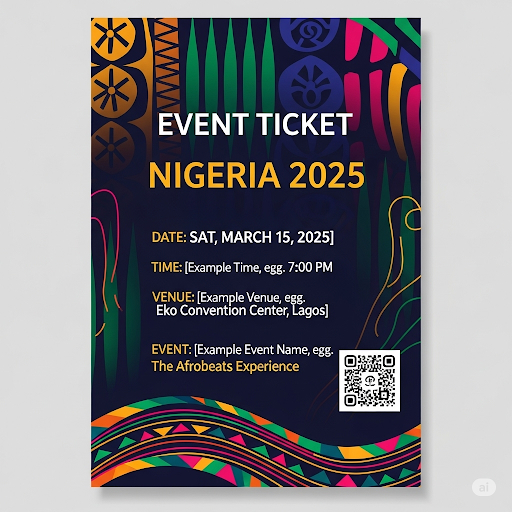
A good event ticket should answer most of the important questions before the person holding it reaches the gate.
Which event is this for? When does it happen? Where am I going? What kind of access did I pay for? How will the organiser know that this ticket is genuine?
When those answers are unclear, the confusion eventually arrives at the entrance.
Guests show up at the wrong venue. Someone with a Regular ticket insists they bought VIP because the category is difficult to identify. Another person presents a screenshot that looks convincing, but nobody at the gate has a reliable way to confirm whether it is valid. Staff begin searching through WhatsApp messages and payment alerts while the queue behind them gets longer.
A ticket is therefore more than a receipt showing that money changed hands. It connects the purchase to the actual event experience. Whether the ticket is displayed on a phone, downloaded as a file or printed, the information on it should help both the attendee and the event team understand exactly what it represents.
The Event Should Be Impossible to Confuse With Another One
The event name needs to be clear and prominent.
That sounds obvious until an organiser runs several events under the same brand or a venue is hosting multiple programmes around the same period. A ticket that only says something vague like Summer Experience may not provide enough context if the organiser runs different editions in Lagos and Abuja.
Use the proper event name and, where relevant, identify the particular edition.
Your visual identity can support that information. A familiar logo, typeface or event artwork helps attendees recognise the ticket quickly and makes the ticket feel connected to the marketing they saw before purchasing.
But branding should not be confused with security.
A logo can help someone recognise your event, but a person creating a fake ticket can also copy a logo from your Instagram page. The security of a ticket should come from whether it can be uniquely identified and verified, not simply from how professional the artwork looks.
The Date Needs More Than a Day and Month When Confusion Is Possible
Your ticket should clearly communicate when the event takes place.
Include the full date and the relevant time information rather than assuming the buyer will remember what was written on the flyer they saw several weeks earlier.
For many events, it is useful to distinguish between when guests can arrive and when the main programme begins.
If doors open at 5pm and the concert programme starts at 7pm, those are two different pieces of information. A guest arriving at 6pm should not think they have missed the event simply because the ticket only displays the earlier time.
The same distinction can help organisers manage entry. If everybody believes 7pm is both the opening time and programme start, a large part of the audience may appear close to 7pm and create a rush at the entrance.
For events running across several days, the ticket should also make it obvious whether the holder has access to one particular day or the entire event.
The Venue Information Should Help Someone Actually Find the Place
A venue name that is obvious to the organising team may not be obvious to every attendee.
If the location has several branches, identify the correct one. If the event is happening inside a larger property, give enough information for people to understand where they should go after reaching the main location.
The appropriate level of detail depends on the event and ticket format.
You do not necessarily need to squeeze a paragraph of driving directions onto the ticket. The full event page, confirmation message or pre-event communication can carry more detailed directions, landmarks, parking information and navigation links.
But the ticket itself should at least make the destination identifiable.
This becomes particularly important when a venue changes after tickets have already been issued. Updating the event page is useful, but do not assume every buyer will return to the page voluntarily before attending. Communicate significant changes directly so nobody relies on outdated information saved on an older ticket.
The Ticket Category Should Mean Something at the Gate
If somebody paid for Regular, VIP, VVIP, a table, an early-bird ticket or another access type, that category should be easy to identify.
The gate team needs it because different tickets may lead to different entrances, seating areas or wristbands. The buyer needs it because they should be able to confirm what they purchased.
This is also where overly complicated ticket structures create problems.
If your event has Regular, Silver, Gold, Platinum, VIP, Premium VIP and VVIP, every one of those names eventually has to mean something. If staff cannot explain the difference without searching for another document, the ticket categories may be more complicated than the event needs.
The ticket itself does not necessarily need to contain every benefit attached to the category. A long description of complimentary drinks, seating arrangements, merchandise and backstage privileges may be better placed on the event page where the buyer sees it before paying.
What the ticket should make unmistakable is the access category that was purchased.
If you are still deciding how many categories to create, our guide on common event ticketing mistakes explains why adding more ticket types does not automatically create more value or revenue.
A Proper Ticket Needs Something That Makes It Individually Verifiable
This is one of the most important differences between a ticket that merely looks legitimate and one that can actually be checked.
Each issued ticket should have a unique identifier.
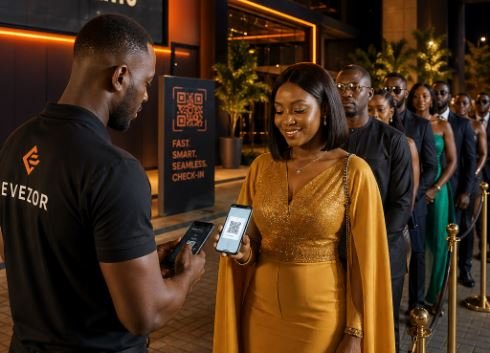
With digital ticketing, this is commonly a QR code, barcode or another unique ticket reference linked to the booking record. At the entrance, staff can verify the identifier rather than deciding whether the design looks convincing.
That matters because visual inspection has obvious limitations.
If one genuine-looking ticket is copied several times, all the copies may look identical. A gate worker staring at the artwork cannot necessarily tell which person has the original.
Verification changes the question.
Instead of asking, "Does this look real?", the team can ask, "Is this ticket recognised for this event, and has it already been used?"
This is why simply adding more logos, stamps or decorative security graphics is not the strongest response to ticket fraud. The ability to check the individual ticket against the organiser's ticketing records is much more useful.
Our guide on preventing fake tickets from affecting your event looks more closely at official sales links, ticket verification and preparing the gate team.
Do Not Put Information on the Ticket That the Buyer Should Have Learned Before Paying
Terms and conditions matter, but the ticket should not become the first place an attendee discovers an important restriction.
If the event is strictly 18+, the buyer should know that before purchasing.
If tickets are non-refundable under the applicable event policy, do not hide that information until after payment. If a particular ticket cannot be transferred, that should be communicated during the purchase process rather than becoming a surprise when the buyer later contacts support.
The same applies to important access rules.
A ticket can carry a short reminder, but lengthy policies are usually better placed on the event page or another clearly accessible location where people can review them before buying.
This creates a much cleaner ticket while still protecting clarity.
The goal is not to squeeze everything the organiser has ever written into one PDF. The goal is to make sure important information appears at the stage where the attendee actually needs it.
Think About What Happens When the Ticket Is Opened on a Phone
Digital tickets are often viewed on relatively small screens, sometimes while the guest is walking towards the gate with several people behind them.
Design for that reality.
The event name, ticket category and verification code should not require aggressive zooming to identify. Avoid placing essential information in tiny text simply because the design looked good on a laptop.
Contrast matters too. Pale text over a busy background may fit the event aesthetic but become difficult to read in bright daylight or on a cracked phone screen.
The QR code or barcode should have enough clear space around it to be scanned reliably. Do not place decorative graphics over it because the ticket designer wanted every empty area filled.
When possible, test an actual ticket on several phones before sales go live. What looks polished in a design file may behave differently once downloaded, forwarded or displayed with the screen brightness turned down.
A Ticket Should Not Require the Buyer to Have Perfect Internet at the Gate
Another practical question is how the attendee will retrieve the ticket when they arrive.
If the ticket exists only behind several pages that require a fresh internet connection, a weak network at a crowded venue can turn ticket retrieval into an unnecessary delay.
Encourage attendees to have the ticket ready before reaching the front of the queue. Depending on the ticketing process, that may mean downloading it beforehand or opening it in advance.
The organiser should also understand how their verification process behaves when the venue has unreliable connectivity.
This is one of those details that feels insignificant during planning and suddenly becomes extremely important when hundreds of people are standing outside.
Be Careful About the Personal Information Printed on a Ticket
A ticket may contain the attendee's name or another booking reference, but more personal information is not automatically better.
Think about what the event team genuinely needs for identification and support.
There is rarely a good reason to place sensitive payment information, unnecessary contact details or other private data prominently on something the attendee may print, screenshot or accidentally share online.
This becomes especially relevant because people frequently post tickets on social media when announcing that they are attending an event.
The ticket should contain enough information to fulfil its purpose without becoming a convenient collection of personal information for anybody who sees it.
Guests Should Know That the QR Code Is Not Decoration
Some attendees are understandably excited after buying a ticket and immediately post the entire thing online.
If the ticket contains a code used for entry, that can create unnecessary risk.
Organisers should remind attendees not to publicly share the usable QR code, barcode or other verification information attached to their ticket.
They can post the flyer, booking confirmation message or a version of the ticket with the sensitive code covered if they want to tell friends they are attending.
This is particularly important for high-demand events where people may deliberately look for tickets they can copy or attempt to resell.
A secure ticketing process helps the gate recognise duplicates, but buyers should still protect the information that grants access.
Do Not Make Your Gate Team Read the Ticket Like a Detective
A ticket can contain all the right information and still be difficult to use if the important details are buried inside the design.
Think about what the person at the entrance needs to identify in a few seconds.
They need to know whether the ticket is for the correct event, whether it is valid, what category it belongs to and where that attendee should go next.
Those details should be easy to recognise.
The event entrance is not the place for staff to study decorative fonts or compare tiny ticket numbers manually while the crowd waits.
This also means the ticket design and gate process should be planned together. If VIP attendees need a different wristband after scanning, staff need to see the ticket category quickly. If a particular ticket only allows entry on Saturday, that difference should not be hidden in a small line near the bottom.
A good ticket makes the next action obvious.
The Ticket Cannot Fix a Gate Process That Was Never Planned
Even the best-designed ticket will not prevent queues if the event has too few people checking guests in.
A QR code may make verification faster, but there still needs to be a realistic number of scanning points for the crowd you expect. Staff should understand what to do when a ticket does not validate, and genuine problems should have somewhere to go without stopping everybody else.
Security screening, wristbands and guest directions also need to fit around the verification process.
If every activity is happening around one table at one narrow entrance, the ticket is not the real problem.
Our guide on avoiding messy event entry goes deeper into planning the gate itself, from verification and staffing to handling unusual ticket cases.
A Good Ticket Reduces Questions Rather Than Creating New Ones
Think about the ticket from the attendee's side.
They should be able to look at it and confirm that they have access to the event they intended to buy, on the correct date, at the correct location and under the correct ticket category.
From the organiser's side, the ticket should also give the gate team a reliable way to confirm that the access being presented is genuine.
Everything else should support those two jobs.
Branding can make the ticket recognisable. Additional instructions can make arrival easier. Terms and policies can protect clarity around the purchase. But do not overload the ticket itself with information simply because there is empty space available.
Put detailed information on the event page where it belongs, communicate important changes directly and keep the ticket focused on what somebody needs when preparing to attend and when entering the venue.
If you are preparing your next ticketed event, you can create your event on Shows.ng and build the ticketing process around the event details, access categories and capacity you have already planned.
A proper event ticket should not merely look official. It should make the attendee's access clear and give the organiser a reliable way to verify it.